
الفوتونات الحيوية والنور الكامن في الطعام الحي
خلاياك تمتصّ الفوتونات وتبثّها، والطعام يحملها. ما هي الفوتونات الحيوية، ولماذا ما زال الطعام الحيّ يبثّ الإشارة، وكيف يعيد تنظيف الفاكهة النيئة والعصائر النور إلى داخلك.
الفراولة في طبقك ما زالت تشعّ نوراً. ليست حرارةً، ولا وهجاً يمكن لعينك أن تراه يوماً، بل تيار منظَّم من الفوتونات يغادر نسيجها في هذه اللحظة، الإشارة الخافتة ذاتها التي تبثّها كل خلية حيّة، وأحد أوائل ما ينطفئ حين تموت الخلية. الخيارة تبثّها. التينة المقطوفة لتوّها تبثّها. وكذلك اليد التي تحملهما.
مقدار النور الذي ما زال الطعام يحمله مقياس عادل لمدى حياة ذلك الطعام حين أكلته، والتغذية الحديثة لا خانة لديها له.
تلك بقعتها العمياء الكبرى. تُحصي السعرات، وغرامات البروتين، ومليغرامات المعادن القليلة التي ما زالت تتكلّف قياسها، وتعامل فراولةً قُطفت قبل ساعة وفراولةً شُعِّعت وشُحنت وخُزّنت ثلاثة أسابيع على أنهما الطعام ذاته. وهما ليستا الطعام ذاته.
واحدة ما زالت تبثّ حقلاً منظَّماً من النور. والأخرى جثّة بمقادير غذائية صحيحة.
الجسد يحرق الوقود، وذلك هو النصف الأصغر ممّا هو عليه. هو أيضاً حقل متماسك من النور تُبقيه الفوتونات قائماً، وهو يعرف، خليّةً خليّةً، الفرق بين طعام ما زال يحمل الإشارة وطعام انطفأ. والممارسة التي تتبع ذلك من أقدم ما في السجلّ: كُل الطعام الحيّ، واشرب الماء الذي يحمله، وأفرغ المنظومة بما يكفي من التواتر ليتمكّن النور من النفاذ.
السعرة تُخبرك بمقدار الحرارة التي يطلقها الطعام حين تحرقه. ولا تُخبرك بشيء عمّا إذا كان الطعام ما زال حيّاً.
النور في النسيج الحيّ
للظاهرة اسم تقني جافّ، ، واسم أوقع نحته في السبعينيات الفيزيائي الحيوي الألماني Fritz-Albert Popp: . يبثّ النسيج الحيّ في حدود ، عبر نطاق يمتدّ من فوق البنفسجي إلى قريب تحت الحمراء، . العين لا تراه. أمّا أنبوب مُضاعِف ضوئي مُبرَّد في غرفة مظلمة محكمة فيعدّه فوتوناً فوتوناً.footnoteCifra, M. وPospisil, P. (2014). Journal of Photochemistry and Photobiology B. "Ultra-weak photon emission from biological samples." المراجعة الحديثة الحاسمة للميدان: الشدّات، والأطياف، وطرائق الكشف، والآلية التي تقبل المؤسسة العلمية الاعتراف بها. الأرقام ليست موضع نزاع. أمّا معنى ذلك النور فهو الجزء الذي كان الميدان أبطأ ما يكون في تبنّيه.
ثمّة طريقتان لقراءة هذا النور، والاختيار بينهما هو الحجّة كلها.
القراءة المؤسّسية استقلابية، وهي صغيرة. إذ تحرق الخلايا وقودها فتُولّد ، تهاجم الدهون في أغشية الخلايا في تفاعل متسلسل يُسمّى . يقذف التفاعل جزيئات مُثارة، وحين تستقرّ هابطةً تُطلق فوتوناً. على هذا الحساب يكون النور عادماً، دخان محرّك ولا شيء أكثر. تلك هي القراءة الحذرة، التي لا تطلب منك شيئاً ولا تُغيّر شيئاً، وهي تُفوّت أهمّ ما في الأمر.
Popp حاجّ بما هو أكبر. أظهر أنّ هذا النور ، أقرب إلى الليزر منه إلى المصباح، وأنّ مصدره الأول هو الخلية نفسها.
هذا ليس عادماً. إنه إشارة، حقل حيّ من الضوء المتماسك تُخاطب به كل خلية سائر الخلايا بسرعة الضوء، أسرع ممّا يستطيع أيّ رسول كيميائي أن يقطع. أنت أوركسترا من النور، وDNA يُمسك بالنوتة.footnotePopp, F. A., Nagl, W., Li, K. H. et al. (1984). Cell Biophysics. "Biophoton emission. New evidence for coherence and DNA as source." عمل Popp التأسيسي. التماسك ينجو داخل الخلية الدافئة الرطبة، وعدد الفوتونات منخفض لأنّ الإشارة المتماسكة لا تحتاج أن تكون عالية. قياسات التماسك عند Popp قائمة بذاتها، وهي تحمل بالضبط المعنى الذي أعطاها إيّاه: النور إشارة، والخلية تُدار به.
على هذه القراءة تقوم الممارسة. النور هو الحياة. يتوهّج في أشدّ صوره في نسيج سليم منظَّم، ويتأجّج حين تُجرح الخلية. وعند لحظة الموت يُعطي دفقةً ساطعةً أخيرة ثم يُظلم، ، النور الذي نظّم الخلية وهو يغادرها دفعةً واحدة.footnoteSlawinski, J. (1988). Experientia. "Luminescence research and its relation to ultraweak cell radiation." يصف الانبعاث النخري، الدفقة الطرفية من الضوء عند موت الخلية، وبعدها يهبط الانبعاث إلى مستوى الخلفية. النور والحالة الحيّة يبدآن معاً وينتهيان معاً. ذلك ليس مجازاً، ذلك قياس.
حين تأكل، أنت لا تبلع كربوناً ومعادن فحسب. أنت تُدخل نور ما تأكله إلى حقل جسدك أنت. كُل ما هو مضيء تُغذِّ الحقل. كُل ما هو معتم تُخفته.
لماذا يحمل الطعام النيء نوراً أكثر
إن كان النور علامة الحياة، فالسبيل إلى المقارنة بين طعامين ليس تحليل كيميائهما وحده بل مراقبة نورهما. وهذا بالضبط ما فعله مختبر Popp، بتقنية تُسمّى : أومض على العيّنة بالضوء، ثم راقب كيف تردّه.
النسيج المعافى الحسن التنظيم يُطلقه ببطء، في منحنى زائدي طويل. والمادّة المتحلّلة أو الميتة تُفرغه سريعاً وينتهي أمرها. صار ذلك المنحنى في يد Popp أداةً لتصنيف الطعام.footnoteKohler, A. وPopp, F. A. (2000). Journal of Alternative and Complementary Medicine. "Biophoton emission as a potential measure of food quality." نُشر في مجلّة طبّ بديل لا في مجلّة تغذية سائدة، لأنّ التغذية السائدة لا خانة لديها للنور. القياسات حقيقية وقابلة للتكرار، وهي تُصنّف الطعام بحسب مقدار ما كان فيه من حياة.
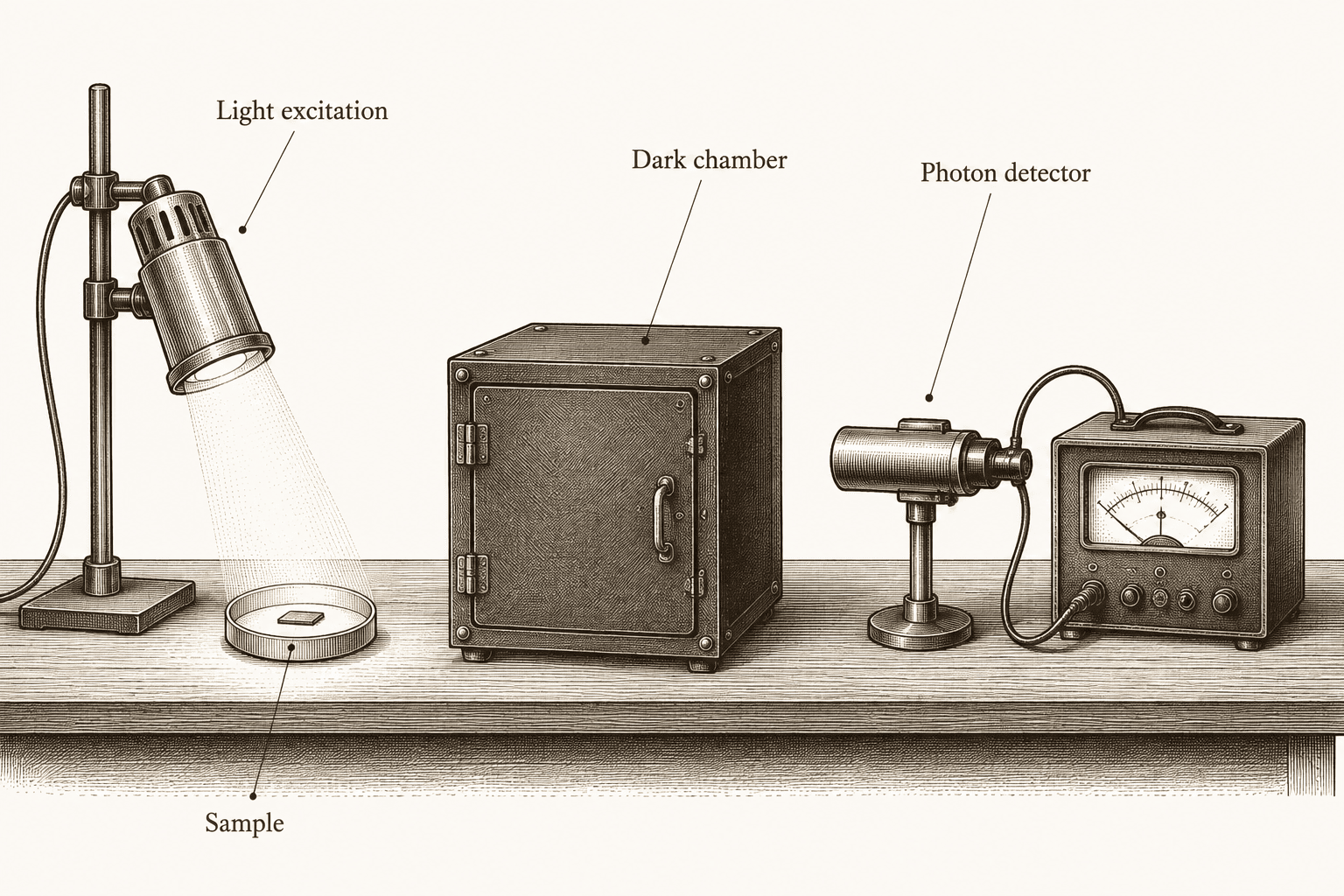
ما أبلغت عنه مجموعته يشير تماماً إلى حيث ادّعت تقاليد الطعام القديمة دائماً. بيض الدجاج الطليق أعطى اضمحلالاً أبطأ وأكثر تنظيماً من بيض الطيور المحبوسة المُجهَدة. المحصول الطازج حافظ على منحنى أنقى من المحصول الذي خُزِّن. والتشعيع، الجرعة المُعقِّمة المستخدمة لإطالة العمر على الرفّ، سطّح الاضمحلال الزائدي الحيّ فحوّله إلى الهبوط الأُسّي الحادّ الخاصّ بالمادّة الخاملة. كيمياء الطعام المُشعَّع لم تكد تتغيّر. أمّا نوره فتغيّر تماماً.
أوضح برهان يقع في البذور، حيث القياس محسوم والرهان ملموس. بلّل بذرةً فتبثّ دفقةً من الفوتونات، وسطوع تلك الدفقة يتتبّع بدقّة تكفي لاستخدامه اختباراً للصلاحية.
البذرة التي ستنبت تلمع. والبذرة الميتة لا تكاد تُسجَّل.footnoteGallep, C. M. et al. (2014). Journal of Photochemistry and Photobiology B. "Ultra-weak photon emission from germinating wheat seedlings." انبعاث الفوتونات عند الترطيب يتتبّع القدرة على الإنبات بدقّة اختبار مختبري. النور مؤشّر كمّي على ما إذا كانت الإمكانية الحيّة ما زالت حاضرة. والتقنية ذاتها فصلت الطماطم المزروعة عضوياً عن المزروعة تقليدياً عبر بصمة انبعاثها، إذ قرأت الثمرة العضوية بوصفها أقلّ إجهاداً وأعلى في النور المخزون.footnotevan Wijk, R. et al. (2013). PLoS One. "Ultra-weak photon emission and biological quality of tomatoes grown under different crop management systems." أعطى المحصول العضوي والتقليدي بصمتَي انبعاث وتلألؤ متأخّر قابلتين للتمييز. وفسّرها المؤلّفون بأنها فروق في الإجهاد وفي القدرة على تخزين النور.
سيُقال لك إنّ هنا يكفّ الأمر عن كونه علماً، وإنّ فوتوناً مأكولاً في حبّة فراولة لا يمكن أن يهمّ، وإنّ النور مجرّد علامة على الطزاجة ولا شيء يعبر من النبات إليك. الاعتراض لا يتّسق مع منطقه هو.
النور لا يُعدَم حين تأكله. الحقل المنظَّم المتماسك لنبتة حيّة لا ينطفئ عند شفتيك؛ إنه يدخل جسداً هو نفسه حقل من النور، فإمّا أن يرفع نظام ذلك الحقل أو يخفضه. كل ثقافة أكلت خلال ساعات من الحصاد عرفت أنّ الطعام النيء الطازج يحمل شيئاً لا يحمله الطعام المطبوخ المخزون الميت. سمّوه براناً، وتشي، وقوّة حياة، وحيوية. ونحن الآن نستطيع تصويره، ولم يفعل الجهاز شيئاً سوى أنه لحق بما عرفوه دائماً.
فإليك الصيغة القويّة، بوضوح. أنت تأكل نوراً.
حِمية الطعام الحيّ ترفع اهتزاز الجسد الذي يأكلها، و أكثر من مجاز، إنه وصف دقيق لما يحدث حين تكفّ عن إطعام الحقل مادّةً ميتة وتبدأ بإطعامه نوراً منظَّماً. كُل طعاماً ما زال يلمع فيصير اللمعان لك. يصلك بإنزيماته سليمةً، وبالفيتامينات الهشّة التي تُتلفها الحرارة، وبـ، الماء المنظَّم الذي تتعرّف عليه خلاياك ولا تستطيع كأس من الحنفية أن تحلّ محلّه. النور، والماء، والإنزيمات، واليقظة، كلّها تشير إلى جهة واحدة. الطعام الحيّ يصنع إنساناً أكثر حياة.
أنت حقل من النور. تستطيع أن تُطعمه نوراً حيّاً أو أن تُطعمه العتمة، وليست هناك وجبة محايدة.
الماء، والرواسب القديمة في الأمعاء
الطعام الحيّ يفعل شيئاً لا يستطيعه مكمّل غذائي. يصل مُشبَعاً بمائه هو، محفوظاً داخل جدران الخلايا، ويحمل ذلك الماء عميقاً إلى الأمعاء.
الفاكهة الطازجة والخضار النيئة تتراوح من سبعين إلى ما فوق تسعين بالمئة ماءً بالوزن، وخلافاً للماء الذي تشربه بين الوجبات فيُمتصّ في معظمه عالياً في الأمعاء الدقيقة قبل أن يبلغ الطرف البعيد، فإنّ الماء المرتبط بالطعام يسافر مع الألياف ويبلغ جدار القولون.footnoteنحو 1.5 إلى 2 لتر من السوائل تدخل القولون يومياً؛ ويعيد امتصاص نحو تسعين بالمئة منها، فيبقى البراز الطبيعي عند نحو 70 إلى 75 بالمئة ماءً. الطعام العالي في الماء والألياف يُبقي ماءً أكثر في لُمعة القولون، فيُليّن البراز ويُحفّز الجدار العضلي على دفعه. انظر Slavin, J. (2013). Nutrients. "Fiber and prebiotics, mechanisms and health benefits." وهذا يهمّ بسبب ما يميل القولون الحديث إلى الاحتفاظ به.
لهذه الرواسب المتراكمة اسم في تقاليد الشفاء الأقدم. Arnold Ehret، الذي بنى منظومةً كاملة حولها في العشرينيات، سمّاها مخاطاً وصنع حِميةً لإذابته. وNorman Walker، رائد العصائر، وصف الطعام المطبوخ والمصنّع وهو يترك طبقةً من الوحل المتصلّب على جدار القولون. والمعالج الطبيعي المعاصر Robert Morse يبني ممارسته كلها على إغراق الجسد بالفاكهة النيئة القابضة لانتزاعها. وRichard Anderson، الأكثر ارتباطاً بتوثيقها بمصطلحات حديثة، راقب مراجعين يُخرجون قوالب مطّاطية طويلة من مادّة داكنة في تنظيفات مُمتدّة، وسمّاها ، وهي موصوفة بالكامل في مقال تنظيف الطفيليات.
يقول التيار الطبّي السائد إنّ هذه الرواسب لا وجود لها، وإنّ القولون ينظّف نفسه، وإنّ ما تُخرجه في تنظيف ليس إلا التنظيف نفسه. لكنّ ما يغادر أجساد الناس أكثر من أن يصمد ذلك الإنكار.
الأنبوب الذي لا يجرفه شيء يترسّب فيه الطمي، والقولون المحروم من الألياف، الشحيح في الماء، البطيء في الحركة سنين، ليس مختلفاً. وأوثق سبيل منفرد لتحرير ذلك الحِمل هو إغراق المنظومة بطعام نيء غنيّ بالماء وإبقاؤها متحرّكة. الألياف تحفظ الماء في البراز. والماء يُليّن ما تصلّب. والكتلة تشدّ الجدار فتُشعل العضلة. و التي أفرغت فيها الكبد نفاياتها، وتحملها خارجاً بدل أن تدعها تدور عائدة. سمِّ الرواسب ما شئت. الطبق النيء الغضّ هو كيف تُحرّكها.
تنظيف الفاكهة النيئة
أبسط صور هذا وأقدمها هي شوط من الفاكهة عالية الماء، تُؤكل وحدها، عبر عدد محدّد من الأيام. هو لطيف، ويصعب أن تخطئ فيه، وهو يُغرق الجسد دفعةً واحدة بالأشياء الثلاثة التي يحتاجها أيّ تحرير: الماء، والسكّر الذي يستطيع الجسد حرقه دون أن يهدم العضلة، والنور الحيّ لطعام يُؤكل بعد دقائق من قطعه.
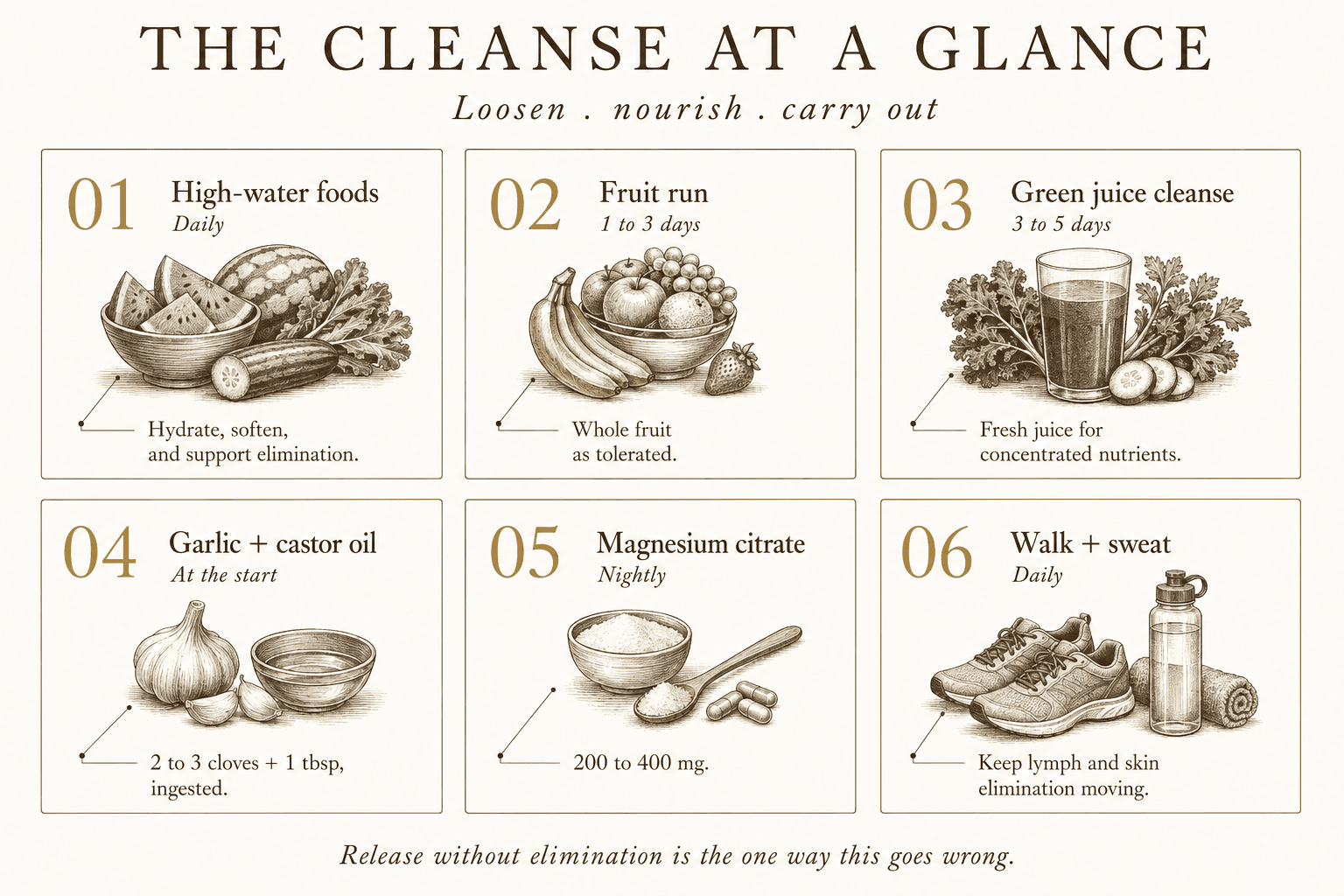
أجرِه على يوم إلى ثلاثة أيام، فاكهةً فقط، وجبات أحادية حيثما أمكن، أي نوع فاكهة واحد في الجلسة الواحدة كي يبقى الهضم بسيطاً. والفواكه التي تحمل أكثر الماء وألطف السكّريات: البطيخ والشمّام، والعنب، والحمضيات، والبابايا، والكمّثرى الناضجة، والتوتيات، والخيار والطماطم، وهما نباتياً فاكهة وموضعهما هنا. كُل حتى الشبع لا حتى التقييد؛ ليس هذا بروتوكول تجويع، والمقصود حجم الطعام الحيّ المائي لا الحرمان. بطيخ لصباح. عنب عبر أصيل. حمضيات وبابايا، وهما تحملان إنزيماتهما الهاضمة، حين تطلب الأمعاء عوناً. واشرب الماء مع رشّة من الملح غير المكرّر بين وجبات الفاكهة لتحفظ الشوارد.
وما يفعله، بالترتيب. الماء والألياف يبلغان القولون فيُليّنان ما فيه. وسكّريات الفاكهة البسيطة تُبقي غلوكوز الدم ثابتاً بما يكفي كي لا يهدم الجسد عضلته وقوداً، وهو نمط إخفاق الصيام الأقسى. والفواكه القابضة، الحمضيات والعنب خصوصاً، هي التي تُثمّنها التقاليد القديمة لانتزاع الرواسب عن الجدار. ولأنك تأكل بتواتر، تبقى الأمعاء متحرّكة، فيغادر فعلاً ما جرى تحريره. توقّع براز أكثر تواتراً وألين وأحياناً أدكن بحلول اليوم الثاني. تلك هي الغاية. وتوقّع كذلك يوماً تشعر فيه بأسوأ قليلاً قبل الأفضل، رد فعل التحرير المألوف حين تُفرغ المنظومة أسرع ممّا اعتادت. وهو يمرّ.
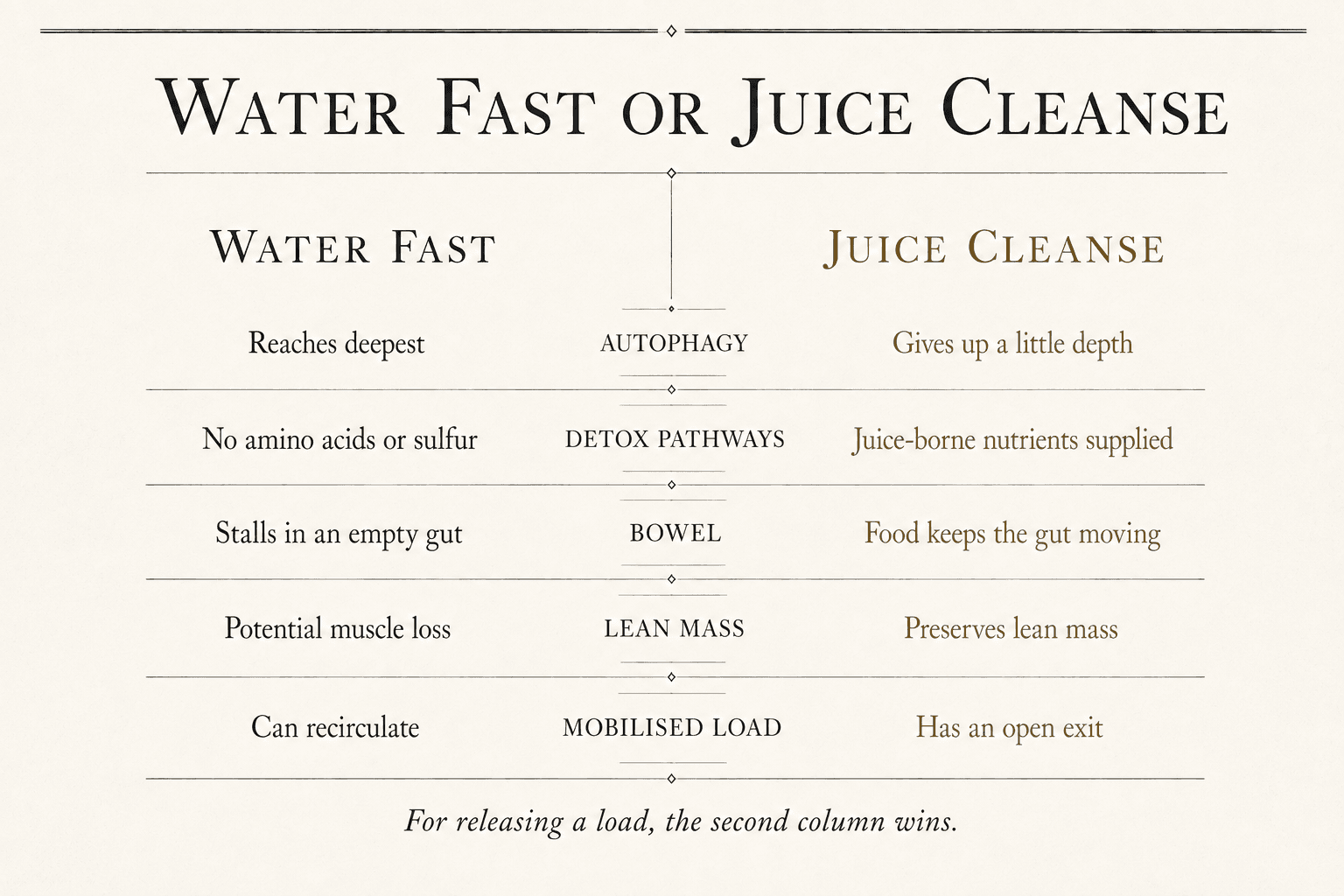
شوط الفاكهة هو حركة الدخول. أمّا التحرير الأعمق فيجري على عصير الخضار، والعصير، كما يتبيّن، يتفوّق على الامتناع عن الطعام كلّياً.
تنظيف عصير الخضار، ولماذا يتفوّق على صيام الماء
ثمّة رومانسية في صيام الماء الصارم، فكرة أنّ عدم تناول أيّ شيء البتّة هو أنقى إعادة ضبط. والفسيولوجيا مثيرة للإعجاب حقّاً. خلال يوم أو يومين بلا طعام، ينفد مخزون السكّر في الكبد، ويتحوّل الجسد إلى حرق الدهن، فترتفع الكيتونات، وأبرزها ، وهو ليس وقوداً فحسب بل إشارة تُهدّئ الالتهاب. وأعمق من ذلك، يُشغّل الحرمان الغذائي المستمرّ ، برنامج التدبير المنزلي للخلية، الذي تهضم فيه أجزاءها التالفة وتُعيد تدويرها. هذه حقيقية وتستحقّ أن تُنال.footnoteلفوائد الصيام والكيتوزية والالتهام الذاتي المُثبَتة: Longo, V. D. وMattson, M. P. (2014). Cell Metabolism. "Fasting, molecular mechanisms and clinical applications"؛ وAnton, S. D. et al. (2018). Obesity. "Flipping the metabolic switch."
لكنّ لصيام الماء الصارم عيباً تتركه الكتيّبات خارج الصفحة، وهو بالضبط عيب في الإخراج. حين يحرق الجسد الدهن فهو لا يُطلق طاقةً فحسب. الدهن هو حيث يخزّن الجسد التي عجز عن إخراجها: الملوّثات الثابتة، وبقايا المبيدات القديمة، والمعادن الثقيلة. حرق الدهن السريع يُغرق مجرى الدم بهذا الحِمل المُحرَّر، وعلى الجسد الآن أن يُبطله ويُخرجه. وشيئان يحتاجهما لذلك يمنعه صيام الماء منهما. في الكبد تعمل على الأحماض الأمينية والكبريت، أي المواد الخام للبروتين، وصيام الماء لا يُمدّها بشيء، فيتضوّر خطّ الاقتران وترتدّ سموم نصف معالَجة. ولأنّ الأمعاء الفارغة تتوقّف عن الحركة، فإنّ ما تنجح الكبد في إفراغه في الصفراء يجلس في معي ساكن، حيث تفكّه البكتيريا فيُعاد .footnoteHodges, R. E. وMinich, D. M. (2015). Journal of Nutrition and Metabolism. "Modulation of metabolic detoxification pathways using foods and food-derived components." يعرض لماذا يعتمد اقتران الطور الثاني على الأحماض الأمينية والكبريت الغذائيين، ولماذا يُبطل تحريرُ السموم دون تزويد هذه العوامل المساعدة، أو دون صون الإخراج، الغايةَ كلها. هي حجّة أدبيات إزالة السموم ضدّ صيام الماء الساذج. تكون قد أدّيت الجزء الصعب، انتزاع السموم من مخزنها، ثم تركتها تدور عائدة. إزالة السموم بلا إخراج ليست إزالة سموم. إنها إعادة توزيع.
صيام عصير الخضار النيء يحفظ ما يهمّ ويُغلق العيب. عند بضع مئات من السعرات يومياً من عصير معصور طازجاً، يدخل الجسد مع ذلك حالة حرق الدهن اللطيفة، منخفضة الإنسولين، الكيتوجينية الخفيفة، التي تُسلّم قدراً كبيراً من الراحة الاستقلابية. لكنه الآن يُطعَم أيضاً بالضبط ما حجبه الصيام الصارم. يصبّ العصير فيه الفيتامينات والمعادن و التي تحتاجها آلة الكبد لإتمام العمل. والتقطير المطّرد للسكّر يوفّر العضلة، فيحرق الجسد الدهن بدل أن يهدم النسيج الهزيل طلباً للغلوكوز. والمحتوى المعدني العالي، البوتاسيوم والمغنيسيوم خصوصاً، يُلطّف الحموضة الخفيفة لحرق الدهن ويترك الجسد أكثر قلوية. والعصائر الخضراء غنيّة ، فتُفتح الأوعية الدموية وتتحسّن الدورة التي تحمل النفايات إلى أعضاء الخروج. وحجم السائل، والألياف الذائبة المتبقّية، والسكّريات البسيطة، تُبقي منعكس الأمعاء حيّاً، فتظلّ المِعى متحرّكة ويغادر الحِمل المربوط بالصفراء الجسدَ بدل أن يدور.
وليس هذا نظرية فحسب. حِمية عصير خضار وفاكهة معصور على البارد لثلاثة أيام أزاحت ميكروبيوم الأمعاء إلى بصمة أصحّ بشكل قابل للقياس، ورفعت أكسيد النيتريك الدائر، وخفّضت مؤشّراً على ضرر أكسدة الدهون، وأنقصت الوزن، في دراسة مضبوطة.footnoteHenning, S. M. et al. (2017). Scientific Reports. "Health benefit of vegetable/fruit juice-based diet, role of the microbiome." حِمية قائمة على العصير لثلاثة أيام أزاحت ميكروبيوم الأمعاء (Bacteroidetes أكثر، Firmicutes أقلّ)، ورفعت أكسيد النيتريك في البلازما، وخفّضت مؤشّر بيروكسدة الدهون، وأنقصت وزن الجسم. حِمية العصير في الدراسة قدّمت نحو 1,300 سعرة يومياً، والصيام الأعمق عند مقدار أقلّ يدفع الإزاحة ذاتها أقوى.
أمّا أكبر حشد رصدي للصيام نُشر إلى اليوم، أكثر من 1,400 شخص، فلم يجرِ على الماء بل على طريقة Buchinger، أي نحو 250 سعرة يومياً من العصائر الطازجة ومرق الخضار، ووثّق سلامةً عميقة، والتزاماً عالياً، وهبوطاً في ضغط الدم والدهون، وتحسّناً في حسّ العافية، وذلك بالضبط لأنّ المدخول الغذائي الصغير منع الانهيار الشاردي الذي يجعل صيام الماء الصارم خطراً.footnoteWilhelmi de Toledo, F. et al. (2019). PLoS One. "Safety, health improvement and well-being during a 4 to 21-day fasting period in an observational study including 1422 subjects." بروتوكول Buchinger صيام عصير ومرق، لا صيام ماء فقط، عند نحو 250 سعرة في اليوم. سجلّه في السلامة على نطاق واسع هو الحجّة السريرية للصيام المُطعَم على الصيام الفارغ.
وأشدّ استخدام سريري للمبدأ، بروتوكول Gerson، يدفع أكثر من اثني عشر كوباً من العصير النيء يومياً إلى جانب إخراج معوي مفروض، على منطق هذا القسم بالضبط: أغرق الجسد بالمغذّيات المحمولة في العصير التي تُشغّل إزالة السموم بينما تُبقي المخارج مفتوحةً على مصراعيها. ليس ذلك هامشياً. ذلك فسيولوجيا.
أبقِ الحركة مستمرّة
كل ما سبق يُحرّر. والانضباط الذي يقرّر إن كان التنظيف يشفيك أم يسمّمك بهدوء هو ما إذا كان ما جرى تحريره يغادر فعلاً.
هذا هو النصف الأكثر إغفالاً في كل إزالة سموم. تحريرُ سمّ مخزون ثم الإخفاق في إخراجه أسوأ من تركه حيث كان، لأنه صار الآن في الدورة. نظامان يحملان الحِمل خارجاً، الأمعاء واللمف، وكلاهما يحتاج عوناً أثناء التنظيف.
الأمعاء أولاً. المهمّة أن تُبقي العبور سريعاً بما يكفي لتغادر النفايات المربوطة بالصفراء قبل أن يُعاد امتصاصها في الحلقة المعوية الكبدية.footnoteJandacek, R. J. وTso, P. (2001). American Journal of Physiology, Gastrointestinal and Liver Physiology. "Enterohepatic circulation of organochlorine compounds, a site for nutritional intervention." يُثبت أنّ السموم المُفرَزة في الصفراء يُعاد امتصاصها حين يكون العبور بطيئاً، وأنّ إبقاء الأمعاء متحرّكة، أو ربط السموم، يكسر الحلقة. رافعتان تفعلان ذلك، وهما ليستا بديلتين إحداهما عن الأخرى.
الأولى تأتي من بروتوكول الأمعاء: فصّان إلى ثلاثة من الثوم النيء، مقطّعة قطعاً خشنة لا مهروسة عجينةً، تُبلع ليلاً في ملعقة كبيرة من زيت الخروع المعصور على البارد. زيت الخروع هو المحرّك الميكانيكي. حمضه الدهني الفعّال، ، يرتبط بمستقبلات على عضلة الأمعاء ويدفعها إلى الانقباض، فيُخرج المادّة المُحرَّرة عبر الليل.footnoteTunaru, S. et al. (2012). PNAS. "Castor oil induces laxation and uterus contraction via ricinoleic acid activating prostaglandin EP3 receptors." الفعل الرحمي ذاته هو سبب منع زيت الخروع في الحمل.
ويركب الثوم معه مضادّاً للميكروبات وخالباً للمعادن. الوصف الكامل يعيش في مقال تنظيف الطفيليات؛ عامله رافعةً ثقيلة، تُستخدم عند بداية التنظيف، لا كل ليلة إلى الأبد.
الرافعة الثانية هي المغنيسيوم، وهنا لا تفعل الصورة الخطأ منه شيئاً لهذه المهمّة. المغنيسيوم الذي يأخذه معظم الناس، الذي يُؤخذ ليلاً للنوم ولسدّ النقص، هو ، وهو الأداة الصحيحة لاستعادة المعدن وللهدوء. وهو الأداة الخطأ لتحريك الأمعاء، لأنه يُمتصّ جيداً إلى حدّ أنه لا يبلغ القولون ليؤدّي عملاً تناضحياً. أمّا الصورة التي تُبقي الأمور متحرّكة فهي ، التي تبقى في الأمعاء، وتسحب الماء إلى القولون، وتُليّن البراز وتُزيحه بالتناضح.footnoteعن الصور: غليسينات المغنيسيوم تُمتصّ بكفاءة ولا تُمارس أثراً مليّناً يُذكر، وهي مثالية لسدّ النقص (انظر بروتوكول المعادن الأساسية)؛ أمّا الصور رديئة الامتصاص، السترات والأكسيد، فتبقى في اللُّمعة وتسحب الماء تناضحياً، وهو ما يُنتج حركة الأمعاء. Mori, S. et al. (2021). Nutrients. "Clinical evaluation of magnesium oxide in the treatment of constipation."
فالقاعدة إذن بسيطة: الغليسينات للجسد، والسترات للأمعاء. أثناء التنظيف، 200 إلى 400 ملغ من المغنيسيوم العنصري على صورة سترات ليلاً تُبقي المخرج مفتوحاً دون القوّة المُسهِلة لزيت الخروع، وهي خيار يومي ألطف للأيام الواقعة بين عمليات إعادة الضبط الأثقل.
ثم اللمف. الذي يصرف النفايات من الفراغات بين خلاياك لا قلب له. أوعيته الجامعة تعصر في إيقاع هادئ، وبقيّة القوّة تأتي من عضلاتك ونَفَسك، فلا يتحرّك التصريف إلا حين تتحرّك أنت.
لهذا لا تكون الحركة اليومية الخفيفة أثناء التنظيف زينةً. امشِ، وتنفّس منخفضاً في الحجاب الحاجز، وأبقِ الأمر يسيراً: غاية التنظيف راحة وتحرير، لا كتلة تدريب قاسية. إذا اشتدّت رائحة الجسد، أو هبطت الطاقة، أو تكاثف الضباب، فقد سبق التحرير المخارج، فأنزل الضغط ووسّعها. الميكانيكا الكاملة والتسلسل اليومي في المضخة المفقودة، وهذا التنظيف يفترضهما.
ومخرج آخر، الجلد. التعرّق طريق إخراج حقيقي، لا فولكلور. وجدت دراسات قاست الدم والبول والعرق معاً أنّ العرق يحمل خارجاً معادن ثقيلة، الكادميوم والرصاص والزئبق، ومركّبات صناعية مثل ثنائي فينول A، بتراكيز تفوق أحياناً ما في الدم أو البول.footnoteGenuis, S. J. et al. (2012). Archives of Environmental Contamination and Toxicology. "Blood, Urine, and Sweat (BUS) Study." والورقة المرافقة عن إخراج ثنائي فينول A في العرق (2012, Journal of Environmental and Public Health). العرق طريق إخراج قابل للقياس لعدّة سموم ثابتة، وهي الحجّة السريرية للساونا أثناء التنظيف. لهذا تضع المضخة المفقودة الحرارة في التسلسل اليومي. الساونا، أو ببساطة حركة تكفي لكسر عرق، تفتح باباً رابعاً يغادر منه الحِمل. اشرب وعوّض المعادن حين تستخدمها؛ فالعرق أيضاً طريق لفقد الشوارد التي يُرهقها التنظيف أصلاً.
العضوي، ومشكلة التربة
إن كانت الحجّة أن تأكل الطعام الحيّ في أسطع صوره، فالسؤال التالي لا مفرّ منه: أسطع من أين؟ وهنا يفصل الجواب بين الممارسة الحقيقية والنسخة الساذجة من حلم الطعام النيء.
امدد يدك إلى العضوي حين تستطيع، ولا لأسباب البطاقة التسويقية. أكبر تحليل تجميعي للمسألة، بمجموع 343 دراسة، وجد المحاصيل العضوية أعلى بوضوح في مضادّات الأكسدة والبوليفينولات، أي كيمياء النبات الدفاعية، والأهمّ أنها أقلّ احتمالاً بأربعة أضعاف أن تحمل بقايا مبيدات قابلة للكشف، وأدنى بنحو ثمانية وأربعين بالمئة في ، المعدن السامّ الذي يتسلّل إلى التربة التقليدية من السماد الصناعي ثم إلى الطعام.footnoteBaranski, M. et al. (2014). British Journal of Nutrition. "Higher antioxidant and lower cadmium concentrations and lower incidence of pesticide residues in organically grown crops." أقوى استشهاد منفرد لاختيار العضوي: ليس فيتامينات أكثر بشكل دراماتيكي، بل كيمياء نباتية دفاعية أكثر، ومبيدات أقلّ بكثير، ونحو نصف الكادميوم.
وحِمية الطعام النيء هي بالتعريف حِمية تُؤكل غير مغسولة بالطبخ، فيهمّ حِمل الملوّثات في المُدخَل أكثر لا أقلّ.
لكنّ المشكلة الأعمق هي التراب نفسه. محتوى الطعام من المعادن تابع لمحتوى التربة من المعادن، وقرن من الزراعة الصناعية جرّد التربة. الجداول الغذائية الرسمية تُظهر ذلك بوضوح: عبر القرن العشرين هبط الكالسيوم والحديد والمغنيسيوم والبوتاسيوم في المحاصيل الشائعة بخمسة عشر إلى قرابة خمسين بالمئة، جزء منه من الاستنزاف وجزء من تربية المحاصيل للحجم والسرعة لا للكثافة الغذائية، ما يُسمّى أثر التخفيف.footnoteDavis, D. R., Epp, M. D. وRiordan, H. D. (2004). Journal of the American College of Nutrition، جداول USDA لعام 1950 مقابل 1999؛ وMayer, A. M. (1997). British Food Journal، الجداول البريطانية لعام 1936 مقابل 1991. انخفاضات بنحو 15 إلى 50 بالمئة عبر الكالسيوم والحديد والمغنيسيوم والبوتاسيوم، من استنزاف التربة ومن "أثر التخفيف" الناتج عن التربية للمردود والمحتوى المائي على حساب الكثافة الغذائية. تلك هي الحجّة التي يعرضها بالكامل مقال موت التربة والأطعمة الحيوانية ونصّ المعادن الأساسية. ورقة السبانخ الحديثة كسر ممّا كانت تُسلّمه جدّتها من معادن. ولا تستطيع أن تأكل طريقك خارج ذلك بأكل مزيد من الورقة المستنزَفة، لأنّ مزيداً منها يعني أيضاً مزيداً من الأوكسالات، ومزيداً من حِمل الخلب، ومزيداً من المبيدات.
لهذا تُخفق حِمية الطعام النيء الصارمة طويلة الأمد حين تُجرى داخل منظومة غذاء صناعية حديثة. تابعت دراسة Giessen للطعام النيء 257 شخصاً يأكلون من سبعين إلى مئة بالمئة نيئاً، فوجدت نقص وزن مزمناً عبر المجموعة، ووجدت في نحو ثلث النساء دون الخامسة والأربعين انقطاعاً جزئياً أو كاملاً للطمث، وهي إشارة الجسد التي لا تحتمل لبساً إلى أنه يعمل على عجز في الطاقة والمغذّيات أعمق من أن يحتمل التكاثر.footnoteKoebnick, C. et al. (1999). Annals of Nutrition and Metabolism. "Consequences of a long-term raw food diet on body weight and menstruation" (دراسة Giessen للطعام النيء). نحو 30 بالمئة من النساء دون 45 أصبن بانقطاع طمث جزئي أو كامل، وهو مؤشّر سريري على عجز طاقي شديد. وآكلو النيء الصارم طويلاً يحملون كذلك كثافة عظم أدنى بشكل قابل للقياس (Fontana et al., 2005, Archives of Internal Medicine).
وآكلو النيء طويل الأمد يحملون كذلك كثافة عظم أدنى بشكل قابل للقياس. الخفّة التي تجلبها الحِمية النيئة في أشهرها الأولى حقيقية، وكذلك الاستنزاف الذي يلحق بها في سنتها الثانية إن جرت دون احترام لما لم تعد سلسلة الغذاء الحديثة قادرة على تسليمه.
ثمّة مجموعة شروط واحدة يصمد تحتها الطريق النيء، وهي بالضبط ما كان مثال الطعام النيء يمدّ يده إليه دائماً. يعمل حيث يكون الطعام محلّياً، مأكولاً في موسمه، مزروعاً في تربة حيّة، الأرض البركانية أو الكثيفة المعادن أو المُدارة بالتجديد التي ما زالت تحتوي ما فقده التراب الصناعي. والمزارع التجديدية تُنبت فعلاً، بشكل قابل للقياس، محاصيل أكثف معادن وأغنى كيمياءً نباتية من جاراتها التقليدية.footnoteMontgomery, D. R. et al. (2022). PeerJ. "Soil health and nutrient density." اختُبرت المحاصيل المزروعة بالتجديد أعلى في المغنيسيوم والكالسيوم والبوتاسيوم والزنك، وأعلى بنسبة 15 إلى 25 بالمئة في الكيمياء النباتية من جاراتها التقليدية. بيولوجيا التربة، لا بطاقة العضوي وحدها، هي ما يُعيد بناء الأرضية المعدنية. إن زُرع الطعام على ذلك النحو وسافر مسافةً قصيرة إلى الطبق، فالحِمية المائلة إلى النيء ليست ممكنة فحسب، بل ممتازة. أمّا حيث يُربّى المحصول لعمر الرفّ، ويُقطف فجّاً، ويُشحن عبر قارّة، ويُزرع في تربة منهَكة، فالحِمية ذاتها نقص بطيء، مهما بلغ انضباط الآكل. والحركة الصادقة في تلك الحالة: اجعل الطعام النيء الحيّ مركز الثقل، ومصدره بأقصى ما تستطيع من محلّية وجودة، وكمّل المعادن التي لم تعد التربة تقدر على تقديمها بدل أن تتظاهر بأنّ النبات ما زال يحملها. والحيّ لا يعني نباتياً فقط: أطرى الأطعمة الحيوانية النيئة، صفار بيض المرعى، والحليب النيء، والسمك المصطاد لتوّه، تحمل النور المنظَّم ذاته والتغذية الكثيفة التي يحاجّ مقال موت التربة والأطعمة الحيوانية بأنّ الجسد لا يستغني عنها. أجرِ التنظيف النيء ممارسةً دورية، لا طريقة عيش دائمة بلا سند، إلا إن كانت تربتك تستحقّ ذلك.
القوس
الإيقاع موسمي لا دائم. شوط فاكهة من يوم إلى ثلاثة حين يشعر الجسد بالثقل أو حين ينقلب الفصل. وتنظيف بعصير أخضر من ثلاثة إلى خمسة أيام بضع مرّات في السنة، يُجرى والمخارج مفتوحة: زيت الخروع والثوم عند البداية، وسترات المغنيسيوم لإبقاء الأمور متحرّكة، ومشي وعرق كل يوم، وماء معدني يكفي لتسبق الفقد.
وبين تنظيف وآخر، النسخة اليومية هي المبدأ ذاته بشدّة أقلّ: اجعل الطبق رطباً حيّاً، وابدأ بالنيء والمطبوخ قليلاً من المحصول، ومصدره جيداً، وأبقِ الأمعاء واللمف متحرّكين بحركة عادية وماء يكفي.
وما يعود ثابت وسريع. بحلول اليوم الثاني أو الثالث يكون الإخراج قد تغيّر بوضوح، أثقل وأتمّ. ثم الخفّة، ثم الصفاء، ثم يقظة مشحوذة وحساسية عائدة تجاه الطعام، ذلك الحسّ بأنك تستطيع أن تشعر بما تفعله بك الوجبة، وهو ما لا يستطيعه جسد مسدود مُفرَط الإطعام.
وليس هذا أمعاءً متحرّرة من عبئها فحسب. إنه الحقل وهو يعمل نظيفاً، والنور المتماسك وهو يُعيد بناء نفسه فيما تكفّ أنت عن صبّ المادّة الميتة فيه. أنت ترفع اهتزازك بأكثر المعاني حرفيةً تحتمله الكلمات. الجسد بُني دائماً ليحمل النور متماسكاً. والعمل كله أن تكفّ عن الوقوف في طريقه.
وللنور شريك. انظر مرّةً أخرى إلى ما يُسلّمه الطعام الحيّ إليك فعلاً، فالفوتونات تسافر داخل شيء: ماء، محفوظ في طور مرتّب منظَّم في مواجهة أغشية الخلايا، الصورة التي تتعرّف عليها أنسجتك. الحقل الذي يحمل النور مبنيّ على ماء حيّ، وذلك الماء هو حيث يمضي هذا تالياً، ما الذي يجعل الماء داخل خلية حيّة مختلفاً عن الماء في قارورة، وكيف تشرب النوع الحيّ منه.
كُل الطعام الذي ما زال يلمع. أشبِع المنظومة بمائه. حرّر ما قدُم، وتيقّن أنه يغادر. والجسد يفعل الباقي.
Sources
- Ultra-Weak Photon Emission from Biological Samples: Definition, Mechanisms, Properties, Detection and Applications, . https://doi.org/10.1016/j.jphotobiol.2014.02.009
- Biophoton Emission: New Evidence for Coherence and DNA as Source, . https://doi.org/10.1007/BF02788579
- Ultra-Weak Photon Emission: A Nondestructive Detection Tool for Food Quality and Safety Assessment, . https://doi.org/10.15586/qas.v12iSP1.766
- Influence of External Light on Ultra-Weak Photon Emission of Fruits: Forensic Differentiation of Organic and Conventional Fruits, . https://doi.org/10.3390/s25061799
- Health Benefit of Vegetable/Fruit Juice-Based Diet: Role of Microbiome, . https://doi.org/10.1038/s41598-017-02200-6
- Safety, Health Improvement and Well-Being during a 4 to 21-Day Fasting Period in 1422 Subjects, . https://doi.org/10.1371/journal.pone.0209353
- Modulation of Metabolic Detoxification Pathways Using Foods and Food-Derived Components, . https://doi.org/10.1155/2015/760689
- Enterohepatic Circulation of Organochlorine Compounds: A Site for Nutritional Intervention, . https://doi.org/10.1016/j.jnutbio.2006.12.001
- Castor Oil Induces Laxation and Uterus Contraction via Ricinoleic Acid Activating Prostaglandin EP3 Receptors, . https://www.pnas.org/doi/10.1073/pnas.1201627109
- Blood, Urine, and Sweat (BUS) Study: Monitoring and Elimination of Bioaccumulated Toxic Elements, . https://pubmed.ncbi.nlm.nih.gov/21057782/
- Higher Antioxidant and Lower Cadmium Concentrations and Lower Incidence of Pesticide Residues in Organically Grown Crops, . https://pubmed.ncbi.nlm.nih.gov/24968103/
- Consequences of a Long-Term Raw Food Diet on Body Weight and Menstruation, . https://pubmed.ncbi.nlm.nih.gov/10436305/
- Solid Food Vacation - DO’s & DON’Ts, . https://www.youtube.com/watch?v=WQEcd6l6PwM
- Living on Light, . https://drsircus.com/cancer/living-light/
التالي في السلسلة
الجسد الذي لا يفسد · النورمُقطَّرٌ ومُنظَّمأنت في معظمك ماء، ومعظم مائك يحمل حصيلة عمر كامل من المعدن الذائب والفلوريد واللدائن. جرّده عائداً إلى ماء خالص، وامنحه دوّامته من جديد، وتكون قد سلّمت الجسد أعظم ترقية يمكن أن يتلقّاها.
- نُشر
- القراءة
- 2 دقيقة
- المصادر
- 14