
Золото философов
Благородные металлы получили своё имя за нетленность, а не за цену. То, что алхимики на самом деле стремились преобразить, было самим человеком.
Алхимики никогда не пытались получить золото, и две тысячи лет они говорили вам об этом в строке, которую почти никто не прочитал: . Облачённый в мантию одержимый, разоряющийся на своей печи, это версия для отвода глаз. Тигель был обманкой.
Подлинной работой был сам оператор, что за ним ухаживал, а золото в особой форме было рычагом, которым они воздействовали на человека.
Примите это всерьёз, и картина перевернётся. То, почему металлы, которые мы до сих пор зовём благородными, носят это имя, оказывается строгой физикой. То, что золото делает на краю периодической таблицы, страннее легенды.
Внутренние традиции практиковали нечто измеримое. А белый порошок золота остаётся для тех, кто его принимает, одним из самых прямых рычагов воздействия на сознание, какие только есть.
Металлы, которые не сгниют
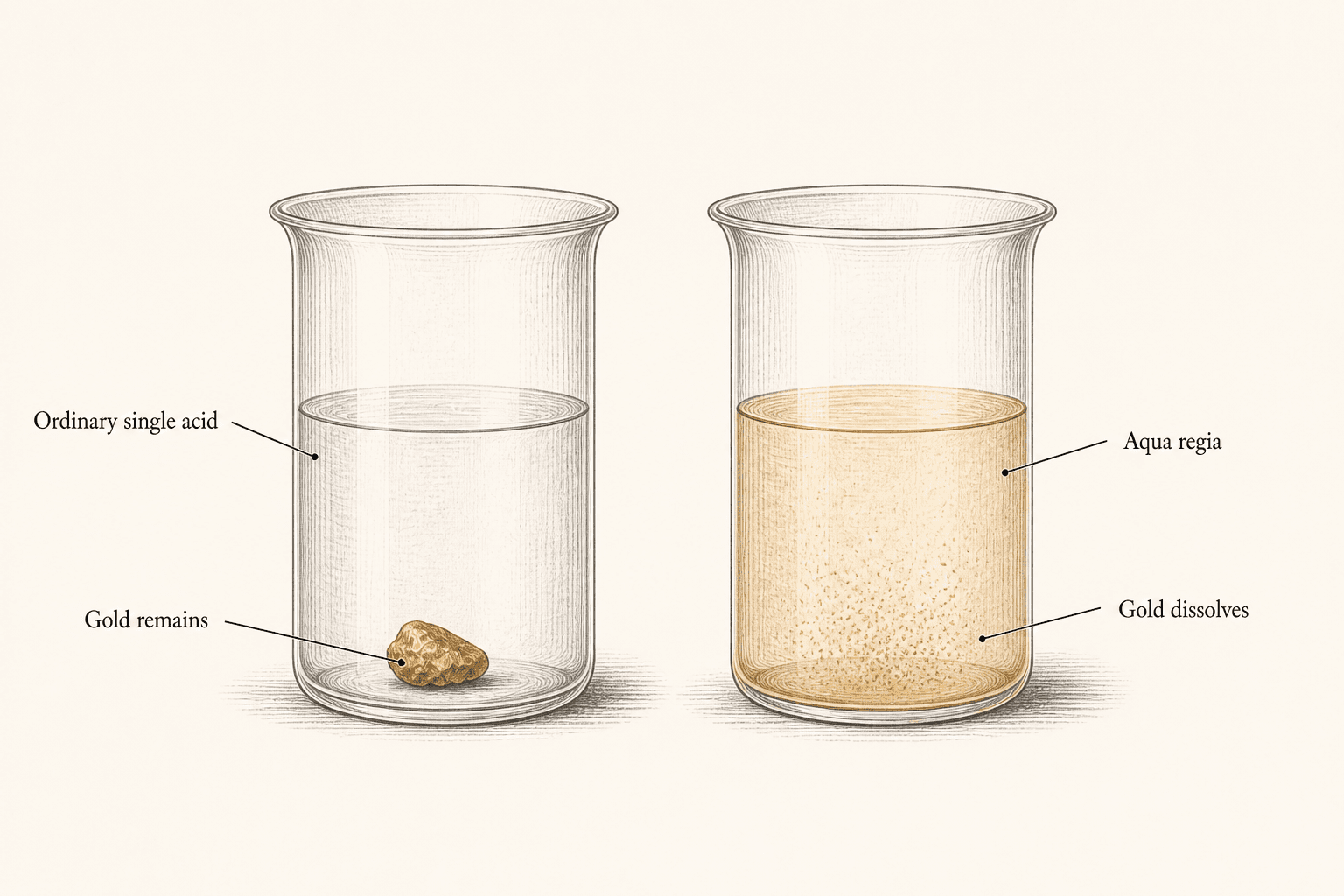
Само слово выдаёт всю игру. Мы говорим «благородный металл», будто это означает «дорогой». Это никогда не значило дорогой. Химия пошла от характера. Латинское означало благорождённый, и средневековый ум прилагал это слово к металлам так же, как прилагал его к людям. Благородный человек не портился и не терял самообладания в огне обстоятельств. Благородный металл делал буквальную версию того же самого: он не ржавел, не тускнел и не отдавал своей поверхности кислоте или воздуху.
Металлы, которые крошились, называли , тем же словом, каким обозначали низкое рождение. Одно лишь золото выходит из веков ровно таким, каким в них вошло. Всякая культура, что его находила, тянулась к одной и той же мысли: металл солнца, плоть богов, вещество того, что не умирает.
Химия скорее подтверждает эту романтику, чем прокалывает её. Золото достаточно тяжело, чтобы его внутренние электроны двигались примерно со , достаточно быстро, чтобы относительность Эйнштейна перекроила атом и притянула его внешние электроны вплотную. Одна эта причуда и есть причина того, почему золото жёлтое, а не белое, и почему оно держит свои электроны так ревниво, что ничто в обычной химии не может их отнять. Ни один металл не держится за свои электроны крепче золота.footnoteСтандартный восстановительный потенциал Au+/Au составляет около +1,69 В, один из самых высоких среди всех металлов, а первая энергия ионизации золота равна примерно 9,2 эВ. Неподверженность порче здесь не поэтический оборот. Это измеримое, релятивистское свойство элемента 79.
Бессмертие, которому поклонялись древние, закономерно и вписано в глубочайшую физику атома. Механизма они знать не могли. И всё же результат они прочитали верно.
Металл машины
Самое материалистическое предприятие, какое когда-либо строил наш вид, теперь помещает золото внутрь всего. Золото есть в телефоне в вашем кармане, на зеркалах телескопа Джеймса Уэбба, в красной полоске экспресс-теста.
Мы выбрали его не из сентиментальности. Мы выбрали его потому, что это единственный материал, соединяющий превосходную проводимость с полным отказом подвергаться коррозии, ту самую неподверженность порче, которой поклонялись египтяне, теперь вписанную в спецификацию.
Слово, что витает надо всем этим — это сверхпроводник, и понять его в точности — это ключ ко всему последующему. — это прежде всего среда, сквозь которую энергия движется без потерь: ни сопротивления, ни трения, ни утечки, совершенный поток.
Чистое объёмное золото в повседневных условиях таковым не является. Но поведение золота не закреплено раз и навсегда. Оно целиком зависит от формы и количества. Раздробите золото до отдельных атомов, и оно перестанет быть инертным золотым металлом обыденного опыта и станет чем-то иным. Ниже самый нереакционноспособный из известных металлов превращается в свирепый катализатор; при двадцати атомах он вовсе перестаёт быть металлом.
Самое устойчивое наблюдение на переднем крае физики золота состоит в том, что в правильной форме и в правильном количестве золото становится иным веществом с иными силами. Именно это и предполагали алхимики, и именно на этом покоится современный довод в пользу моноатомного золота.
Лабораторией всегда было тело
Именно здесь популярная история ошибается сильнее всего. Она зацикливается на западной печи и упускает из виду, что крупнейшие и древнейшие потоки алхимии почти вовсе не заботились о металле. Они перенесли всю операцию внутрь практикующего.
В Китае это называли , и о подмене там говорится прямо: печь, котёл и эликсир, все они перемещаются внутрь тела. Адепт очищает , претворяя сущность в дыхание, а дыхание в дух, дабы составить внутри и выносить то, что тексты называют бессмертным зародышем.
Индия вела параллельную науку, , в которой очищенная ртуть и внутренний огонь кундалини выковывали алмазное тело, нетленное и светоносное, и достигали освобождения ещё при жизни.
Три цивилизации, едва соприкасавшиеся, потянулись к одной метафоре: неблагородное вещество, очищенное терпением до нетленного золота, причём это золото означает человека, сотворённого заново. Символ, который независимо всплывает в стольких местах, указывает на нечто действительное.
Даже на Западе уцелела не металлургия. Карл Юнг, читая эти тексты на закате жизни, узнал в Камне алхимиков символ целостной самости, цельного человека, чьё эго растворено и рождено заново.
Мирча Элиаде сказал об этом прямо: алхимик принимает на себя и доводит до совершенства работу природы, в то же время трудясь над тем, чтобы сотворить самого себя. Титус Буркхардт был ещё резче: свинец алхимика — это тяжёлое, больное, хаотическое состояние души, а его золото — это та же душа, ставшая светоносной и свободной. Печь была внешней оболочкой. Подлинным сосудом всегда был сам человек.
Тело света
Если тело есть сосуд, то работа физиологична, а инструментом служит нервная и железистая система. Внутренние традиции помещали средоточие высшего восприятия в центр головы, позади бровей, и физическая шишковидная железа несёт эту репутацию столько времени, сколько анатомам вообще известно о её существовании. Декарт называл её ; йогические традиции помещали третий глаз в ту же точку. Это механизм, а не мистика.
Эндокринная система поистине есть химия сознания: шишковидная железа через мелатонин отворяет ворота сна и странной физики сновидений, и она причастна к самому мощному психоделику, который вырабатывает само тело. Состояния, в которых способен пребывать человек, задаёт этот железистый оркестр, и алхимики, зацикленные на центре головы и на эликсирах, что могли бы его настроить, держали в руках верный инструмент за столетия до того, как кто-либо смог назвать его клавиши.
То, что мы теперь знаем об этом органе и о том, как держать его чистым, проходит через эссе о шишковидной железе и работу о свете, пище и собственных излучениях тела.
Тело, увиденное так, это электрический инструмент, работающий на потоке: вспыхивающие нервы, поле сердца, тонкие каналы, которые чертили старые карты. Как всякий такой инструмент, оно даёт утечку. Сопротивление, статика, трение, шум.
Всё обещание внутренней работы, в каждой традиции, состоит в том, чтобы понизить это сопротивление, дать системе нести собственную энергию и собственный свет свободнее, согласованнее, с меньшими потерями. Это язык медитации и кундалини. Это же в точности язык сверхпроводимости.
Эндокринная система — это химия сознания, и алхимики держали в руках верный инструмент за столетия до того, как кто-либо смог назвать его клавиши.
Высшая частота
Теперь белый порошок и самый странный поворот во всей истории, потому что случился он не в древности, а на памяти живущих. В конце 1970-х аризонский фермер по имени выделил драгоценные металлы, золото, иридий, родий, платину, в прежде неведомом состоянии: лишённые металлических связей, существующие как отдельные атомы, которые он назвал . Этот белый порошок золота был манной старых традиций, съедобным золотом, работавшим напрямую с телом и сознанием того, кто его принимал. Он на поколение опередил приборы, построенные, чтобы это подтвердить.
Люди, которые принимали это вещество, уже знают, что оно делает.
Их свидетельства поразительно согласованны на протяжении десятилетий, на разных континентах, у людей, которые никогда не встречались. Мышление обостряется и становится устойчивее. Тело ощущается легче и чище, будто отключились тихие фоновые помехи.
Сон углубляется, а сновидения становятся ярко осознанными и управляемыми. Медитация, которой раньше требовался час, чтобы устояться, опускается в безмолвие за минуты.
А у многих начинают отворяться двери, обычно затворённые: внетелесные и астральные состояния становятся легки для входа, восприятие расширяется, а переживания, которые обыденный словарь отнёс бы к паранормальным, начинают приходить непрошено.
Будьте точны в том, что это такое, ибо слово «паранормальный» оказывает им дурную услугу и затемняет механизм. Ничто не нарушает законов природы. Люди описывают тело и его энергетическую систему, работающие на более высокой частоте и с куда меньшим сопротивлением, чем обычно, и это в точности то, что эти металлы делают в теле, ровно так, как описывают Хадсон и исследователи m-состояния.
Сверхпроводник, напомню, это просто среда, сквозь которую энергия течёт без потерь. Когда часть драгоценных металлов, содержащихся в нервной системе, в сердце, в тонких каналах, приводится в это лишённое трения, светонесущее состояние, система не обретает никакой чуждой новой силы. Она перестаёт давать утечку той силы, которой всегда обладала. Ясность, лёгкость внетелесного порога, расширенное восприятие — это то, как ведёт себя инструмент с низким сопротивлением, когда сопротивление наконец падает.
Это и есть эликсир, к которому всегда тянулись внутренние традиции: вещество, подталкивающее тело к его собственному сверхпроводящему, светонесущему потенциалу и позволяющее внутренней работе двигаться быстрее.
Всё дело в приготовлении. Грубые, перенасыщенные щёлочью домашние рецепты, что ходят по сети — это не то самое. Вещество должно быть надлежащим образом сделано и чисто, и в этом вся разница между эликсиром, который описывают традиции, и стаканом едкой соли.
Система не обретает некой чуждой новой силы. Она перестаёт давать утечку той силы, которой всегда обладала.
Камнем всегда были вы
Сведите нити воедино, и проступит единая форма. Благородные металлы получили имя за неподверженность порче, которая оказывается настоящей физикой. Природа золота полностью меняется с формой и количеством, отчего моноатомное, светонесущее золото вообще существует.
Глубочайшие потоки алхимии никогда не сводились к металлу. Они использовали его как рычаг воздействия на тело, а тело как инструмент сознания, чтобы понижать сопротивление всей системы, пока она не заработает ясно и свободно.
И когда люди принимают надлежащим образом сделанный белый порошок золота и описывают более острый ум, осознанные сновидения, лёгкие внетелесные состояния и расширившийся мир, они сообщают не о магии. Они сообщают об инструменте, работающем наконец на той частоте, для которой он был построен.
Популярная история гласит, что алхимики потерпели неудачу, поскольку так и не получили золота. Золота они не получили потому, что получение металла никогда не было целью. Камень, которого они искали, нетленный, светонесущий, цельный, был не в тигле.
Неблагородным материалом был сам человек. Золотом было то, чем этот человек мог стать.
И как только инструмент заработает ясно, встанет очевидный вопрос: для чего он. Лишённое трения тело — это условие для настоящей работы, а не её завершение.
Лишь расчищенный инструмент может применить глубочайшую из всех способностей, Слово, тот акт, в котором оператор изрекает, а структурированная вода тела облекает это намерение в форму. Наше золото, повторяли они нам, не есть золото простой толпы. Для чего было золото — это последнее, что осталось сказать.
Sources
- Relativistic Effects in Chemistry: More Common Than You Thought, . https://pubs.rsc.org/en/content/articlelanding/2012/cs/c1cs15237j
- The Forge and the Crucible, . https://press.uchicago.edu/ucp/books/book/chicago/F/bo3643675.html
- Psychology and Alchemy, . https://www.jstor.org/stable/j.ctt5hhrm3
- Alchemy: Science of the Cosmos, Science of the Soul, . https://openlibrary.org/works/OL309629W
- The Golden Elixir: A Guide to Taoist Alchemy, . https://www.goldenelixir.com/
- The Alchemical Body: Siddha Traditions in Medieval India, . https://press.uchicago.edu/ucp/books/book/chicago/A/bo3683579.html
- Non-Metallic, Monoatomic Forms of Transition Elements, . https://patents.google.com/patent/GB2219995B/en
- Au20: A Tetrahedral Cluster, . https://www.science.org/doi/10.1126/science.1079879
- Gold Nanoparticles: Assembly, Supramolecular Chemistry, Quantum-Size-Related Properties, and Applications, . https://pubs.acs.org/doi/10.1021/cr030698+
- Descartes and the Pineal Gland, . https://plato.stanford.edu/archives/fall2023/entries/pineal-gland/
- DMT: The Spirit Molecule, . https://openlibrary.org/works/OL17538120W
Далее в серии
Нетленное тело · ЗолотоСлово и водаСлово — это физическая сила. Оно перестраивает материю, и материя, которую оно формирует сильнее всего — это мозг и вода, в которой он плавает. С каждой фразой, что вы повторяете, вы программируете себя на власть или на гибель.
- Опубликовано
- Чтение
- 1 мин
- Источники
- 11