
Сексуальная трансмутация
Самый концентрированный творческий материал, какой производит тело, спинальный канал, по которому он может подняться, и дисциплина, превращающая влечение в результат.
Никола Тесла запатентовал двигатель переменного тока в тридцать два года, шестьдесят лет спал по три часа в сутки и ни разу за всю жизнь не растратил ту единственную способность, которую большинство людей разряжает, так ни разу и не спросив, для чего она дана. Когда его спросили об этом в конце карьеры, он ответил прямо: он не может назвать многих великих изобретений, сделанных женатыми людьми. Он не шутил. Он описывал то, как всё устроено.
Перечень со всех сторон смыкается вокруг одной и той же точки. Ньютон, целомудренный всю жизнь. Леонардо да Винчи, целомудренный всю жизнь. Бетховен, по большей части тоже. Будда после своего просветления. Кант, Паскаль, Кьеркегор, Ницше.
И эта закономерность никогда не была мужской. Хильдегарда Бингенская управляла монастырём и изнутри пожизненного обета целомудрия создала энциклопедический свод музыки, медицины и визионерского богословия. Флоренс Найтингейл отказала своим женихам и назвала брак, от которого отвернулась, своего рода самоубийством собственного призвания. Тереза Авильская реформировала орден и написала его глубочайшие мистические тексты из той же дисциплины.
Мужчины и женщины, переформировавшие сами категории человеческого знания, почти без исключения выстраивали дисциплинированные отношения с глубочайшим влечением тела. Эта закономерность не совпадение и не подавление. Это сбережение, приложенное к самому концентрированному творческому материалу, какой несёт в себе тело.
И сам этот материал не принадлежность одного пола. У мужчины это семя. У женщины это яйцеклетка, самая крупная одиночная клетка, какую строит человеческое тело, около десятой доли миллиметра в поперечнике, ровно на границе того, что различает невооружённый глаз, в десятки тысяч раз объёмнее сперматозоида, который с ней встречается.footnoteЧеловеческая яйцеклетка — это самая крупная клетка тела, примерно 0,1 мм в диаметре, у самого предела видимости невооружённым глазом, тогда как сперматозоид среди самых малых; по объёму яйцеклетка превосходит один сперматозоид в десятки тысяч раз. Moore, K. L., Persaud, T. V. N., Torchia, M. G., The Developing Human, Clinically Oriented Embryology (11th ed.), гл. 2.
Женщина рождается, уже держа в себе каждую яйцеклетку, какую когда-либо понесёт, и выпускает за всю жизнь лишь несколько сотен, тогда как мужчина производит семя без остановки.footnoteЖенщина рождается со всем своим запасом ооцитов, примерно от одного до двух миллионов при рождении, убывающим до нескольких сотен тысяч к половому созреванию, из которых овулируют лишь около четырёхсот или пятисот. Baker, T. G., A quantitative and cytological study of germ cells in human ovaries, Proc. R. Soc. Lond. B 158 (1963), 417-433.
Две анатомии, один принцип: самый концентрированный творческий материал, какой производит тело, и единственный вопрос, растрачен ли он у нижних врат или сбережён и поднят.
Растрать семя вниз, и получишь ту жизнь, какую получает большинство. Направь его вверх, и получишь нечто совсем иное.
То, что восходит, когда сексуальную силу удерживают и направляют, а не рассеивают, имеет имя, которому по меньшей мере три тысячи лет, размеренный путь через тело и гормональный ответ, приходящий в течение примерно недели. Современная среда делает эту дисциплину труднее, чем в любой прежний момент человеческой истории. Каждая её часть есть механизм, и каждая её часть есть рычаг.
Что йогическая традиция знала всегда
Средоточие сексуальной силы находится у основания позвоночника. Йогическая традиция называет дремлющую энергию, свёрнутую там, , силой змеи. Растраченная по нижним каналам, она следует тем путём, каким следует всякое животное тело: наружу, к размножению, к следующей ожидаемой награде, к тому рассеянию, которым природа поддерживает продолжение вида. Сбережённая, в теле, достаточно дисциплинированном, чтобы её удержать, та же сила начинает восходить.
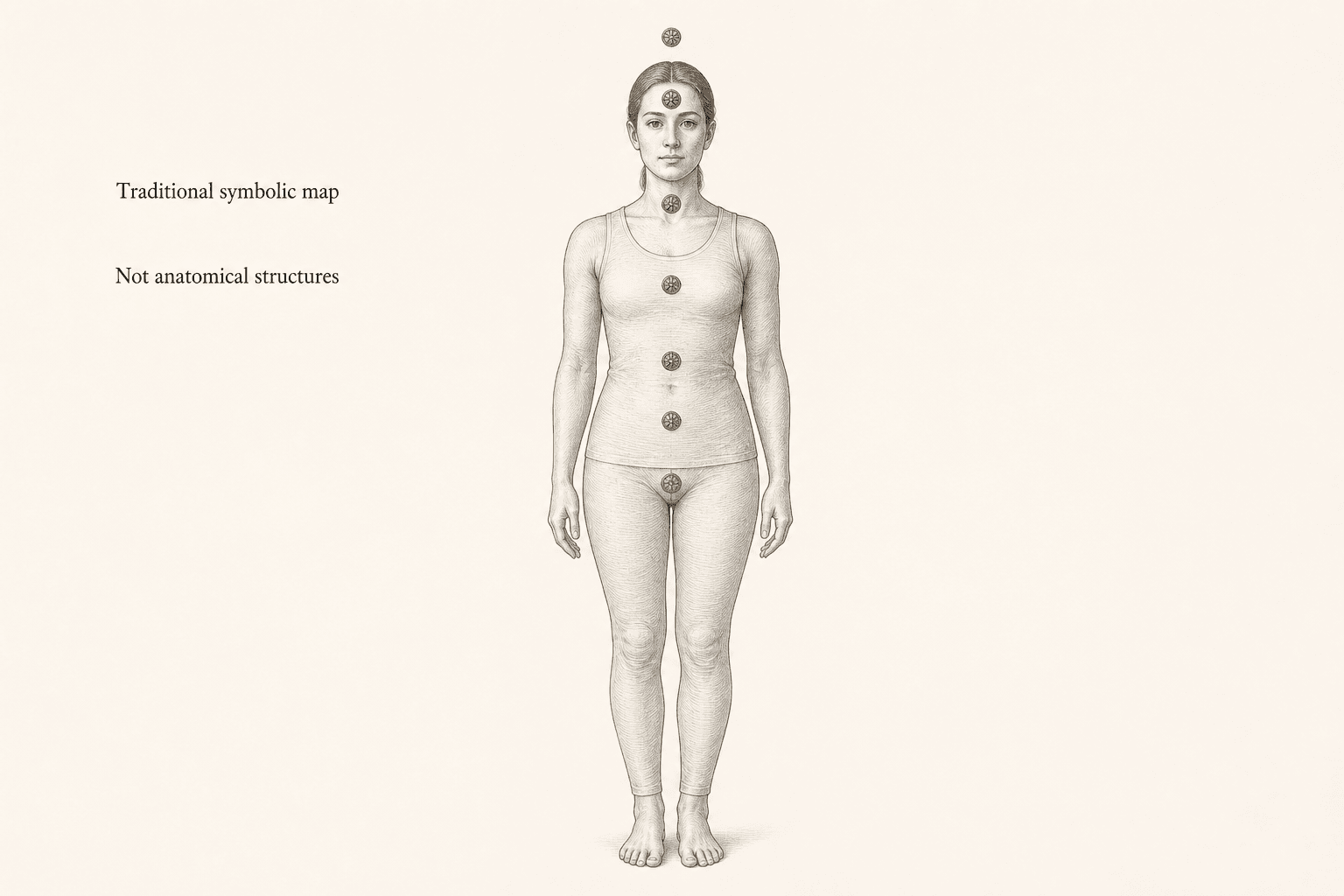
Путь, который она избирает, есть , центральный канал позвоночника. Восходя, она проходит сквозь семь врат сознания, каждые из которых есть центр в теле и набор способностей ума. Это семь . Эта карта единообразна в йогической, тантрической, даосской и во многих более древних герметических традициях, и внутренний опыт, о котором сообщают практикующие, идущие этим путём, совпадает с картой. Картография стандартна.
Пройди их снизу вверх. Каждые врата — это область тела, железа и способ быть в мире, и обычно уже с другого конца комнаты видно, на каких из них живёт человек.
Муладхара, корень
Основание позвоночника, у промежности. Красный. Земля. Связанная железа — надпочечники. Кундалини лежит здесь в своей латентной форме, и у большинства людей она оттуда ни разу не шевельнётся. Способности — выживание, безопасность, заземление. Когда они затворены и энергия пригвождена к основанию, преобладающее чувство — страх. Когда они отворены, ты идёшь по миру, не вздрагивая перед ним.
Свадхистхана, сакральная
Ниже пупка. Оранжевый. Вода. Гонадная эндокринная линия. Это те врата, сквозь которые энергия должна подняться, и те врата, на которых большинство современных людей её теряет. Способности — сексуальность, наслаждение, творчество. Порнографическая индустрия и алгоритмическая лента устроены так, чтобы удерживать энергию пригвождённой к этим вратам, растрачиваемой снова и снова и никогда не восходящей. Покори их, проведи энергию насквозь вместо того, чтобы дать ей вытечь, и та творческая сила, которой ведают эти врата, становится доступной для высших способностей. Таков подлинный механизм того, что прежние авторы называли творческой сублимацией.
Манипура, солнечное сплетение
Над пупком, у диафрагмы. Жёлтый. Огонь. Поджелудочная железа и пищеварительные органы. Способности — воля, свобода действия, личная сила. Отвори эти врата, и ты перестанешь извиняться за то, что занимаешь место. Огонь третьей чакры есть то, что удерживает дисциплину на протяжении лет.
Анахата, сердце
Середина груди. Зелёный. Воздух. Вилочковая железа. Способности — любовь, сострадание, связь. Это первые врата за пределами трёх нижних и первые, на которых энергия начинает ощущаться качественно иначе. Ниже сердца работа — это по большей части работа с влечением. У сердца она становится работой с присутствием.
Вишуддха, горло
Горло. Синий. Эфир. Щитовидная железа. Способности — истина, голос, выражение. То, что ты говоришь, обретает вес у этих врат. Люди могут тебя услышать. Ложь, которую человек говорит самому себе, пока работают нижние врата, сгущается в горле и закрывает его; дисциплина её истончает.
Аджна, третий глаз
Между бровей, глубоко в центре черепа. Индиго. Средоточие шишковидной железы. Способности — интуиция, прозрение, видение. Традиционное имя — третий глаз, потому что глаз, отворяющийся здесь, видит насквозь, в устройство вещей, а не только в их поверхность. Йоги, прошедшие этот путь, описывают буквальное отворение восприятия у шестых врат.
Сахасрара, макушка
Темя. Фиолетовый, или чистый белый, или отсутствие цвета. Гипофиз. Способность — само сознание, нераздельное. Когда энергия достигает этих врат, практикующий входит в самадхи, и отношение между личным «я» и тем, что больше его, меняется. Это и есть цель дисциплины на её пределе.
Почему большинство современных людей не способны ничего из этого ощутить
Войди в любой крупный город и посмотри на его население. Энергия пригвождена ко вторым вратам, почти повсеместно. Глаз полуприкрыт. Осанка обрушивается вперёд у грудины. В лице та плоскость, какая бывает у человека, расходовавшего способность так долго, что он уже не помнит, что она была способностью. Четырёх верхних чакр словно и не существует. Третий глаз тёмен.
Две причины, и они усугубляют друг друга.
Первая — насыщенность зрительной среды. Глаз человека в 2026 году непрерывно поливается сконструированными сексуальными образами такой интенсивности, против которой у предковой нервной системы нет защиты. Влечение возбуждается весь день, каждый день, стимулами более мощными, чем любая встреча в естественном мире. Энергия растрачивается прежде, чем может подняться. Пригвождённая ко вторым вратам, энергия вообще ни разу не доходит до пяти верхних.
Вторая — кальцификация самой шишковидной железы. Малый орган в центре мозга, соответствующий шестой чакре, твердеет с возрастом почти у каждого взрослого в индустриальном мире. Фтор в воде, бромиды в пище, хронический стресс, хронический недосып, воздействие экрана, подавляющее выработку мелатонина. К четвёртому десятилетию третий глаз минерализуется наглухо.
Протокол, обращающий это вспять, изложен полностью в эссе о декальцификации шишковидной железы, и он есть предпосылка всего, что следует здесь далее. Энергия не может достичь врат, запечатанных кальцием.
Гибельные последствия рассеяния
Современный медицинский голос называет сексуальное рассеяние безвредным. Он ошибается. Цена реальна и велика. Просто она распределена по достаточному числу областей, чтобы ни одна отдельная специальность не зафиксировала полной картины.
Вот что небрежная разрядка вытягивает из тебя всякий раз:
- Силу в утренний час. Чистая ясность первых девяноста минут дня, то окно, в котором всегда совершалась великая работа, есть первое, что забирает обрушение пролактина. Человек, разряжающийся ночью, просыпается не с тем же умом. Он просыпается с его более тусклой, более медленной, более подавленной версией, и эта разница накапливается на протяжении года. Всплеск пролактина, следующий за оргазмом, не мужское событие, у женщин измеряли столь же крутой подъём, и потому каждая цена, названная в этом разделе, написана для обоих тел.footnoteExton, M. S. et al., Cardiovascular and endocrine alterations after masturbation-induced orgasm in women, Psychoneuroendocrinology 24(3) (1999), 319-337. У женщин пролактин резко поднимался после оргазма, тот же послеоргазменный всплеск, что измерен у мужчин. https://pubmed.ncbi.nlm.nih.gov/10367606/
- Устойчивость внимания. Способность удерживать в уме один трудный вопрос долгое время. Не вздрагивать перед ним. Возвращаться к нему час за часом. Эта способность, основа всякого рода серьёзной работы, утекает сквозь вторые врата.
- Жизнь сновидений. Яркие, повествовательно связные, изредка осознанные сны, какие чистая нервная система производит в третьей четверти ночи. Сновидческая жизнь заядлого расточителя серая, отрывочная, незапоминающаяся, тревожная. Сновидческая жизнь дисциплинированного практикующего цветёт всеми красками. Люди это замечают.
- Присутствие и осанку. То, что другие улавливают за один удар сердца с того мига, как ты входишь в комнату. Человек, который расходует, несёт след каждой разрядки в фактуре лица, глаза, голоса. Человек, который удерживает энергию, несёт это тоже.
- Третий глаз. Самая разрушительная цена в дальней перспективе. Глаз, отворяющийся у шестых врат, не может отвориться вовсе в теле, которое поливает вторые врата из брандспойта каждый день. Интуиция, которая есть врождённое право полноценно действующей нервной системы, замолкает. Большинство людей так и не узнают, чем обладали.
Оглянись вокруг. Поникшая осанка, блуждающий взгляд, неспособность удержать трудную мысль дольше минуты, хроническая фоновая подавленность современного взрослого населения. Это зримый след способности, растрачиваемой у самых нижних её врат, каждый день, на протяжении десятилетий.
Что восходит, когда ты это удерживаешь
Теперь другое направление, по порядку, как оно приходит.
В течение недели утренний час начинает возвращаться. Первые тридцать дней есть отвыкание от дофаминовой петли, в которой работали старые привычки, мучительное примерно в той же форме, в какой мучительно всякое отвыкание. После первого месяца фактура внимания начинает меняться: то, за что ты садишься, впитывает влечение, а не соперничает с ним. После трёх месяцев сны становятся отчётливее. После шести месяцев энергия ощущается как нечто телесное, тепло или ток, который движется в нижней части живота и, постепенно, вверх.
После года чистой дисциплины, с декальцинированным телом и удерживаемым протоколом, верхние врата становятся доступны так, как не были прежде. Интуиция становится громче. Присутствие накапливается. Другие люди прочитывают тебя иначе. Результат работы, накопленный за год, неузнаваем для того, кем ты был, когда начинал.
Исследование 2003 года в Чжэцзянском университете зафиксировало у мужчин чистый всплеск тестостерона на седьмой день воздержания.footnoteПримечание о достоверности источника: статья Jiang et al., первоначально процитированная в подтверждение утверждения о седьмом дне, была отозвана в 2021 году и не является надёжным доказательством. Ближайшее неотозванное исследование на людях изучало эндокринные различия после трёх недель воздержания: Exton, M. S. et al. (2001), "Endocrine response to masturbation-induced orgasm in healthy men following a 3-week sexual abstinence." https://pubmed.ncbi.nlm.nih.gov/11760788/ Гормональная система отвечает в течение примерно недели, и этот измеренный всплеск есть лишь видимая кромка гораздо большего.
Женская эндокринная система живёт по иным часам, цикличным на протяжении месяца, а не восстанавливающимся к седьмому дню, со своим тестостероном и своим либидо, поднимающимися к овуляции, но на сбережение она отвечает по той же логике. Более глубокие способности отзываются дольше в любом теле, и отзываются они на один и тот же образ действия.
Влечение, что построило всё живое, не твоё, чтобы его упразднить. Оно твоё, чтобы его направить.
Дисциплина
есть йогический термин для центральной практики, самое чистое однословное определение всей дисциплины. Буквальный перевод — ходьба в божественном; в живой практике это сбережение и направление сексуальной силы вверх. Брахмачарья не есть воздержание как наказание. Это сознательный выбор сохранить способность для высшего употребления.
Традиция никогда не приписывала эту практику одному полу. Она давала брахмачарини наравне с брахмачари, а сама сила, которую поднимает вся дисциплина, кундалини, свёрнутая у основания всякого тела, носит имя шакти, женского начала. Ничто из того, что следует далее, не принадлежит одному полу.
есть следующий столп. Тело должно быть сосудом, достаточно крепким и чистым, чтобы удержать восходящую энергию. Классические асаны, особенно перевёрнутые позы (стойка на плечах, стойка на голове) и сидячие позы (сиддхасана, падмасана), упражняют именно те каналы, по которым энергии нужно подняться. Тяжёлые многосуставные упражнения делают ту же работу на уровне крупных мышц.
есть дыхание, рычаг, которым энергия перемещается сознательно. Даже десять минут в день попеременного дыхания через ноздри или бхастрики начинают очищать боковые каналы () и освобождать место для того, чтобы центральный канал нёс больше тока.
Медитация есть внимание, самая важная переменная во всей дисциплине. Ум, обученный покоиться в неподвижности, улавливает побуждение к рассеянию в тот миг, когда оно возникает, прежде чем оно каскадом обрушится в тело. Без этого прочие практики не закрепляются.
диета уравновешивает основу. Пресная, умеренная, размеренная еда. Острая, жирная, солёная, изобилующая стимуляторами пища усиливает влечение у вторых врат; рафинированный сахар и сверхпереработанные продукты разгоняют воспаление, которое снижает порог импульсивности. Ешь рано; не нагружай кишечник перед сном. Если эта практика влечёт тебя к вегетарианству, держи её вместе с дисциплиной добавок, изложенной в эссе о смерти почвы и животной пище, иначе основа не выдержит практики.
Взгляд есть отдельный столп. Упражняй глаз. Когда он падает на нечто, вовлекающее вторые врата, не позволяй ему задержаться.
Второй взгляд есть то, что запускает петлю; первый есть биология. Отсекай на втором.
Окружение, в котором ты пребываешь, тоже имеет значение. Будь среди людей, идущих в том же направлении. Влечение трудно удерживать в одиночку в культуре, которая повсюду его расходует.
И работа есть приёмник. Влечению нужна цель, и цель должна быть достаточно требовательной, чтобы принять эту энергию. Выбери вопрос или свод трудов, достаточно великий, чтобы заслужить эти годы.
Традиция считает и то, чего стоит производство самой основы. Классическая ведёт от пищи к млечному соку, к крови, к ткани, к жиру, к костному мозгу и к эссенции, и каждая ступень проносит дальше около половины полученного. Шестьдесят четыре части пищи дают одну часть последней. Это и есть та основа, которую дисциплина сберегает, а работа расходует.
Дуга
Ты не включишь это за один день. Основа создаётся годами, по обе стороны порога. Тот, кто расходовал энергию десятилетиями, не может обратить эту цену вспять за месяц. Тот, кто чисто держит дисциплину десять лет, несёт нечто, чего население вокруг него не распознаёт, но способно почувствовать.
Классический рубеж есть двенадцать лет непрерывной брахмачарьи, после которых, согласно йогическим текстам, практикующий приходит к постижению без дальнейшей работы. Двенадцать лет — это долгий срок. Это также и порядок той дуги, на протяжении которой великая работа имеет обыкновение складываться.
Тесла пронёс двигатель переменного тока от его первого видения в будапештском парке до патентов, осветивших современный мир, через годы единого, нераздельного сосредоточения; Ньютон шёл к «Началам» два десятилетия в Кембридже. Биографии и древние тексты указывают на одно и то же: глубокие результаты отзываются лишь на устойчивое, нерассеянное усилие, удерживаемое на долгом горизонте.
Большинство людей за это не возьмётся. Современная среда устроена так, чтобы в этом удостовериться. Те, кто станет, будут жить в ином теле и ином уме, нежели те, какие предназначал им брандспойт. Энергия, что построила всё живое, есть та энергия, которая, сбережённая и направленная вверх, строит тех людей, которых помнят. Йогические тексты называют очищенную эссенцию, которую она оставляет после себя, .
Эссенция в мозге. Путь вверх по позвоночнику. Но сбережение силы есть лишь половина дела. Ток можно удерживать, и он всё же может утекать, всё же сползать обратно вниз, к вратам, из которых он всегда вытекал, в тот миг, когда внимание ускользает.
Традиции, что нанесли на карту восходящий канал, нанесли рядом с ним и нечто иное: набор телесных печатей, намеренный замок у основания, который оборачивает энергию на саму себя и гонит её вверх по колонне под давлением. Этой печати посвящён «Великий замок», и в ней разница между тем, чтобы просто удерживать заряд, и тем, чтобы его нацеливать.
Sources
- Tesla: Man Out of Time, . https://www.simonandschuster.net/books/Tesla/Margaret-Cheney/9780743215367
- My Inventions, . https://en.wikisource.org/wiki/My_Inventions
- Autobiography of a Yogi (1946 First Edition), . https://www.ananda.org/support/files/2017/11/AYEbookDownload.pdf
- Practice of Brahmacharya, . https://www.dlshq.org/download2/brahmacharya.pdf
- The Serpent Power, . https://openlibrary.org/works/OL8421143W
- Light on Yoga, . https://www.penguinrandomhouse.com/books/85770/light-on-yoga-by-b-k-s-iyengar/
- Endocrine Response to Masturbation-Induced Orgasm in Healthy Men Following a 3-Week Sexual Abstinence, . https://pubmed.ncbi.nlm.nih.gov/11760788/
- The Developing Human: Clinically Oriented Embryology, . https://openlibrary.org/works/OL20706927W
- A Quantitative and Cytological Study of Germ Cells in Human Ovaries, . https://doi.org/10.1098/rspb.1963.0055
- Cardiovascular and Endocrine Alterations after Masturbation-Induced Orgasm in Women, . https://pubmed.ncbi.nlm.nih.gov/10367606/
Далее в серии
Нетленное тело · ОгоньВеликий замокЕсть одно влечение, которое силе воли не одолеть, и потому тело несёт для него аппаратный замок. Три бандхи, великий замок, почему инъякуляция — это ловушка, и почему сбережённому потоку нужно великое дело, чтобы его удержать.
- Опубликовано
- Чтение
- 1 мин
- Источники
- 10