
산소라는 치료법
당신은 하나의 몸이 아니라 삼십 조 개 세포의 군락이며, 거의 모든 현대 질병은 그 세포들이 일하는 조건이 무너진 결과이다. 첫 번째 조건은 산소, Otto Warburg가 암의 뿌리까지 추적해 들어간 그것이다.
당신은 통째로 병들고 통째로 낫는 한 마리의 동물이 아니다. 당신은 대략 삼십 조 개의 인간 세포로 이루어진 군락이며, 그 하나하나가 먹고, 숨 쉬고, 일하고, 스스로를 고치고, 늙고, 죽는 살아 있는 개체이고, 그들의 협력이 너무나 완전한 나머지 바깥에서 보면 그 협력이 한 마리의 생물처럼 보인다. 그들이 지켜 내는 휴전, 그것이 "당신"이다. 이것은 효과를 노린 비유가 아니다. 다세포 생물의 글자 그대로의 구조이며, 한번 그것이 눈에 들어오고 나면 무언가 잘못되었을 때 어디를 들여다볼지가 달라진다.
뒤따르는 모든 것을 끌고 가는 귀결이 여기 있다. 몸이 하나의 커다란 것이라면 건강은 위에서 아래로 몸에 가해지는 것, 곧 환자에게 내려지는 알약 하나, 진단 하나, 시술 하나가 된다. 그러나 몸이 작은 것들의 군락이라면, 건강은 무엇에 가해지는 일이 아니다. 그것은 세포 하나하나에 대해 참이거나 거짓인 하나의 사실이다.
건강한 몸이란 건강한 세포들의 집단, 그 이상도 그 이하도 아니다. 병든 장기란 더는 제 일을 할 수 없게 된 세포들의 동네이며, 대개는 그들이 일하는 조건이 무너졌기 때문이다. 닿아야 할 산소가 모자라고, 노폐물이 너무 쌓이고, 그들이 잠겨 사는 체액의 화학이 어긋난 것이다.
건강한 몸은 건강한 세포들의 집단이다. 병든 장기는 그 세포들이 더는 제 일을 할 수 없게 된 동네이다.
그리하여 건강하게 지낸다는 물음 전체가 더 작고 더 답할 수 있는 하나의 물음으로 무너진다. 이 삼십 조 개의 개체가 제 일을 계속하려면 무엇이 필요한가?
거의 전부가 일하는 조건이다
타고난 망가진 유전자에서 오는 병, 방어선을 압도하는 감염에서 오는 병, 물리적 외상에서 오는 병은 옆으로 치워 두자. 그 셋은 실재하며, 이 글이 다루는 것이 아니다.
남는 것이 그 밖의 전부이다. 꿈쩍도 하지 않는 비만. 수십 년을 관리하면서 한 번도 되돌리지 못한 당뇨. 심장병, 그리고 언제나 알약 한 알이 더 필요한 혈압. 자가면역 질환들. 관절염과 섬유근육통. 편두통, 망가진 장, 도무지 맑아지지 않는 피부, 평생 보충을 받는 갑상선. 약자로 된 이름은 있고 원인은 없는 탈진. 우울과 불안. 알츠하이머와 파킨슨. 그리고 암들.
그 전부가 두 가지 실패이며 오직 두 가지이다. 세포에게 필요한 것이 너무 적게 닿는 것, 그리고 세포를 중독시키는 것이 너무 많이 쌓이도록 방치되는 것. 결핍과 독성. 그 목록의 모든 이름은 그 둘이 한 조직에서 십 년을 보낸 뒤의 모습이다.
이 렌즈는 어디를 볼지 일러 줌으로써 제 몫을 한다. 위에서 내려온 증상이 아니라, 세포가 그 안에서 살아가는 조건을 보라는 것이다.
그리고 세포가 필요로 하는 모든 것 가운데 단 하나는 매초 요구되고, 몇 분 이상 저장될 수 없으며, 떨어지는 그 순간 사업 전체를 멈춰 세운다. 산소가 세포의 에너지이다.
느리게 타는 불
몸이 하는 모든 행동은, 한 번의 심장 박동이든 하나의 생각이든 상처가 아무는 일이든, 단 하나의 분자로 값이 치러진다. 은 세포가 쓸 수 있는 에너지의 단위이며, 당신이 하는 모든 움직임 뒤에 있는 충전식 배터리이다. 그것은 몇 초 안에 찍히고 쓰이므로 몸은 쉬지 않고 그것을 만들며, 음식에서 끌어낸 연료를 가져다 당신이 들이쉬는 산소와 천천히 그리고 신중하게 결합시킨다.
화학은 세 단계로 진행된다. 먼저 해당작용이 세포의 체액 속에서 포도당 한 분자를 쪼개어 약간의 ATP를 내놓으며, 여기에는 산소가 전혀 필요하지 않다. 그다음 세포의 발전소인 안에서, 시트르산 회로, 곧 Warburg 자신의 실험실에서 수련한 사람의 이름을 딴 Krebs 회로가 연료에서 전자를 하나씩 떼어 낸다. 그 전자들은 미토콘드리아 안쪽 막에 늘어선 운반체들의 행렬인 위에 실려, 손에서 손으로 그 줄을 따라 내려가며 단계마다 약간의 에너지를 풀어놓는다.
그 줄의 끝에 산소가 앉아 있고, 여기 있는 모든 것이 이 사실 위에서 돈다. 산소는 , 곧 조립 라인 전체가 다 쓴 전자를 건네는 펼쳐진 손이며, 그 전자를 양성자와 결합시켜 그저 물을 이룬다. 그 손을 치우면 라인은 전자를 둘 곳이 없다. 밀려 정체된다. 멈춘다. 전자가 그 줄을 따라 떨어지며 풀려나는 에너지는 막을 가로질러 양성자를 퍼내고, 되돌아 밀려드는 그 양성자의 물결이 분자 터빈인 ATP 합성효소를 돌려 ATP를 찍어 낸다. 끝에 산소가 없으면 줄을 따라 흐름도 없고, 양성자를 퍼내는 일도 없고, 터빈도 없고, ATP도 없다. 산소를 빼앗긴 세포가 며칠이 아니라 몇 분 만에 죽는 까닭이 이것이다.
그 산수가 호흡에 대한 논증의 전부이다. 완전한 호기성 호흡은 포도당 한 분자당 대략 30에서 32개의 ATP를 낸다.
36에서 38이라는 옛 교과서 수치는 수십 년 전에 아래로 수정되었다. 양성자 누출과 분자를 막 너머로 실어 나르는 비용이 제대로 계산되고 나서였고, 그래서 30에서 32가 정직한 숫자이다.
산소 없는 대비책인 발효는 순수익으로 고작 2개를 낸다. 그것은 같은 한 입의 음식에서 열다섯 배 더 많은 에너지를 끌어내느냐, 아니면 그 십오분의 일로 근근이 버티느냐의 차이이다.
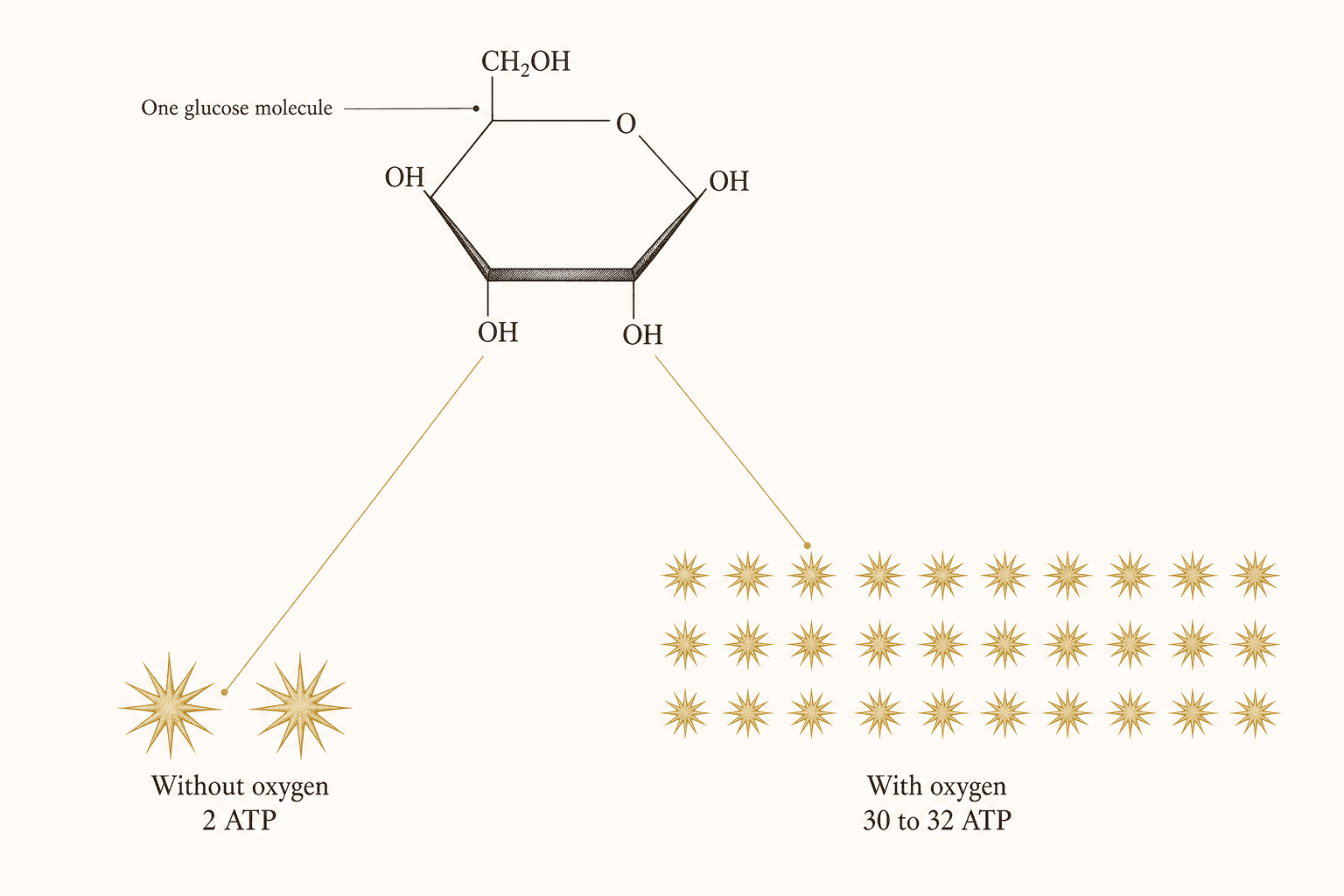
그리고 느리게 타는 불은 헐거운 시가 아니라 정확한 화학이다. 호흡의 알짜 반응, 곧 포도당에 산소를 더해 이산화탄소와 물과 에너지를 내는 반응은 그 포도당에 불을 붙이는 것과 같은 방정식이다.
불은 그 전부를 한꺼번에 열과 화염으로 쏟아 낸다. 세포는 똑같은 연소를 작고 통제되고 붙잡히는 수십 단계로 나누어 돌리며, 에너지를 화염으로 잃는 대신 ATP로 저축한다.
당신은 아주 글자 그대로, 들이쉬는 산소로 음식을 태우고 있다. 다만 아주 천천히, 그리고 의도적으로.
은 건강한 모든 세포가 기본값으로 돌리는 깨끗하고 수율 높은 길이다. 는 포도당을 젖산까지만 절반쯤 분해하는 것으로, 고대의 비상 경로이자 대기에 산소가 여유롭지 않던 시절 생명이 쓰던 길이다. 대부분의 세포는 공기를 빼앗겼을 때에만 그것에 손을 댄다. 한 종류의 세포는 공기가 가득할 때에도 그것을 돌린다.
Warburg와 망가진 숨
독일의 생화학자로 1883년부터 1970년까지 산 Otto Heinrich Warburg는, 1920년대에 모든 암세포가 하고 건강한 세포는 하지 않는 일을 측정했다. 그것은 발효한다. 정상 세포는 산소로 포도당을 끝까지 깨끗하게 태운다. Warburg는 종양 조직이 둘레에 산소가 얼마든지 있는데도 제 포도당의 대부분을 고대의 혐기성 경로로 돌려 젖산으로 발효시킨다는 것을, 마치 모자라지도 않은 공기를 헐떡이며 찾는 것처럼 그런다는 것을 발견했다. 이것이 호기성 해당작용이라고도 불리는 이며, 종양학 전체에서 가장 신뢰할 만하게 관찰된 사실 가운데 하나이다. 그것은 FDG-PET 스캔의 토대 자체인데, 이 스캔이 종양을 밝히는 것은 정확히 종양이 둘레 조직보다 훨씬 빠르게 당을 삼키기 때문이다.
그는 세포생물학의 거인이었다. Hans Krebs가 그의 실험실에서 수련했다.
그 더 넓은 작업의 힘으로 1931년 노벨 생리의학상이 Warburg에게 돌아갔으며, 위원회의 표현으로는 "호흡 효소의 본질과 작용 방식을 발견한 공로"였다. 위에서 묘사한 바로 그 전자전달계의 끝에 앉아 세포의 산소 호흡을 맡는, 철을 품은 효소이다.
이 사람은 숨 쉬는 일을 단 하나의 분자 차원에서 당대 살아 있는 누구보다 잘 이해했다.
그런 다음 그는 정작 중요한 해석을 세웠다.
1966년 Lindau 강연 "The Prime Cause and Prevention of Cancer"에서 그는 그것을 온 힘으로 말했다. "암의 근본 원인은 정상 체세포 안에서 산소 호흡(당의 산화)이 당의 발효로 대체되는 것이다."
Warburg에게 발효는 증상도 기벽도 아니었다. 그것이 바로 그 원인, 곧 호흡 자체에 가해진 상해이자 뿌리에서부터 망가진 세포의 숨이었다.
그 뒤 한 세기의 대부분 동안 주류 종양학은 그 독해를 옆으로 밀어 두고, 암을 거의 전적으로 돌연변이 유전자의 병으로, 곧 세포의 소프트웨어가 한 줄 한 줄 망가진 것으로 뒤쫓았다. 그 탐색은 방대했고, 그 예산이 약속한 치료법을 내놓지 못했다. 지난 이십 년 사이 이 분야는 Warburg가 먼저 본 것으로 돌아왔다. 망가진 대사는 이 병의 각주가 아니라 그 중심이라는 것이다. Thomas Seyfried 같은 연구자들이 이어 가는 현대의 암 대사 이론은 Warburg가 측정한 손상된 호흡을 뿌리의 상해로 삼고, 유전적 혼돈은 더는 숨 쉴 수 없게 된 세포에서 뒤따라 나오는 것으로 읽는다. 그 반대가 아니라.footnoteSeyfried, T. N. (2012). Cancer as a Metabolic Disease: On the Origin, Management, and Prevention of Cancer. Wiley. Warburg의 명제를 되살린 현대의 흐름은 손상된 미토콘드리아 호흡을 이 병의 기원으로, 종양의 유전체 불안정성을 그 하류의 결과로 다루며, 유전자를 독으로 죽이는 데 그치지 않고 발효를 굶기는 쪽으로 예방과 치료의 틀을 다시 짠다. 그것은 종양이 광적으로 당을 태우는 것을, 숨 쉬는 능력을 잃고 존재하는 가장 오래된 비상 연료로 되돌아간 세포의 서명으로 읽는다.
암은 세포가 숨 쉬기를 멈추는 곳에서 시작된다. Warburg는 1966년에 그것을 분명히 말했고, 세월은 그에게 너그러웠다.
그러니 여기 이 렌즈는 무른 렌즈가 아니다. 건강이 세포가 일하는 조건이라면, 그 가운데 가장 중요한 단 하나의 조건인 산소는 웰니스의 장식이 아니다. 그것은 한 노벨상 수상자가 호흡 효소의 차원에서 그은, 숨 쉬는 세포와 발효하는 세포 사이의 선이다. 군락이 계속 숨 쉬게 하는 것은 Warburg가 평생을 바쳐 그 모든 변수 가운데 가장 깊은 것임을 증명한 그 하나의 변수를 돌보는 일이다.
암이 있는 사람에게 따라 나오는 것
지침 하나가 기전에서 곧바로 떨어져 나오고, 오늘 당장 실행할 수 있다. 발효하는 세포는 포도당으로 돌아가며 그 밖의 것으로는 거의 돌아가지 못한다. 건강한 세포처럼 지방으로 물러설 수도 없고 케톤으로 물러설 수도 없다. 그 둘을 태우는 기계장치가 바로 이미 손상된 미토콘드리아의 기계장치이기 때문이다. 그것은 의존이고, 의존은 지렛대이다.
그러므로 진단을 안고 있는 사람은 몸이 허락하는 한 탄수화물과 당을 최대한 줄여야 하며, 그것을 옆에 붙은 생활 습관 메모가 아니라 치료의 일부로 다루어야 한다. 설탕이 먼저 가고 통째로 간다. 꿀과 시럽과 과일 주스도 포함되는데, 과일 주스란 섬유질을 빼낸 설탕이다. 그다음은 삼킨 지 몇 분이면 포도당이 되는 정제 전분들, 곧 빵과 파스타와 흰쌀과 감자와 아침 시리얼이다. 남는 것은 지방과 단백질과 전분이 적은 채소이며, 이는 바르부르크의 발견 위에 세워진 케톤 연구가 실제로 시험하고 있는 것과 가깝다. 들어가지 않은 포도당 1그램은 발효가 받지 못한 1그램이고, 건강한 세포는 아무것도 잃지 않는다. 그것들은 아직 숨을 쉴 수 있기 때문이다.
종양이 당을 발효시키는 것은 더 이상 숨을 쉴 수 없기 때문이다. 그것은 PET에서 종양을 찾아내는 방법이기만 한 것이 아니다. 그것은 손을 대야 할 의존이다.
이것은 종양 치료와 나란히 가는 것이지 결코 그것을 대신하는 것이 아니며, 산소 작업 뒤가 아니라 그 곁에 놓인다. 둘은 같은 방향으로 움직인다. 세포가 쓸 수 있는 산소를 올리고, 발효가 돌아가는 연료를 내리는 것이다.
현대의 몸이 공기에 쪼들리는 까닭
산소가 세포의 에너지라면, 만성적인 산소 결핍은 삼십 조 개의 작은 책상에서 한꺼번에 벌어지는 만성적인 에너지 결핍이다.
현대의 삶은 그것을 조용하고 빈틈없이 마련해 둔다. 그 원인들은 실내에 갇히고, 앉아 지내고, 오염되고, 과도하게 시달리는 삶의 평범한 결이며, 켜켜이 쌓인다.
- 흡연은 혈액을 일산화탄소로 채우는데, 일산화탄소는 헤모글로빈에 산소보다 이백 배 더 단단히 결합한다. 그러면 적혈구는 이미 자리가 찬 채로 돌며, 한 바퀴마다 조직으로 훨씬 적은 산소를 실어 나른다.
- 베이핑, 그리고 들이마신 미세 입자와 용제는 폐의 섬세한 가스 교환 표면을 붓고 뻣뻣하게 만들어, 숨 한 번에 피로 건너가는 산소가 줄어든다.
- 도시의 대기 오염, 특히 PM2.5 미세 입자와 지표 오존은 폐에 염증을 일으키고 폐가 받아들일 수 있는 산소의 양을 떨어뜨린다.
- 정제 탄수화물과 종자유와 낮은 철분으로 이루어진 형편없는 현대 식단은 피를 걸쭉하게 하고 염증을 일으키며, 산소 운반 기계의 핵심에 있는 바로 그 철분을 헤모글로빈에서 굶긴다.
- 몸을 쓰지 않는 것은 폐활량을 줄이고, 순환을 늦추고, 미토콘드리아와 모세혈관의 밀도를 낮춘다. 그것들은 움직임이 요구할 때에만 몸이 지어 올리는 기계이다.
- 만성적인 얕은 가슴 호흡, 곧 책상에 매인 스트레스 양상은 폐의 윗부분만 환기시키고, 교환의 대부분이 일어나는 산소 풍부한 아래쪽 폐엽은 거의 건드리지 않는다.
- 답답하고 환기가 모자라며 이산화탄소가 많은 실내 공간, 이제 깨어 있는 하루의 대부분을 신선하게 움직이는 공기에서 떨어져 보내는 곳이다.
- 만성 스트레스와 그것이 몰고 오는 급한 과호흡은 이산화탄소를 날려 보내, 헤모글로빈이 제 산소를 조직으로 내놓는 대신 움켜쥐게 만든다.
- 나쁜 자세와 약한 호흡근은 애초에 폐가 얼마나 펴질 수 있는지를 기계적으로 제한한다.
- 흐트러진 잠과 치료받지 않은 수면무호흡은 밤마다 몇 시간씩 혈중 산소 포화도를 떨어뜨린다.
열 가지 원인, 모두 현대적이고, 모두 흔하며, 온전히 산소가 채워진 몸을 한 번도 느껴 본 적이 없어 견줄 기준이 없는 사람에게는 대부분 보이지 않는다.
그 하나하나에 대한 첫 수는 공짜이고 구조적이다. 몸을 움직이고, 아래쪽 폐 깊숙이 숨을 들이고, 창을 열고, 자세를 고치고, 피 속의 철분을 지켜라.
몸은 산소 전달의 기계를 요구받을 때에만 지어 올리고, 요구받지 않으면 그것이 시들도록 둔다. 어떤 실천보다도, 어떤 기구보다도, 잔에 떨어뜨리는 어떤 방울보다도 앞서 이것이 바닥이며, 대부분의 사람은 그 바닥에 한 번도 서 본 적이 없다.
피, 그리고 피를 맑게 지키는 간
이 모든 것에는 오해가 하나 접혀 들어가 있고, 그 오해가 사람들이 도달할 수 있다고 믿는 산소 공급의 상한을 조용히 눌러 둔다. 그 가정은 피 속의 산소가 폐에서 결판난 확정된 무엇이라는 것, 숨 쉬는 일이 그 전부라는 것, 정상적인 가슴으로 하는 정상적인 한 번의 호흡이 당신이 앞으로 얻을 산소 전부를 건네준다는 것이다. 폐가 산소를 피로 건너보내는 곳이라는 부분은 사실이다. 그러나 피가 실제로 얼마나 많은 산소를 나르는지, 그리고 가장 가는 혈관의 저 끝에 있는 세포에게 그중 얼마가 닿는지는 폐의 일이 끝난 한참 뒤에 결판나며, 피 자체의 질과 피가 지나는 관의 상태가 그것을 정한다. 그리고 그 둘은 무엇보다도 몸이 얼마나 깨끗한가에 좌우된다.
관부터 보자. 로 더께가 앉고 뻣뻣해진 동맥은 깨끗하고 유연한 동맥보다 적은 피를 나르며, 적은 피는 그 협착의 하류에 있는 모든 것에게 적은 산소이다. 이것이 심혈관 의학 전체를 세포의 관점에서 읽은 것이다. 석회화되고 플라크가 안벽을 덮은 혈관은 천천히 공기를 굶고 있는 세포들의 군락이다. 그다음은 피 자체이다. 몸이 미처 치우지 못한 찌꺼기로 실린 혈류는 걸쭉하고, 염증이 일고, 끈끈해서 산소를 나쁘게 나르고 나쁘게 내놓으며, 조직으로의 실제 인계가 일어나는 가는 모세혈관을 기어서 지난다. 쉬운 말로, 독성은 당신이 아무리 충실히 숨을 쉬어도 안에서부터 천천히 당신을 질식시킨다.
바로 여기에 간이 서 있다. 간이 피를 맑게 지키는 장기이기 때문이다. 장에서 돌아오는 거의 모든 방울이 순환에 다시 합류하기 전에 간을 지나며 분류되고, 해독되고, 바로잡힌다.
Andreas Moritz는 The Amazing Liver and Gallbladder Flush에서, 현대의 간이 조용히 울혈되어 있다고 주장한다. 그 안의 수천 갈래 작은 담관이 세월에 걸쳐 굳은 침착물, 곧 간내 결석으로 막혀 간이 맡은 수백 가지 일을, 무엇보다 피를 묽고 맑게 지키는 능력을 옥죈다는 것이다.
울혈된 간은 걸쭉하고 독성이 있고 산소가 모자란 혈류의 상류 원인이며, 그것을 비워 내면 피는 다시 맑게 흐른다. 이 정화를 하는 사람들은 기전이 예측하는 바로 그것을 보고한다. 간의 막힘이 풀리고 피가 묽어지면서 피가 나르는 산소가 느낄 수 있을 만큼 가파르게 오르고, 울혈된 몸의 둔탁한 배경 질식감이 걷힌다는 것이다.
정화 자체, 곧 사과주스 준비와 엡솜 소금과 올리브유는 간과 담낭 정화에 적어 두었으며, 그것이 산소에 관한 글에 제자리를 얻는 까닭은 담즙과 결석 아래에 있는 그것의 본질이 바로 그것이기 때문이다. 당신은 강을 준설해 공기가 다시 그 강을 따라 내려가게 하는 것이다.
노폐물에 잠기고 제 영양소와 산소를 빼앗긴 세포는 에너지를 만들 수도, 스스로를 고칠 수도, 제 선을 지킬 수도 없으며, 그런 세포로 가득한 조직이 우리가 나중에 진단과 이름을 붙이는 것이다.
길은 반대 방향으로도 꼭 그만큼 분명하게 나 있다. 독성 부하를 치우고, 영양소를 대고, 산소를 되살리면 그 병을 키운 조건이 더는 거기에 없으며, 그리하여 깨끗한 지형을 돌려받은 몸은 그것이 여태 아는 단 하나의 일을 하니, 곧 낫는다. 병을 바깥에서 뒤쫓지 말라. 병이 자라난 땅을 깨끗이 하고, 그것을 계속 깨끗하게 지켜라.
그 손에 직접 먹이는 일
공급을 되살리는 일 너머에, 산소를 내놓는 분자를 몸 안에 넣어 조직이 쓸 수 있는 산소를 곧장 끌어올리는 더 오래된 전통이 있다. 두 가지 실천이 그것을 이어 가며, 그 둘은 살아 내기에 같지 않다. 하나는 사람들이 힘들이지 않고 여러 해를 이어 간다. 다른 하나는 여기에 온전히, 그것을 하는 사람들이 하는 그대로 적어 둔다. 그것이 작동하기 때문이고, 시작한 사람 대부분이 조용히 그만두기 때문이다.
오존수, 그리고 그것을 만드는 발생기
오존 발생기를 사서 부엌에 두어라. 이 장에 나오는 모든 것 가운데 소유할 값어치가 있는 유일한 장비이며, 그 논거는 화학만이 아니다.
오존은 O3, 곧 불안정하고 반응성이 높은 세 원자짜리 산소이며 산화 잠재력이 염소의 약 한 배 반이다. 의료용 발생기로 물에 불어넣으면 녹아들어 가 되는데, 이는 미생물의 세포벽을 터뜨리고 바이오필름을 무너뜨린 뒤 어떤 화학적 찌꺼기도 남기지 않고 분해되어 보통의 산소로 되돌아가는 강력한 산화성 소독제이다.
그것을 규정하는 물리적 사실은 그 덧없음이다. 오존은 반감기가 매우 짧아 물에서 20분에서 40분 정도이고 물이 따뜻하면 그보다 훨씬 짧으므로, 병에 담거나 저장할 수 없고 갓 만들어 즉시 써야 한다.
가장 분명한 증거는 치과 영역에 있다. 체계적 문헌 고찰들은 오존수 세척이 치은염과 치주 지표를 진짜로 개선하면서 이상반응은 매우 적음을 발견하며, 잇몸선을 말끔히 씻어 내는 그 산화력은 물을 갓 만들어 마시면 몸의 나머지를 통해서도 작용한다. 갓 만들고, 순하게 유지하고, 마셔라.
그리고 이 모든 것이 실제로 일어나는지를 정하는, 거의 아무도 적어 두지 않는 부분이 있다. 오존수는 맛이 좋다. 잔에서 나올 때 밝고 희미하게 날카로우며, 폭포 옆에서 마시는 물이나 폭풍이 지난 뒤 첫 몇 분의 물맛 같아서, 사람들은 규율 때문이 아니라 원해서 그것을 마신다. 그것은 작은 일이 아니다. 프로토콜의 값어치는 그 준수의 값어치이며, 이것이 평범한 삶과 접촉하고도 살아남는 산소 실천이다.
그것은 기생충 정화 안에서 두 번째 자리를 얻는다. 장을 식민화하는 것은 몇몇 예외를 빼면 낮은 산소에 맞게 지어져 있다. 그것이 그 유기체들이 고르는 지형이고 그들이 붙들 채비를 갖춘 지형이다. 오존수는 마실 때마다 그 지형에 도착하는 산소를 올리며, 그 산화의 날은 잇몸선에서 바이오필름을 들어 올리는 바로 그 날이다. 삼십 일 동안 그것을 마시면, 그 프로토콜의 작용제들은 이미 세입자에게 등을 돌린 땅에서 일을 시작한다.
실제로는 이렇다. 일어나서 한 잔, 저녁 식사 전에 또 한 잔, 각각 기계가 요구하는 몇 분 동안 불어넣고 아직 살아 있는 동안 마신다. 적정할 것도, 셀 것도, 올라갈 천장도, 견뎌야 할 맛도 없다.
식용 등급 과산화수소
더 오래된 실천은 같은 산소를 다른 분자로 전달한다. 그것이 작동하기 때문에, 그리고 사람들이 그것을 묻기 때문에 여기에 온전히 적어 둔다. 시작하기 전에 알아 둘 것은, 그 흔한 실패가 위험이 아니라 포기라는 점이다. 물에 탄 과산화수소는 쓰고 희미하게 금속 맛이 나며, 방울 수가 오를수록 그 맛은 날카로워지고, 이 프로토콜을 그만두는 사람 대부분은 오직 그 이유로 그만둔다. 그것이 당신이라면, 조리대 위의 기계가 더 나은 도구이며 그리로 옮겨 간다고 잃을 것은 없다.
의 내복은 Father Richard Willhelm, Dr. Charles Farr, 그리고 작가 William Campbell Douglass 같은 인물들과 연결되어 있다. 논리는 단순하다. 과산화수소는 H2O2, 곧 산소 원자가 하나 더 붙은 물이며, 몸 안에서 물과 산소로 분해되므로 조직이 쓸 수 있는 산소를 올린다는 것이다. 이 실천에는 타협할 수 없는 세 가지 점이 있고, 그 하나하나가 무게를 진다.
첫째, 오직 식용 등급만이 삼킬 수 있다. 약국의 갈색 병에 든 3퍼센트 소독제, 그리고 모든 공업용과 화장품용 등급은 안정제와 첨가물, 곧 인산염과 주석 화합물과 아세트아닐리드를 담고 있으며, 그것들은 베인 상처에는 괜찮고 결코 삼켜서는 안 된다. 식용 등급이란 H2O2와 물, 그리고 그 밖에 아무것도 없다는 뜻이다.
둘째, 농축된 35퍼센트 식용 등급 과산화수소는 희석하지 않으면 진짜로 부식성이다. 그것은 피부를 하얗게 태우고 장에 궤양을 낼 것이며, 결코, 절대로 원액으로 복용하지 않는다. 철저히 방울 단위로 다루고, 물에 엄청나게 희석하며, 전통적인 실천은 가득 찬 한 잔에 몇 방울로 시작하고, 어떤 농축 시약과도 같은 존중으로 다룬다. 차게 보관하고, 아이들에게서 멀리 두고, 조심스레 다룬다.
셋째, 빈속에, 음식과 대략 두 시간 거리를 두고 복용한다. 과산화수소는 음식 속의 유기물과 카탈레이스 효소와 반응한다. 식사와 함께 복용하면 음식에 제 힘을 다 쓰고, 위에서 부글거리며 거품을 내고, 소화를 돕기는커녕 방해한다.
내복하는 사람 대부분이 따르는 프로토콜은 Madison Cavanaugh의 The One Minute Cure에 펼쳐진 것이며, 그것은 처음부터 끝까지 희석과 느린 오름 위에 지어져 있다. 작게 시작해 한 번에 한 방울씩 오르며, 하루 세 번 복용하고, 날마다 각 복용에 한 방울씩 더한다.
식용 등급 과산화수소는 35퍼센트 농축액으로도 이미 희석된 3퍼센트로도 팔리고, 같은 오름이 어느 쪽으로도 진행되며, 3퍼센트는 같은 산소를 나르는 데 방울이 약 열두 배 필요할 뿐이다. 그래서 아래 표는 눈앞에 어느 등급이 있든 쓸 수 있도록 둘을 잔당 방울 수로 나란히 놓는다.
아래의 모든 수치는 잔당 방울 수, 곧 6에서 8온스의 가득 찬 물 한 잔에 대한 것이며, 하루 세 번, 날마다 각 복용에 한 방울씩 더한다. 35퍼센트 농축액으로는 3방울에서 시작해 첫 주가 끝날 때 9방울, 둘째 주가 끝날 때 16방울에 서고, 셋째 주 어딘가에서 25방울이라는 천장에 이르러 평평해진다. 이미 희석된 3퍼센트로는 같은 오름에 방울이 약 열두 배 필요하다. 35방울로 시작해, 대략 작은술의 3분의 1이고, 첫 주 끝에 105방울, 곧 작은술 하나쯤, 둘째 주 끝에 185방울, 곧 작은술 하나 4분의 3쯤, 그리고 천장에서 290방울, 곧 큰술 하나쯤이다.
그 칸의 3퍼센트는 식용 등급 3퍼센트이며, 결코 안정제가 든 갈색 병 소독제가 아니다. 그것은 결코 삼키지 않는다.
천장에는 약 삼 주 뒤에 이르며, 중하고 자리 잡은 상태에는 그것을 1주에서 3주 동안 유지한 다음 올라온 길 그대로 내려오며, 한 번에 멈추기보다 낮은 유지 수준을 향해 줄여 간다.
기예의 전부는 느린 오름과 자기 몸을 읽는 것이다. 어떤 용량이 메스꺼움이나 정화 반응의 권태를 데려오면, 몇 방울 물러나 그것이 누그러질 때까지 거기 머문 뒤에 나아가라.
그리고 희석은 실천의 세부가 아니라 실천 자체인데, 이익과 위험이 같은 산소의 방출이기 때문이다. 등급이나 희석을 틀리면 그 같은 산소가 정맥 속의 거품, 곧 으로 떠오를 수 있고, 그것이 이 실천이 사람을 해친 실제로 기록된 방식이며, 언제나 부주의한 용량이나 잘못된 등급에서 왔지 제대로 한 실천에서 온 적은 없다. 희석을 존중하고, 중한 병이라면 의사의 진료도 함께 두어라. 그러면 그것은 제 일을 한다.
방어자들도 산소로 움직인다
산소는 몸 자신의 세포를 위한 연료만이 아니다. 그것은 그 세포들을 지키는 세포들을 위한 탄약이며, 여기서 기전은 명백하고 확립된 면역학이다. 몸의 최전선에서 먹어 치우는 세포인 호중구나 대식세포가 세균을 삼키면, 그것은 이라 불리는 갑작스럽고 의도된 산소 화학의 분출로 그것을 죽인다.
세포막에 있는 효소 복합체 NADPH 산화효소가 분자 산소를 붙들어 일련의 반응성 산소종으로 바꾼다. 먼저 초과산화물, 그다음 과산화수소, 그다음 마이엘로퍼옥시데이스 효소를 거쳐 가정용 표백제의 활성 성분인 차아염소산까지, 붙잡힌 병원체를 파괴하려고 세포 안에서 필요할 때 즉석에서 제조한다.
그 살해 장치는 분자 산소를 요구한다. 산소가 없으면 폭발도 없고, 죽임도 없다.
그 증거는 실재하는 병이다.
만성 육아종병에서는 유전적 결함이 NADPH 산화효소를 무력화하며, 그 결과는 잔인할 만큼 또렷하다. 이 환자들의 면역 세포는 세균을 완벽하게 삼킬 수 있으나 그것을 끝낼 산소 라디칼을 만들지 못하므로, 거듭되는 생명을 위협하는 감염을 겪는다.
산소가 잘 공급된 조직은 그 면역 세포가 온전히 무장한 조직이다. 저산소의 정체된 조직은 방어자들이 적을 입에 물고도 쏘지 못하는 조직이다.
그리고 여기서 조용한 원이 닫힌다. 면역계가 무기로 제조하는 바로 그 분자인 과산화수소가 위에 적은 과산화수소 요법의 심장에 있는 분자이다. 몸 자신이 죽이기 위해, 그것도 일부러 그 물질을 만든다. 그것이 그 요법이 작동하는 까닭의 일부이며, 그 용량이 존중받는 까닭이기도 하다. 호중구를 무장시켜 미생물을 죽이게 하는 같은 산소 화학이, 잘못된 자리에 잘못된 용량으로 들어가면 정맥에 거품을 박아 넣을 것이기 때문이다.
첫 번째 조건
그러니 삼십 조 개의 세포, 그리고 거의 다른 모든 물음 아래 놓인 하나의 물음이다. 그들은 숨 쉬고 있는가? 그것은 Warburg가 우리가 아는 가장 나쁜 병의 뿌리까지 추적해 들어간 조건이고, 면역계가 탄약으로 쓰는 조건이며, 현대의 삶이 평범한 열 가지 방식으로 한꺼번에 조용히 벗겨 내는 조건이다. 그것을 대신할 보충제는 없고, 그것 없이 살아남는 진단도 없다.
치료법은 한 병의 약이 아니다. 그것은 조건 그 자체를 돌려주는 것이며, 그 거의 전부가 공짜이다. 창을 열고, 폐가 일할 때까지 걷고, 폐의 바닥까지 숨을 들이고, 피 속의 철분을 지켜라. 삼십 조 개의 세포가 그것을 기다려 왔고, 그다음에 무엇을 할지 일러 주어야 하는 세포는 하나도 없다.
그러나 느리게 타는 불이 억눌리는 두 번째 길이 있고, 그것은 닫힌 창보다 조용하며 되돌리기는 훨씬 어렵다. 군락을 중독시키는 것 가운데 일부는 지나가 버리지 않는다. 그것은 박힌다.
어떤 금속들은 조직 속으로 스며들어 머물며, 자리 잡은 곳에서 세포를 비좁게 만드는 데 그치지 않고 그 전기 장치를 막아, 호흡이 나르도록 지어진 바로 그 전류를 절연한다. 그것이 다음 차례의 뺄셈이며, 절연체들의 주제이다.
Sources
- The Nobel Prize in Physiology or Medicine 1931: Otto Warburg, . https://www.nobelprize.org/prizes/medicine/1931/warburg/biographical/
- On the Primary Causes and on the Secondary Causes of Cancer, . https://mediatheque.lindau-nobel.org/recordings/31517/on-the-primary-causes-and-on-the-secondary-causes-of-cancer-german-presentation-1966
- On the Origin of Cancer Cells, . https://www.science.org/doi/10.1126/science.123.3191.309
- Cancer as a Metabolic Disease, . https://openlibrary.org/works/OL21487177W
- Understanding the Warburg Effect: The Metabolic Requirements of Cell Proliferation, . https://www.science.org/doi/10.1126/science.1160809
- How Cells Obtain Energy from Food, . https://www.ncbi.nlm.nih.gov/books/NBK26882/
- Colonocyte Metabolism Shapes the Gut Microbiota, . https://pmc.ncbi.nlm.nih.gov/articles/PMC6296223/
- Neutrophils to the ROScue, . https://pmc.ncbi.nlm.nih.gov/articles/PMC5651264/
- Chronic Granulomatous Disease, . https://www.ncbi.nlm.nih.gov/books/NBK493171/
- Hyperbaric Oxygen Therapy: Antimicrobial Mechanisms and Clinical Application for Infections, . https://pubmed.ncbi.nlm.nih.gov/30399579/
- Hydrogen Peroxide Poisoning, . https://pubmed.ncbi.nlm.nih.gov/15298493/
- Effectiveness of Ozonated Water on Gingivitis: A Systematic Review, . https://pmc.ncbi.nlm.nih.gov/articles/PMC11194125/
- The Key Cause of Cancer Is Oxygen Deficiency, . https://drsircus.com/cancer/the-key-cause-of-cancer-is-oxygen-deficiency/
- Oxygen Is a Nutritional Drug, . https://drsircus.com/general/oxygen-is-a-nutritional-drug/
시리즈의 다음 글
부패하지 않는 몸 · 비움절연체들수은, 납, 카드뮴, 알루미늄, 비소는 같은 죄를 짓는다. 몸의 전류를 가로막고 그 빛을 어둡게 한다. 저마다 실제로 어디를 통해 당신에게 들어오는지, 그 문을 어떻게 닫는지, 그리고 이미 들어온 것을 끌어내는 광물 기계, 곧 글루타티온과 셀레늄과 황을 다룬다.
- 발행
- 분량
- 1 분
- 출처
- 14