
النور, الفصل 11
إزالة تكلّس الغدة الصنوبرية
غدّة بحجم حبّة أرز تصنع أقوى مادّة مهلوسة معروفة، وتُدير ساعتك الرئيسية، ومعظم البالغين يُحيلونها حجراً. هذه هي الكيمياء التي تعكس ذلك.
عضو بحجم حبّة أرز، في المركز الهندسي لدماغك، يُصنّع أقوى مركّب مهلوس عرفه الإنسان، وهو في هذه اللحظة يتحوّل إلى حجر.
الغدّة نفسها تُدير ساعة الجسم الرئيسية، وتبني بنية النوم، وتبذر الكيمياء التي يبلغها المتأمّلون الممارسون بعد عقود من الرياضة. معظم البالغين يُكلّسونها، والعمر ليس السبب. الترسّبات تبدأ في الطفولة وتتتبّع الحِمل الذي يحمله الجسم: الفلورايد، البروميد، المعادن الثقيلة، تصل أسرع ممّا تُصفّى. ولا يبدو العمر سبباً إلا لأنّه يمنح ذلك الحِمل وقتاً أطول.
الانحدار تدريجي. يستوي النوم ويبهت. تفقد الأحلام فيزياءها المنتظمة. تكفّ الصباحات عن الوصول صافيةً. ذلك الإحساس بأنّك «على الوتر»، الذي يتذكّره معظم الناس من عشرينياتهم ولا يكادون يجدون له موضعاً في أربعينياتهم، ليس ذكرى شباب، بل ذكرى غدّة غير مُكلَّسة تؤدّي عملها. تبدو الحالة شيخوخةً طبيعية. ليست كذلك. التكلّس قابل للعكس، والكيمياء التي تعكسه موصوفة وصفاً دقيقاً.
الغدة الصنوبرية لا تُنتج كيمياءً تُوصّل التجربة. تُنتج كيمياءً تبني البنية التي تجري التجربة فوقها.
ما الذي تستعيده
عودة وظيفة الغدة الصنوبرية تُعيد قائمةً بعينها، كلّ بند فيها مرسوم في الأدبيات، ولا شيء منها فولكلور.
- بنية النوم. يرتفع إنتاج الميلاتونين، وتحتدّ الذروة الليلية، وتتعمّق دورات الموجة البطيئة وحركة العين السريعة. وتحطّ الساعة الأولى من الصباح صافيةً بدل أن تكون ضبابية.
- أحلام بفيزياء منتظمة. حيّة، متّصلة، قابلة للتنقّل داخلها. ويعود ذلك الأساس الذي سمّته التقاليد القديمة جسد الحلم.
- يصير الحلم الواعي في المتناول. الوعي الفوقي داخل الحلم يعتمد على سلامة أطوار حركة العين السريعة وعلى ما تُطلقه الغدة من التريبتامينات. والتدريب لا يُثمر إلا بقدر ما تكون تلك الكيمياء حاضرة.
- علاقات طورية أوثق. يعود كورتيزول الصباح وميلاتونين الليل إلى شراكتهما العكسية المُحكَمة. وينجرف المتتالي الهرموني كلّه، الدرقي والكظري والتناسلي، عائداً إلى إيقاعه.
- عمق التأمّل. التزامن في نطاق غاما وإسكات الشبكة الافتراضية، وهما ما يبلغه المتأمّلون الممارسون بالانضباط، يصيران في المتناول بجلسات أقلّ.
- إحساس «الانسجام». تماسك أساسي، محاذاة محسوسة بين الساعة الداخلية والعالم في الخارج، يعود خلال أربعة إلى ستة أسابيع من الالتزام المتّصل.
المكافأة هي استخدام مَلَكة يقضي معظم البالغين عقودهم الوسطى دون أن يدركوا أنّهم فقدوها.
علم الأحياء، ما تفعله الغدة فعلاً
الغدة الصنوبرية أصغر عضو صانع للهرمونات في الجسم، وأحد أبلغها أثراً. حجمها بحجم حبّة أرز. تقع في المركز الهندسي للدماغ، في حجرة صغيرة تُسمّى ، فوق بِركة صغيرة من السائل الدماغي الشوكي مباشرةًfootnoteالغدة فريدة تشريحياً، فهي تقع خارج الحاجز الدموي الدماغي وتستقي إمدادها الدموي مباشرةً من فروع الشرايين الدماغية الخلفية. ذلك الموقع المميّز هو ما يجعلها غنيّةً أيضياً ومعرّضةً على نحو غير مألوف للمواد الجارية في الدم، بما فيها العوامل المُكلِّسة التي تتراكم فيها على مدار العمر.. وهي تستقبل، قياساً بحجمها، دماً أكثر من أيّ عضو في الجسم بعد الكلية.
عملها الرئيسي صنع ، الهرمون الذي يُدير ساعة الجسم. بدونه تنهار بنية النوم، ويفقد الجهاز المناعي بعض مراقبته في الوردية الليلية، وينحرف المتتالي الهرموني كلّه عن إيقاعه.
والغدة تفعل أكثر من إطلاق الميلاتونين عند الغسق. تصنع عائلة صغيرة من جزيئات قريبة تُعدّل النواقل العصبية الرئيسية في الدماغ: الدوبامين، والسيروتونين، وGABA، والغلوتامات. تُشكّل المزاج، والمرونة المعرفية، ونسيج الحلم. حين تعمل، يكون النوم مُرمِّماً، والصباحات صافية، وإيقاع الجهاز العصبي اليومي يتتبّع الشمس. وحين لا تعمل، لا يفعل أيّ من ذلك.
الجزيء الآخر الذي تصنعه الغدة، DMT
ضع الميلاتونين جانباً. تصنع الغدة الصنوبرية أيضاً ، الجزيء ذاته الذي يُنتجه الجسم بمقادير ضئيلة تحت ظروف فسيولوجية بعينها. والمسار موصوف وصفاً جيّداً: يتحوّل الحمض الأميني التريبتوفان إلى تريبتامين، ثم إلى DMT، على يد footnoteBarker, S. A. et al. (2013). Drug Test Anal. رُسِم تعبير INMT في نسيج الغدة الصنوبرية والشبكية والرئة والحبل الشوكي عند الثدييات. وأكّدت ورقة Barker وBorjigin التحليلية عام 2013 وجود N,N-DMT بمقدار قابل للقياس في راشح الغدة الصنوبرية لدى جرذان حيّة، بتراكيز تُقارن بالسيروتونين..
عام 2013، قاس Barker وBorjigin مقدار DMT في الغدة الصنوبرية لجرذان حيّة بتراكيز تُقارن بالسيروتونين.
السيلوسيبين يُمسك بك على مدى ساعة. LSD يمتدّ معظم يوم. أمّا DMT فيُجرَّع بالميلليغرامات وزناً حين يُدخَّن، ويُنتج داخل نافذة الجرعة انحلالاً كاملاً للإدراك الاعتيادي خلال ثلاثين ثانية، يبلغ ذروته عند ثلاث دقائق، ويُستقلَب تماماً خلال خمس عشرة.
لا شيء آخر في صيدلة الوعي النفسية يقترب من تلك السرعة وذلك التمام، ولا شيء آخر داخلي المنشأ. الغدة الصنوبرية هي العضو الوحيد في قائمة أنسجة الثدييات المُحصاة الذي يُنتج DMT ويجلس في المركز الهندسي للدماغ.
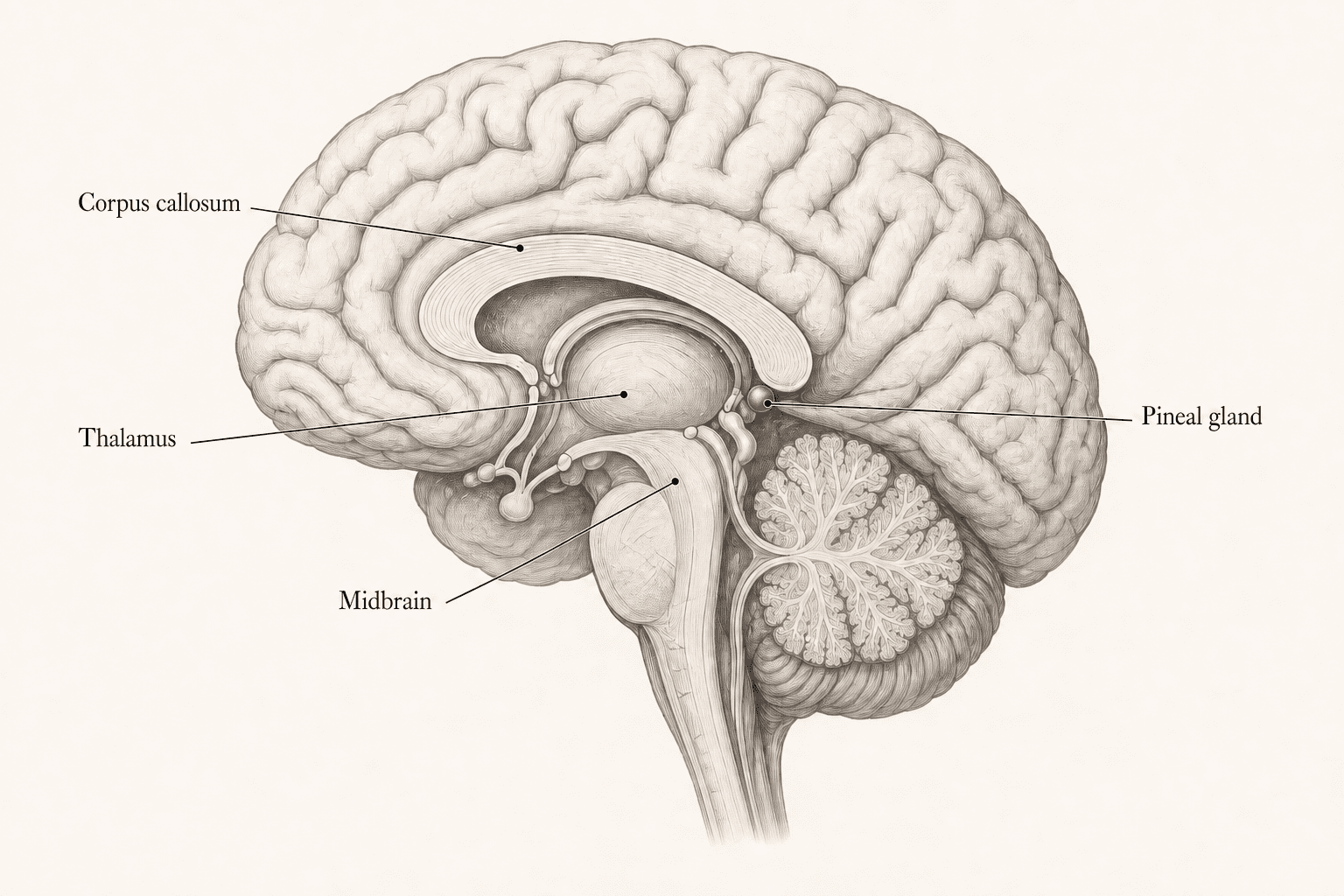
ما يفعله DMT بالدماغ
حين يبلغ DMT الدماغ يرسو على ، المستقبل ذاته الذي تستخدمه معظم المهلوسات، مع آثار أصغر على مستقبلين أو ثلاثة سواه. وثلاثة أشياء قابلة للقياس تحدث.
أوّلاً، الدماغ ينمو وصلات جديدة فعلاً. تنشيط المستقبل ذاته الذي يُنتج التحوّل الذاتي يُطلق ، استجابة نموّ في العصبونات ذاتها: فروع جديدة، ونقاط اتّصال جديدة، وشبكة أسلاك أكثف. أظهر مختبر Olson في UC Davis عام 2018 أنّ جرعةً واحدة عند مستويات ذات دلالة فسيولوجية أنتجت تغيّرات دامت أسابيع.
ثانياً، ترددات الدماغ تتزامن. تُظهر تسجيلات الموجات الدماغية أثناء حالات التأمّل العميق، مقيسةً بأنقى صورها عند المتأمّلين الممارسين، وهو يُطلق في تناسق تامّ عبر القشرة الجبهية والجدارية. وجد عمل Lutz وDavidson مع رهبان تبتيين في Madison هذا التزامن عند ثلاثين انحرافاً معيارياً فوق خطّ أساس المبتدئين. ذلك ما يصفه الممارسون بالحالة الوَحْدَوية أو اللاثنائية: ساعة الربط في الدماغ تعمل بإيقاع يُكامل التجربة بدل أن يُشظّيها.
ثالثاً، الناقد الداخلي يصمت. ، آلة الاجترار، الراوي الداخلي، ينخفض نشاطها. وما يبقى هو الحقل الإدراكي الكامن تحتها، أقلّ ترشيحاً وأكثر عُرياً. تُظهر دراسات الرنين المغناطيسي الوظيفي على المتأمّلين المتقدّمين البصمة ذاتها في الحالات العميقة. وكذلك تفعل دراسات الجرعات المجهرية من السيلوسيبين دون عتبة الإدراك.
علاقة حالة الحلم
أوضح دليل داخل الجسم على نشاط DMT داخلي المنشأ هو نوم حركة العين السريعة.
يبلغ إنتاج الميلاتونين ذروته في النافذة ذاتها التي تحوي أعمق أطوار الحلم، بين الثانية والرابعة بالتوقيت المحلّي، ونمط الموجات الدماغية في حركة العين السريعة يبدو، طوبولوجياً، شديد الشبه بالنمط المرصود تحت إعطاء DMT من خارج الجسم في ظروف مضبوطة. كانت فرضية Strassman الأصلية، تلك التي منحت كتابه The Spirit Molecule عنوانه، أنّ إطلاق الغدة لِـ DMT الخاصّ بها عند عتبة حركة العين السريعة العميقة هو ما يُولّد الظاهراتية الفائقة الواقعية للحلم. الآلية تتّسق مع الكيمياء. والتداخل لا يُخطئه النظر: بيئات حسّية حيّة، واتّصال سردي، وفيزياء حلم منتظمة، أي البصمة الدقيقة لحالة تريبتامينية مُولَّدة من داخل الجمجمة.
لهذا يرتبط الحلم الواعي بالغدة الصنوبرية على نحو تُخطئه معظم المعالجات الشائعة. القدرة على التعرّف إلى الحلم بوصفه حلماً وأنت داخله تعتمد على:
- ميلاتونين يكفي لدعم دورات عميقة من حركة العين السريعة
- تنشيط قشري يكفي لإبقاء الوعي الفوقي حيّاً أثناء الحلم، مُعدَّلاً بما تُطلقه الغدة من التريبتامينات
- تهيئة كافية قبل النوم لفحص «أهذا حلم؟» في القشرة الجبهية الأمامية، وهو أثر تدريب لا أثر كيمياء
الأوّلان يعتمدان على ما تُخرجه الغدة. والغدة المُكلَّسة تُقصّر في كليهما. أمّا الثالث، التدريب، فلا يُثمر إلا بقدر سلامة الأوّلين. يصير الحلم الواعي أيسر منالاً بكثير ما إن تُستعاد بنية النوم نفسها، وهو بالضبط ما تدعمه إزالة التكلّس فيما بعدها.
التأمّل وحلقة الوعي
يبلغ التأمّل الطويل النقطة العصبية ذاتها بطريق مختلف. رياضات الانتباه المُستدام، فيباسانا، وشيكانتازا الزِن، وريغبا التبتية، تُنتج الإيقاع السريع المتزامن ذاته، والإسكات ذاته للراوي الداخلي، وتُنتج عبر عقود من الممارسة سماكةً قابلة للقياس في القشرة و أوثق في المناطق ذاتها التي يُنشّطها DMT حادّاً. رافعة كيميائية ورافعة انضباط، تصلان إلى الموضع نفسه.
الجسر بينهما أنّ الانتباه المُستدام نفسه يُطلق كمّياتٍ صغيرة من DMT داخلي المنشأ عند الغدة الصنوبرية، ولهذا يصف الممارسون المتقدّمون حالات لا تُميَّز ظاهراتياً عن تجارب DMT الخارجي دون أن يكونوا قد تناولوا شيئاً. الغدة هي التي تؤدّي العمل؛ والممارسة تُعطيها الإشارة.
هذه هي الحجّة على معاملة وظيفة الغدة الصنوبرية بوصفها أساساً، لا مجرّد مُنظِّم للإيقاع اليومي. الغدة ليست منفصلة عن عمل العقل.
هي أحد الأعضاء التي يبني بها العقل نفسه.
ما الذي يُكلّسها
الترسّبات المرئية على التصوير المقطعي والرنين المغناطيسي، القابلة للكشف حتى عند الأطفال والمتسمِّكة مع كل سنة من التعرّض السُّمّي، هي ، بلّورة فوسفات الكالسيوم ذاتها التي يستخدمها الجسم لصنع العظم، تتراكم في الغدة الصنوبرية لأنّ تدفّقها الدموي العالي، وغياب الحاجز الدموي الدماغي عنها، وقدرتها على تركيز أيونات بعينها، تجعلها مصرفاً للمواد التي يحاول الجسم عزلها.
الغدة ليست فاشلة. هي تُستعمل مقلباً للنفايات.
ثلاث فئات من المُدخَلات تُسرّع العملية.
- الفلورايد والبروميد والكلور تُزاحم اليود وتُخرجه. كلّها ، أبناء عمومة كيميائيون يتشاركون نقاط الرسوّ ذاتها في الجسم، وحين يقلّ اليود تحلّ محلّه. والفلورايد أسوأها، إذ يتركّز في هذه الغدة الصغيرة أكثر من أيّ نسيج رخو آخر في الجسم. عام 1997 قاست الباحثة Jennifer Luke مستويات الفلورايد داخل نسيج صنوبري مُكلَّس فبلغت 21,000 جزء في المليون، أعلى ممّا في عظام أتلفها أصلاً تعرّض مزمن للفلورايد. تشبّع الهاليدات، في جانب منه، مرض نقص يود.
- المعادن الثقيلة تعلق في تيّار الكالسيوم. الألمنيوم والرصاص والزئبق تتراكم في أيّ نسيج منشغل بالتمعدن. وشغف الغدة الصنوبرية بالكالسيوم يجرّها معه.
- الالتهاب المزمن منخفض الدرجة وانخفاض المغنيسيوم. المغنيسيوم هو المكبح الرئيسي للجسم على التكلّس من النوع الخطأ. حين يقلّ المغنيسيوم يترسّب الكالسيوم بسهولة في النسيج الرخو والشرايين والمفاصل والغدد. أضف الالتهاب الصامت، فيُوضَع أساس التكلّس أسرع ممّا يستطيع الجسم تصفيته.
العاقبة تصل ببطء. ينخفض إنتاج الميلاتونين بالتوازي مع الجزء المُكلَّس، ويرتخي كل إيقاع لاحق له بالقدر ذاته. لا أحد يلحظ السنة التي بدأ فيها الأمر. إنّما يلحظون العقد الذي ظلّ يجري فيه.
البروتوكول
هو مبنيّ حول ثلاثة مبادئ: إزاحة الهاليدات (امنح الجسم اليود الذي يحتاجه فعلاً كي يُغادر الفلورايد والبروميد مواضع الارتباط)، وتزويد عوامل إزالة التكلّس المساعدة (المعادن والفيتامينات التي تُوجّه الكالسيوم عائداً إلى العظم وبعيداً عن النسيج الرخو)، ودعم المخارج (الكبد، والصفراء، والأمعاء، وهي الطرق التي يخرج بها الحِمل المُزاح).
سبعة بنود، كلّ واحد مثبَّت على طبقة بعينها من المشكلة.
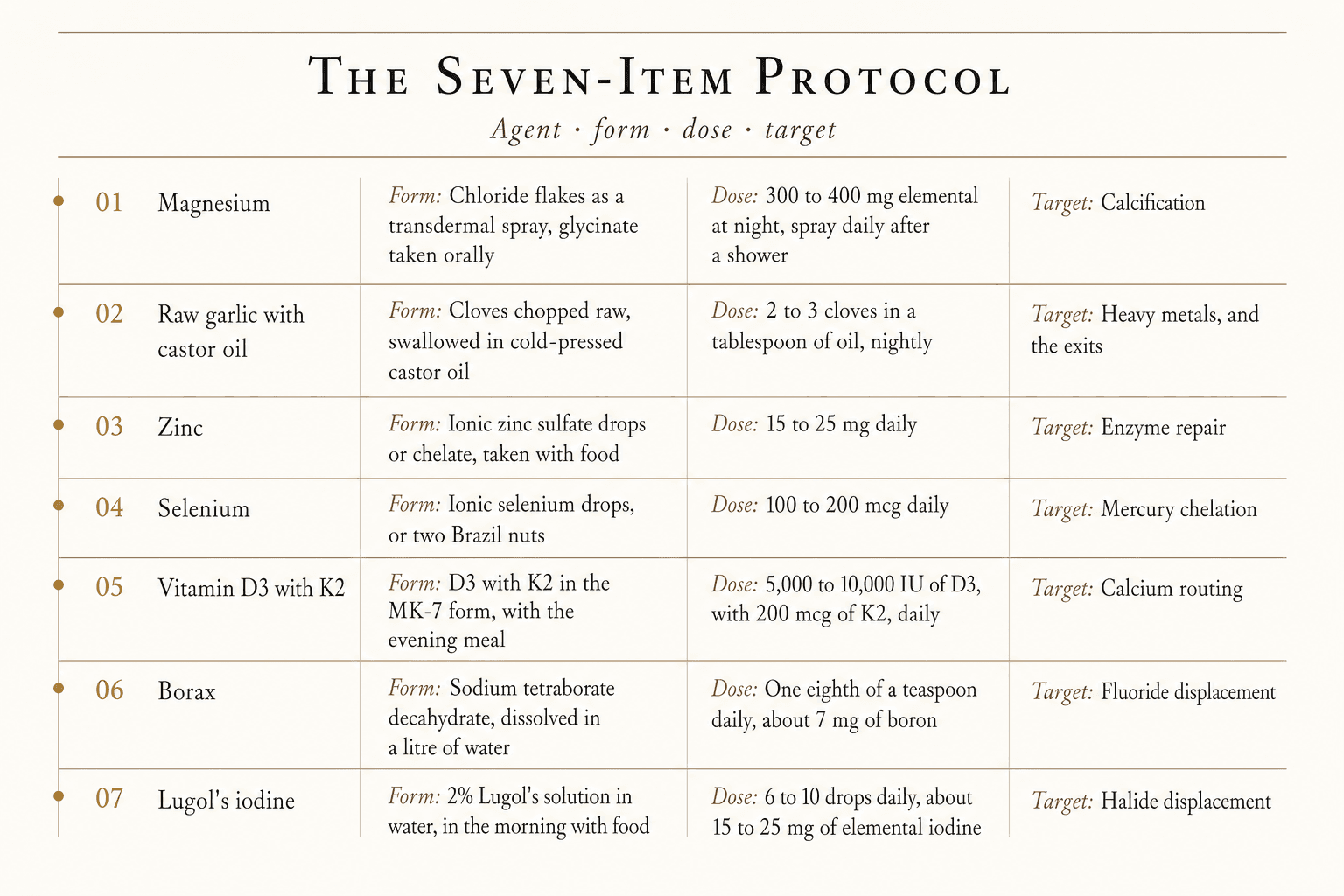
1. كلوريد المغنيسيوم عبر الجلد وغليسينات المغنيسيوم فموياً، يومياً
طريقان، معدن واحد. الطريق عبر الجلد قارورة رذاذ من رقائق كلوريد المغنيسيوم مُذابة في ماء مُقطَّر، بنسبة جزء من الرقائق إلى جزء من الماء وزناً تقريباً، تُوضع بعد الاستحمام على باطن الساعدين والصدر والبطن والساقين.
اتركه عشرين إلى ثلاثين دقيقة، ثم اشطف الأثر الأبيض.
وإلى جانب طريق الجلد، 300 إلى 400 ملغ من المغنيسيوم العنصري فموياً ليلاً على هيئة . الغليسينات أحد الشكلين الفمويين القويّين، إلى جانب ماء بيكربونات المغنيسيوم في مقال المعادن، لأنّه يتجاوز القيد الذي جعل المغنيسيوم الفموي تاريخياً بلا نفع عند الجرعات التي تُحرّك مستويات الأنسجة فعلاً.
سترات المغنيسيوم وأكسيده وكبريتاته تُطلق أثراً أسموزياً في الأمعاء، يسحب الماء إليها ويُنتج برازاً رخواً قبل أن يرتفع المغنيسيوم في المصل أو الأنسجة ارتفاعاً ذا معنى بزمن طويل. أمّا الغليسينات فمرتبط بالحمض الأميني غلايسين، الذي يحمله عبر جدار الأمعاء على نظام نقل الأحماض الأمينية، والغلايسين نفسه ناقل عصبي مُهدّئ يدعم بنية النوم العميق ذاتها التي يهدف باقي البروتوكول إلى استعادتها.
المغنيسيوم أكثر المعادن نقصاً في الغذاء الحديث، والقوّة المضادّة المركزية للتكلّس المرَضي. هو مطلوب لأكثر من 300 تفاعل إنزيمي، بما في ذلك كل خطوة في استخدام الجسم لـ ATP، عملة الطاقة في الخلية. وهو العامل المساعد لتحويل فيتامين D إلى ، ولتثبيت الكالسيوم في العظم (بدل النسيج الرخو)، ولصنع الجسم .
الطريقان متكاملان. الطريق عبر الجلد يُوصّل أيونات المغنيسيوم مباشرةً إلى الدورة الدموية المجهرية في الأدمة، وهو نافع لتحميل الكمّيات دون المرور بالأمعاء. أمّا الغليسينات الفموي فيُضيف جرعةً ثابتة داخل الخلايا مع فائدة جانبية مُهدّئة، وهو الرافعة الأعملَ لمن يُسافر أو يريد كبسولةً واحدة بدل طقس الرذاذ.
وللغدة الصنوبرية تحديداً: المغنيسيوم هو ما يسحب الكالسيوم خارج النسيج الرخو ويُوجّهه نحو العظم حيث موضعه.
2. الثوم النيء المفروم، مع زيت الخروع، ليلاً
فصّان إلى ثلاثة من الثوم النيء، مفرومة فرماً ناعماً، تُبتلع في ملعقة كبيرة من زيت الخروع المعصور على البارد قبل النوم.
المركّب الفعّال في الثوم هو ، وهو مركّب كبريتي يتكوّن حين يُسحق الفصّ. وهو أحد أقوى الطبيعية التي نعرفهاfootnoteCha, C. W. (1987). Tohoku J Exp Med. يُخلّب الأليسين معادن ثقيلة منها الرصاص والزئبق والكادميوم. والأثر الوقائي ضدّ السمّية الحادّة للمعادن الثقيلة في النماذج الحيوانية كبير ومتّسق..
يُمسك بالرصاص والزئبق والكادميوم، ويُوجّهها عبر الكبد إلى الطرح. وهو أيضاً مضادّ ميكروبي واسع ضدّ جراثيم الأمعاء التي تقود الالتهاب الجهازي المزمن، ومنها بعض الكائنات المتورّطة في ما صار يُسمّى محور الأمعاء والغدة الصنوبرية، موضوع مقال تنظيف الطفيليات.
زيت الخروع هو النصف الميكانيكي. يُبقي الأمعاء متحرّكة ويُحفّز جريان الصفراء، فتُغادر المعادن التي ربطها الثوم أثناء الليل بدل أن تدور من جديد عبر ، ومقال تنظيف الطفيليات يبسط الصيدلة كاملةً. ولأنّ المستقبل ذاته يُقبّض الرحم، فزيت الخروع ممنوع في الحمل.
3. الزنك، أيونياً أو مُخلَّباً
15 إلى 25 ملغ من الزنك، سائلاً أيونياً أو مُخلَّباً، مع الطعام، يومياً.
الزنك ثاني أوفر معدن نزر في الجسم وأحد أكثرها نقصاً في الإمداد. وهو العامل المساعد لأكثر من 300 إنزيم، منها ، المسار الرئيسي الذي يستخدمه الجسم لحبس المعادن الثقيلة وإخراجها.
دون زنك كافٍ، يعمل ذلك النظام بنصف سرعته، فيتراكم النحاس والكادميوم والزئبق بدل أن يُغادر.
وخاصّاً بالغدة الصنوبرية: الزنك لازم كي يُحوّل الجسم السيروتونين إلى الكيمياء التي تصير ميلاتونيناً. زنك منخفض يعني ميلاتونيناً منخفضاً مهما كان سواه في موضعه.
الشكل يهمّ. محلول الزنك الأيوني في قمّة سُلّم الامتصاص، والمُخلَّب، بيكولينات أو سترات أو ثنائي غليسينات، ثانٍ قويّ. وكثير من الزنك التجاري على هيئة أكسيد، وهو ما تكاد الأمعاء لا تمتصّه وتمرّره في معظمه كما هو. وشكل المعدن، أيونياً في مقابل مُخلَّب في مقابل ملح لا عضوي رخيص، هو موضوع مقال المُكمّلات كلّه.
4. السيلينيوم
100 إلى 200 ميكروغرام من السيلينيوم يومياً، ويُفضَّل على هيئة سيلينوميثيونين، أو حبّتين من جوز البرازيل.
السيلينيوم هو العامل المساعد في قلب نظامين حاسمين. الأوّل ، الإنزيم الذي يُبقي جزيء إزالة السمّية الرئيسي في الجسم قابلاً لإعادة التدوير. ودون سيلينيوم يقع ذلك النظام في عجز وتنهار قدرة الجسم على إزالة السموم الذائبة في الدهن والمعادن الثقيلة.
والثاني عائلة التي تُحوّل هرمون الدرقية المُخزَّن إلى صورته الفعّالة. نقص السيلينيوم يُنتج نوعاً صامتاً من قصور الدرقية لا يظهر في فحوص TSH المعيارية لكنّه يُنتج كل عرَض سريري له، ودرقيةٌ كسولة تخنق الغدة الصنوبرية بعدها.
وللعمل الخاصّ بالغدة الصنوبرية، السيلينيوم أيضاً أحد المعادن القليلة التي ترتبط بالزئبق مباشرةً، مُكوّنةً معقّدات خاملة تستطيع الكليتان طرحها. والتعرّض للزئبق أحد المحرّكات المُبخَسة الوزن لتكلّس النسيج الرخو.
5. فيتامين D3 مع K2
5,000 إلى 10,000 وحدة دولية من فيتامين D3 يومياً، مقرونةً بـ 200 ميكروغرام من فيتامين K2 على هيئة MK-7.
فيتامين D3 هرمون، لا فيتامين في الحقيقة. ينظّم تعبير أكثر من 2,000 جين ويُخبر الأمعاء كم من الكالسيوم تمتصّ.
وK2 هو العامل المساعد لـ يُقرّران أين ينتهي الكالسيوم الممتصّ: أحدهما يُوجّهه إلى العظم، والآخر يُبقيه فعلياً خارج الشرايين والنسيج الرخو.
هذه هي مفارقة الكالسيوم، والغدة الصنوبرية هي سبب انتماء الأمر إلى هنا كما ينتمي إلى بروتوكول المعادن. D3 يُقرّر كم من الكالسيوم تأخذ الأمعاء. وK2 يُقرّر أين يحطّ. ودون K2 تحطّ حصّة منه في النسيج الغدّي، وهذه الغدة نسيج غدّي في مركز الرأس بالضبط. خُذهما معاً مع وجبة المساء، إلى جانب المغنيسيوم الذي يحتاجه D3 لخطوة تنشيطه.
6. البوراكس، ثُمن ملعقة صغيرة يومياً
مقدار صغير من ، رباعي بورات الصوديوم عشاري الماء، مُذاب في لتر ماء ويُرتشف على مدى اليوم.
البوراكس هو المصدر الغذائي لـ، وهو معدن نزر فقده الغذاء الصناعي إلى حدّ بعيدfootnoteDevirian, T. A.; Volpe, S. L. (2003). Crit Rev Food Sci Nutr. انخفض محتوى الطعام من البورون مع الزراعة الصناعية؛ والتكميل بمقدار 3 إلى 10 ملغ يومياً يُظهر فوائد عبر نقاط نهاية متعدّدة، من كثافة العظم إلى الأداء المعرفي..
يدعم البورون سلامة غشاء الخلية، وينظّم الالتهاب، ويُعين فيتامين D والمغنيسيوم على أداء عملهما. والحاسم هنا: أنّه ينافس الفلورايد مباشرةً على المواضع التي كان الفلورايد سيتراكم فيها لولاه، فيُزيحه من العظم والنسيج الرخو.
ثُمن ملعقة صغيرة من البوراكس في لتر ماء يُعطي نحو 7 ملغ من البورون، داخل النطاق الذي أظهر فوائد مضادّة للالتهاب وفوائد في كثافة العظم في تجارب مضبوطة. والملح يُوصّل أيضاً حِملاً قلوياً صغيراً يُعين الكليتين على طرح الفلورايد المُحرَّر.
نقطة دقّة: ثمّة بوراكس واحد فقط، المعدن ذاته سواء باعته البطاقة منظّفاً أو مُكمّلاً. ما يتغيّر هو الجرعة، وثُمن الملعقة الصغيرة هو الجرعة الغذائية. أبقِه عندها، وتوقّف إن لاحظت أيّ تهيّج.
7. محلول لوغول لليود، 6 إلى 10 قطرات يومياً
ستّ إلى عشر قطرات من في ماء، تُؤخذ صباحاً مع الطعام.
اليود هو الهاليد السيّد. حين يكون اليود حاضراً بمقدار كافٍ، تكون مواضع رسوّ الهاليدات في الجسم مشغولة باليود، وتُطرح الهاليدات الأخرى، الفلورايد والبروميد والكلور، بدل أن تتراكم. وحين يكون اليود ناقصاً، تملأ الأخرى مواضع الرسوّ، بما لذلك من عواقب على الدرقية والثدي والبروستاتا والغدة الصنوبرية.
تلك القطرات تُوصّل نحو 15 إلى 25 ملغ من اليود العنصري، أعلى بكثير من التوصية اليومية المعيارية، الموضوعة عند الحدّ الأدنى اللازم لمنع الدُّراق والتي يُعدّها كثيرون غير كافية لكفاية اليود على مستوى الجسم كلّهfootnoteوُضِع المقدار اليومي الموصى به عند 150 ميكروغراماً لمنع الدُّراق السافر والقماءة. أمّا حالة اليود المثلى، مقيسةً باليود البولي على مدى 24 ساعة بعد اختبار تحميل، فتجري في نطاق 12 إلى 25 ملغ يومياً بحسب عمل Abraham وBrownstein وFlechas. وأدبيات IodineProject هي المرجع المعياري لبروتوكول اليود عالي الجرعة..
الغذاء الساحلي الياباني يُوفّر 12 إلى 25 ملغ يومياً من عشب البحر، والسجلّ الصحّي العامّ لتلك المجتمعات في السرطانات الحسّاسة للهرمونات وأمراض الدرقية مُواتٍ على نحو لافت.
وللغدة الصنوبرية تحديداً: كفاية اليود هي ما يُتيح للغدة أن تلفظ ما تراكم فيها من فلورايد. إزالة التكلّس بلا يود ضغطٌ على قابض ما زال مشتبكاً. اليود هو ما يفكّه.
العوامل المساعدة تهمّ. يُحمَّل اليود بكفاءة أعلى في حضور سيلينيوم كافٍ، يُخفّف الذي يُطلقه اليود مع إزاحة الهاليدات، وفي حضور مغنيسيوم يدعم متتالي إزالة السمّية كلّه. والبروتوكول مُصمَّم حول هذا. اليود هو الرافعة؛ وبقيّة البنود هي نقطة الارتكاز.
القوس الزمني
إزالة التكلّس ليست مشروع أسبوع. تُشير أدبيات تعبئة المعادن الثقيلة إلى ثلاثة إلى تسعة أشهر حتى يظهر انخفاض مرئي على التصوير، ثم صيانة مدى الحياة.
أمّا التغيّرات المحسوسة، عمق النوم، وحيوية الأحلام، وصفاء الساعة الأولى من اليوم، فتظهر أبكر، عادةً خلال أربعة إلى ستة أسابيع من الالتزام المتّصل. الانضباط هو البروتوكول. والمكافأة هي الغدة التي بُنيت لتحفظ الوقت، تحفظه من جديد.
وتنظيف الغدة نصف الدارة فقط. الغدة الصنوبرية المُحرَّرة من حجرها مُستقبِل أُعيد إلى الخدمة، والإشارة التي بُنيت لتتبّعها تأتي من خارج الجمجمة: ضوء النهار الذي يضبط الساعة عبر العين، وقبل كل شيء شمس الصباح والمساء المنخفضة. التيّار يجري خارجاً من هنا، إلى الجسد الكهربائي وممارسة أخذ الضوء من الشمس.
Sources
- The Pineal Gland and Melatonin in Relation to Aging: A Summary of the Theories and of the Data, . https://pubmed.ncbi.nlm.nih.gov/7556503/
- Physiologic Pineal Region, Choroid Plexus, and Dural Calcifications in the First Decade of Life, . https://pmc.ncbi.nlm.nih.gov/articles/PMC8013049/
- Calcite Microcrystals in the Pineal Gland of the Human Brain: First Physical and Chemical Studies, . https://pubmed.ncbi.nlm.nih.gov/12224052/
- Fluoride Deposition in the Aged Human Pineal Gland, . https://pubmed.ncbi.nlm.nih.gov/11275672/
- Magnesium in Man: Implications for Health and Disease, . https://pubmed.ncbi.nlm.nih.gov/25540137/
- Vitamin K2 and the Calcium Paradox, . https://openlibrary.org/works/OL25024633W
- Iodine Deficiency in Industrialized Countries, . https://doi.org/10.1111/j.1365-2265.2011.04168.x
- LC/MS/MS Analysis of the Endogenous Dimethyltryptamine Hallucinogens, Their Precursors, and Major Metabolites in Rat Pineal Gland Microdialysate, . https://pubmed.ncbi.nlm.nih.gov/23881860/
- Psychedelics Promote Structural and Functional Neural Plasticity, . https://pubmed.ncbi.nlm.nih.gov/29898390/
- Long-Term Meditators Self-Induce High-Amplitude Gamma Synchrony during Mental Practice, . https://www.pnas.org/doi/10.1073/pnas.0407401101
- DMT: The Spirit Molecule, . https://openlibrary.org/works/OL17538120W
- Iodine Protects against Fluoride Toxicity, . https://drsircus.com/iodine/iodine-protects-fluoride-toxicity/