
الأرض, الفصل 1
المعادن الأساسية للصحة والعافية
ثمانية معادن تُدير نحو ثمانين بالمئة من الأجهزة التي تسوق الناس إلى عيادات الاختصاصيين، ولا يقيس تحليل الدم المعياري أيّاً منها تقريباً. الآليات بأسمائها، والجرعات بالضبط، والبروتوكول الذي يُعيد المجموعة كاملةً.
ثمانية معادن تُدير نحو ثمانين بالمئة من الأجهزة التي تُبقي الإنسان حيّاً، ولا يقيس تحليل الدم المعياري أيّاً منها تقريباً. واتركها ناقصةً عشرين عاماً فما ينتج عن ذلك ليس شكوى تحملها إلى طبيب. إنه العظم الذي يرقّ، والشريان الذي يتصلّب، والدرقية التي تستقيل، والعصب الذي يكفّ عن الإطلاق النظيف، والجهاز المناعي الذي ينقلب على الجسد الذي بُني ليدافع عنه. استعادتها لا تكلّف شيئاً يُذكر، وقيم المختبر تتحرّك خلال أسابيع، والطبّ السائد يتجاهل الأمر لأنه لا توجد براءة اختراع على حجر.
طبيبك يقيس الحديد وB12. وهذه هي الثمانية التي لا يقيسها. الطعام على صحنك هُجِّن من أجل الغلّة، لا من أجل العناصر التي تحتاجها كل خليّة لأداء عملها، والمعدن الذي تدفعه صناعة الغذاء بأشدّ قوّة، أي الكالسيوم، هو المعدن الذي تُحمّل به نفسك أكثر من سواه، وهو الذي أقلّ ما يُفهَم ضرره عند الإفراطfootnoteMayer, A. M. B. (1997). British Food Journal. "Historical changes in the mineral content of fruits and vegetables." مقارنة جداول الأطعمة الحكومية البريطانية لعام 1936 بجداول 1991 وجدت انخفاضات بنسبة 19% في Mg، و27% في Ca، و49% في الحديد، و24% في K عبر 27 خضاراً. ومتابعة USDA لعام 2004 على يد Davis et al. أكّدت الاتجاه عبر إمدادات الغذاء في الولايات المتحدة..
الكالسيوم هو المكبح. والمغنيسيوم هو دوّاسة التسارع. أخطئ العلاقة بين هذين الاثنين فيبدأ الجسد ببطء في قلب بنيته على نفسه.
الجسد الحديث نادراً ما يمرض ممّا فيه. هو يمرض ممّا يفتقر إليه.
ما الذي تستعيده
أكثر ما صنّفته تحت باب الشخصية هو كيمياء. الطبع الحادّ. الضباب الذي لا ينقشع قبل الظهر. الأحلام التي توقّفت عند الثلاثين أو نحوها. الاندفاع الذي رحل ولم يترك عنواناً. يُحيل البالغون ذلك كلّه إلى العمر، وإلى الضغط، وإلى الجينات، ثلاثة تفسيرات لم تُعِد لأحدٍ شيئاً قطّ. وهو في معظمه غياب، والغياب هو السبب الوحيد في الطبّ الذي ينعكس بمجرّد اللمس.
ما الذي يعود حين تُستعاد المجموعة، وبأيّ ترتيب يصل، مبسوط في صدر هذا الكتاب. أمّا ما يخصّ هذا الموضع فهو خطّ الإمداد الذي تحته. كلّ عائد من تلك العوائد يقوم على ثمانية عناصر، كلّ واحد منها حجر لا يكلّف شيئاً يُذكر، ولا واحد منها في التحليل الذي طلبه طبيبك، وهكذا يمضي نقص بهذا الوزن عشرين سنة دون أن يُسمّى.
ظللت تسمّي النقص شخصيةً.
كلّ ذلك قابل للفحص، بنداً بنداً. اختبار الزنك مجّاني ويجيب في عشر ثوانٍ؛ ودرجة الكالسيوم تصوير من خمس عشرة دقيقة يمكنك حجزه هذا الأسبوع. أمّا معظم ما تبقّى فيصل قبل أن يؤكّده أي مختبر، وهذا هو سبب بقاء الناس على هذا بعد أن تركوا كلّ شيء آخر بدأوه يوماً. الجسد بكامل مواصفاته حال لم يعشها أكثر البالغين قطّ، ولا تُخطئه العين في الأسبوع الذي يصل فيه.
المعدن الذي يُدير كل شيء
المغنيسيوم يُدير نظام الطاقة في الجسد. يجلس في مركز كل ورقة من الكلوروفيل، العمل ذاته الذي يقوم به الحديد داخل خليّة الدم الحمراء، ولهذا فإنّ أكل الخضراوات يُوصله مباشرةً. وداخل الخليّة، يُثبّت المغنيسيوم الجزيء الذي تحرقه وقوداً ()، ويُدير المضخّة التي تُبقي الكالسيوم خارج الأماكن التي لا ينتمي إليها، ويوازن بين إشارتَي التشغيل والإيقاف الرئيسيتين في الدماغ ()، ويبني مضادّ الأكسدة الرئيسي للجسم، ويحوّل فيتامين D إلى شكله النشط. اقصُر في المغنيسيوم فتبطؤ كل واحدة من تلك المنظومات دفعةً واحدة.
وهو أيضاً، بفارق واسع، أكثر المعادن قصوراً في الإمداد في النظام الغذائي الصناعي. يضع أكثر من نصف الأمريكيين تحت المدخول اليومي الذي تسمّيه معاييرهم المحافظة نفسها كافياً. وفحص الدم المعياري يُفوّته، لأن الجسد يدافع عن مغنيسيوم الدم بسحبه من الخلايا والعظم. الرقم في الدم يبقى ثابتاً بينما تُفرَّغ الخلايا، ولهذا يظلّ معظم البالغين في نقص عقوداً دون أن يُسمّى ذلك قطّ.
ثم تتدفّق العواقب. مغنيسيوم منخفض يعني أن الوقود الخلوي يعمل بسوء، ما يعني أن المضخّة التي تُبقي الكالسيوم خارج الخلايا تعمل ببطء. فيتراكم الكالسيوم داخل الخليّة حيث لا ينبغي أن يكون (في الصحة يوجد خارج الخليّة عشرة آلاف ضعف ما يوجد داخلها)، وتدريجياً . فيبطؤ نظام الطاقة أكثر. ويُسمّي الدكتور H. Ray Evers هذا الحلقة الفاسدة: لا مغنيسيوم يكفي لصنع الطاقة، ولا طاقة تكفي لتشغيل المضخّة التي يحتاجها الكالسيوم، ومحطّات الطاقة تتكلّس نتيجةً لذلك.
«إنّه كأنّك تمرّ في الحياة وفرامل الطوارئ مشدودة.»
أين يضلّ الكالسيوم طريقه
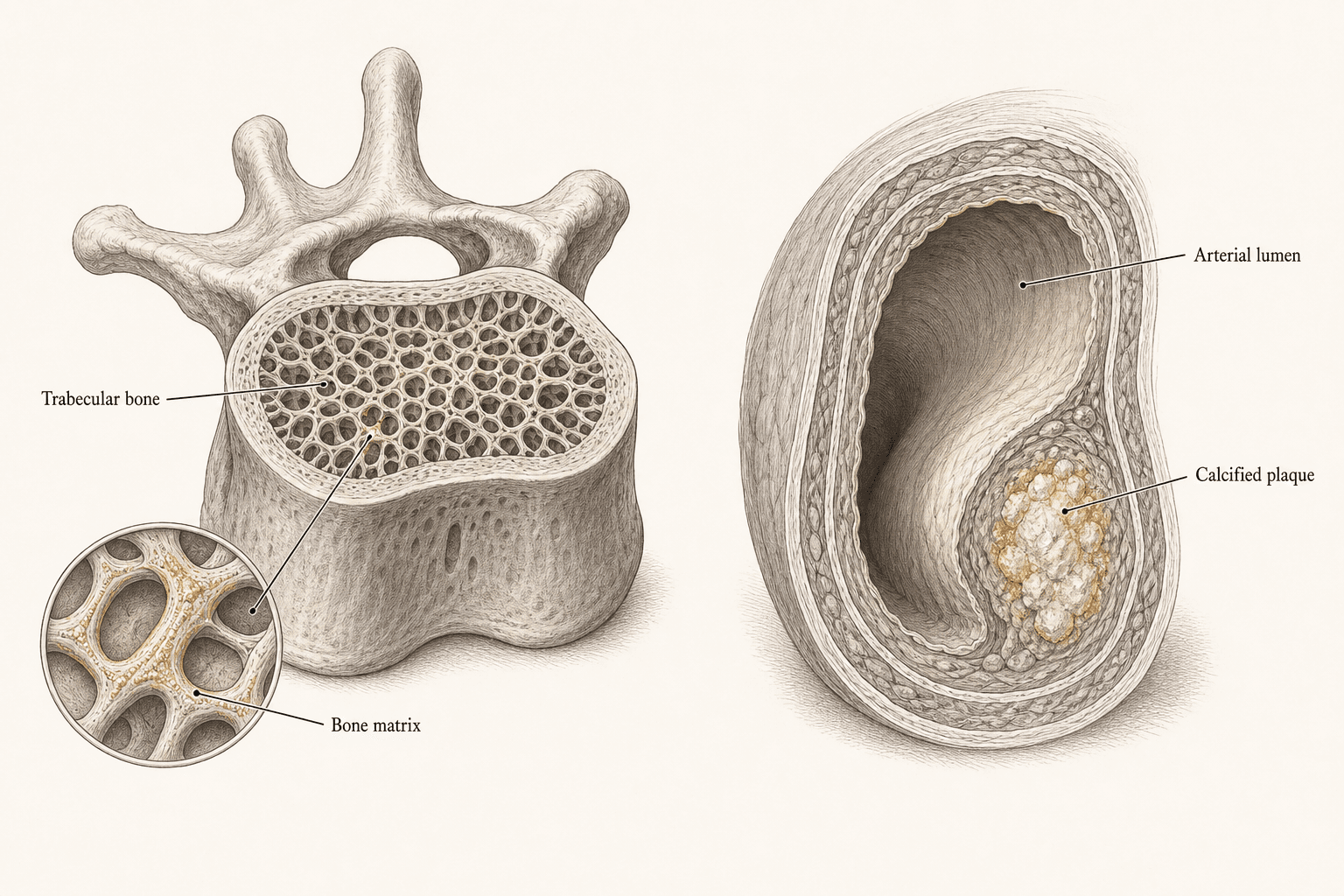
إن كان المغنيسيوم دوّاسة التسارع، فالسؤال التالي هو ما الذي يحدث حين يكون المكبح مشدوداً بدونه. نحو 99% من كالسيوم الجسد في الأسنان والعظم. أمّا الـ 1% الباقية، الدائرة في الدم والمنتشرة عبر الأنسجة الرخوة، فهي حيث يقع الأذى حين يكون المغنيسيوم غير كافٍ.
خُمس حجم اللويحة الشريانية كالسيوم. و، وهي تصوير CT بسيط يجمع الكالسيوم في شرايين القلب، هي أفضل مُتنبّئ منفرد نملكه بأحداث القلب، أفضل من الكوليسترول، وأفضل من الدهون الثلاثية، وأفضل من ضغط الدم. والدكتور Matt Budoff من UCLA، أبرز المناصرين لمسح الكالسيوم الروتيني، يضعها بصراحة: الكمية الإجمالية للكالسيوم التاجي تتنبّأ بأحداث أمراض القلب فوق كل عامل خطر معياري. و، أي التصلّب البطيء لصمّام مَخرَج القلب، يظهر عند نحو 29% ممّن تجاوزوا الخامسة والستين، وفي شكله الشديد عند 2 إلى 9% ممّن تجاوزوا الخامسة والسبعين. حصى الكلى، وتمعدُن المفاصل، وجير الأسنان، واللويحة الشريانية، وتكلّس الصنوبرية، وتكلّس الغدد: الكيمياء الحيوية ذاتها، مواقع مختلفة.
الدول ذات أعلى معدّلات الوفيات القلبية هي الدول ذات أعلى نِسَب كالسيوم إلى مغنيسيوم في تربتها ومياهها. أستراليا تتصدّر القائمة. واليابان، حيث يبلغ المدخول اليومي من المغنيسيوم 560 ملغ، تجلس بين الأدنى. ونساء البانتو، على 200 إلى 300 ملغ من الكالسيوم يومياً، عندهنّ أدنى معدّل في العالم؛ ونساء الغرب على أكثر من 1,000 ملغ روّج لها لوبي الألبان خمسين عاماً عندهنّ أعلاه. المعدن الذي بيع جواباً لهشاشة العظم يتتبّع، في علم الأوبئة، نتائج عظم أسوأ.
ثمّة خيط أشدّ إعتاماً.
دراسة عام 1998 من Harvard School of Public Health على 47,781 رجلاً وجدت أن من يستهلكون 1,500 إلى 1,999 ملغ من الكالسيوم يومياً كان لديهم نحو ضعف خطر سرطان البروستات النَقيلي مقارنةً بالرجال على 500 ملغ أو أقلّ. وعند 2,000 ملغ فأكثر، ارتفع الخطر إلى أكثر من أربعة أضعاف.
ومتابعة Harvard لعام 2001 على 20,885 رجلاً وجدت أن الربع الأعلى استهلاكاً للألبان كان لديه سرطان بروستات أكثر بنسبة 32% من الربع الأدنى. ووضعت الدكتورة Carmen Rodriguez، كبيرة علماء الأوبئة في American Cancer Society، الأدبيات بدقّة: ثمّة دليل معقول على أن الكالسيوم يلعب دوراً في تطوّر سرطان البروستات.
المغنيسيوم يتحكّم في مصير الكالسيوم. بدونه، المعدن الذي يحتاجه الجسد للعظم يترسّب في كل مكان لا ينبغي أن يترسّب فيه.
لا شيء من هذا حجّة ضدّ الكالسيوم. الجسد يحتاجه.
الحجّة ضدّ تحميل الكالسيوم دون مغذّيات الشريك، أي المغنيسيوم وفيتامين K2 والبورون، التي تُقرّر أين ينتهي الكالسيوم. خُذ الكالسيوم وحده فترفع مستواه في دمك. خُذه مع شركائه فتوجّهه إلى العظم حيث ينتمي.
ما الذي يمنع الاستعادة: النظام الغذائي الحديث
مشكلة التوجيه قابلة للحلّ. أمّا السؤال الأصعب فهو لماذا انكسر التوجيه أصلاً، والجواب سابق على مطبخك. القائمة ثابتة عبر الأدبيات. المعادن التي جرّدها الغذاء الصناعي، تقريباً بترتيب تنازلي للشدّة:
- المغنيسيوم، استنزاف التربة، والحبوب المُكرَّرة (الدقيق الأبيض يُزيل نحو 80% من مغنيسيوم الحبّ)، وانخفاض مدخول الخضراوات الورقية والبذور
- اليود، استُبدل في الخبز التجاري بالبروميد في الثمانينات. والملح المُيوَّد ليس الجواب الذي يُباع على أنّه هو، والحساب أدناه يبيّن السبب
- الزنك، مربوط في الأمعاء بمركّبات في الحبوب غير المُعالَجة، منخفض في الأنظمة النباتية، يهبط في تربة المزرعة
- السيلينيوم، يعتمد كلّياً على ما في التربة؛ وأجزاء كبيرة من الولايات المتحدة والصين وأوروبا فقيرة بالسيلينيوم
- البورون، أقلّ المعادن النَزِرة نقاشاً. الأنظمة الحديثة تُوصل ربما 1 ملغ في اليوم مقابل نطاق مدعوم بالأدلّة من 3 إلى 10 ملغ
- فيتامين D3، الواقي الشمسي، والعمل الداخلي، وخطّ العرض، والبشرة الداكنة تجتمع لتترك معظم بالغي العالم الصناعي في عوز وظيفي
- فيتامين K2، يوجد في دهون الحيوانات المُربّاة على المراعي، والأطعمة المخمّرة، ولحوم الأعضاء. الزراعة الصناعية والنظام منخفض الدسم جرّداه
- الكبريت، يأتي من الأحماض الأمينية المحتوية على الكبريت في البروتين الجيّد؛ وإنتاج البروتين الصناعي فقير بالكبريت
- النحاس، مقترن بالزنك؛ ناقص في كلا الاتجاهين بحسب الفئة السكّانية
تلك القائمة هي ما يُجيب عنه البروتوكول أدناه. النحاس يركب مع الزنك، وD3 وK2 يُؤخذان زوجاً واحداً، ومُدارَأة البيكربونات تُغلق المجموعة، ولهذا تبلغ الحزمة اليومية ثمانية بنود. استعِد هذه فيبدأ معظم مؤشّرات التكلّس والإرهاق والنوم والمناعة والإدراك بالتصحيح.
البروتوكول
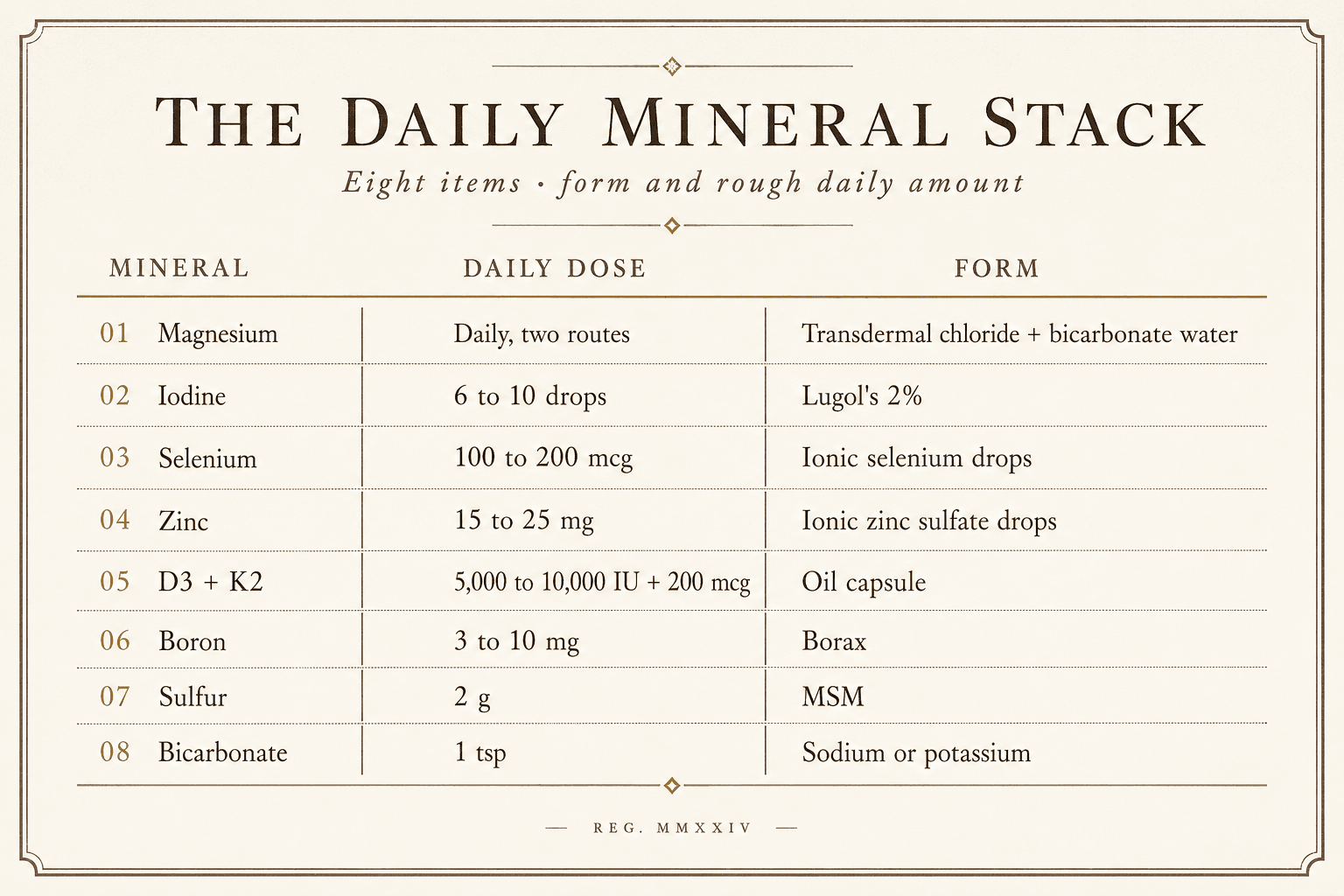
الحزمة اليومية مبنيّة حول ثلاثة مبادئ:
- المغنيسيوم أوّلاً. كل قطعة أخرى تفترض أن المغنيسيوم في مكانه.
- شركاء توجيه الكالسيوم. D3 مع K2 مع البورون، كي يذهب الكالسيوم إلى العظم لا إلى الشرايين.
- مُعِينات اليود وإزالة السموم. اليود مع السيلينيوم مع الكبريت، وهي تعمل على حمل المعادن الثقيلة والسموم الذي يحمله الجسد.
والجرعات أدناه هي الجرعات التي تدعمها الأدبيات.
1. المغنيسيوم، عبر الجلد وبيكربونات، يومياً
الطريقة الأكفأ لتحميل المغنيسيوم هي مساران معاً.
عبر الجلد: كلوريد المغنيسيوم سداسي الماء، من ماركة Zechstein أو Ancient Minerals. يُرَشّ يومياً على باطن الساعدين والصدر والبطن والربلتين بعد الاستحمام. اتركه 20 إلى 30 دقيقة، ثم اشطف البقايا. يتجاوز المشكلة التي يواجهها المغنيسيوم الفموي، وهي أنه يُحفّز برازاً رخواً قبل أن يكون الجسد قد حمّل أي كميّة معتبرة.
عبر الفم: ماء بيكربونات المغنيسيوم، Mg(HCO3)2. صيغة البيكربونات من أفضل صيغ المغنيسيوم الفموية امتصاصاً، وهي وحدها تُوصل أيون البيكربونات القلوي إلى جانب المعدن.
وللاستعادة دون زاوية البيكربونات، غليسينات المغنيسيوم هي الصيغة الفموية القوية الأخرى، وهي التي يستند إليها بروتوكول الصنوبرية؛ أمّا الصيغ الأيونية والمخلّبة فمرتّبة بالكامل في مقال المكمّلات.
والجمع بين كلوريد المغنيسيوم عبر الجلد وبيكربونات الصوديوم أو المغنيسيوم عبر الفم في أوقات متباعدة قليلاً هو، بحسب Mark Sircus، الطريقة المثلى لتوصيل أيونات المغنيسيوم وأيونات البيكربونات معاً إلى خلايا الجسم.
2. اليود، لوغول 2%، ستّ إلى عشر قطرات يومياً
اليود هو سيّد . حين يكون كافياً، يحتلّ مواقع المستقبلات في الدرقية والثدي والبروستات والمبيض والصنوبرية التي كانت ستقبل الفلورايد والبروميد والكلور لولاه. وبروتوكول اليود عالي الجرعة، الذي ريادته في العصر الحديث للأطبّاء Abraham وBrownstein وFlechas، يُوصل 12 إلى 25 ملغ من اليود العنصري يومياً، مقابل RDA بالغة 150 ميكروغرام مُعَدَّة لمنع تضخّم الدرقية الظاهر.
نقص اليود هو السبب الأول القابل للوقاية للإعاقة الذهنية في العالم، وتضع بيانات السكّان الفارق بين المجموعات الناقصة والمجموعات الكافية عند 13.5 نقطة من نقاط الذكاءfootnoteBleichrodt, N.; Born, M. P. (1994). ضمن The Damaged Brain of Iodine Deficiency، تحرير Stanbury, J. B. تحليل بَعدي لثمانية عشر بحثاً في اليود والنمو الذهني وضع متوسّط العجز عند 13.5 نقطة ذكاء مقابل ضوابط كافية اليود. ووجد Qian, M. et al. (2005) في Asia Pacific Journal of Clinical Nutrition فارقاً قدره 12.45 نقطة عبر سبعة وثلاثين بحثاً صينياً. وتسمّي منظمة الصحة العالمية نقص اليود، منذ 1990، أشيع أسباب تلف الدماغ القابلة للوقاية في العالم..
ستّ إلى عشر قطرات من بتركيز 2% تُوصل نحو 15 إلى 25 ملغ من اليود العنصري. والنظام الياباني الساحلي، الذي يُقدّم 12 إلى 25 ملغ في اليوم من العشب البحري، هو المرجع السكّاني الطبيعي لهذه الجرعة؛ ونتائج الصحة العامة في تلك الفئات على صعيد السرطانات الحسّاسة للهرمونات وأمراض الدرقية مواتية بشكل لافت.
الملح المُيوَّد لا يؤدّي هذا العمل، ولم يُبنَ له قطّ. إنّه أرضيّة صحّة عامّة وُضِعت في العشرينات لوقف الدُّراق، وأرضيّةٌ هو كلّ ما هو. غرامٌ من الملح المُيوَّد يغادر المصنع حاملاً نحو 45 ميكروغراماً من اليود. وبلوغ الـ15 مليغراماً المذكورة أعلاه يقتضي ثُلث كيلوغرام من الملح يوميّاً، وهو ما سيُدخلك المستشفى قبل أن يبلغ اليودُ الدرقيّةَ بزمن طويل. حتى هامش التقريب لا ينجو من الرفّ: يوديد البوتاسيوم يتأكسد ويتطاير من البلّورة تحت الرطوبة والضوء وحرارة المقلاة، ويذهب من ثُلث إلى أربعة أخماس ما أُضيف قبل أن يصل الطعام إلى الصحن. فالرقم المطبوع على العلبة والرقم الذي يبلغ الجسد رقمان مختلفان.
ثمّ الملح نفسه، وهو جديرٌ بالرفض لحسابه الخاصّ. ملح الطعام ليس ملح بحرٍ عليه بطاقة. إنّه كلوريد صوديوم مكرَّر إلى 97 بالمئة فما فوق، مغليّ خارج الصحبة المعدنيّة التي جاء بها، مُبيَّض، ومُعاد تركيبه بحمولة صناعيّة صغيرة كي يظلّ منسكباً: كمضادّات تكتّل، وثاني أكسيد السيليكون كعامل انسياب، والدكستروز كي لا يتأكسد اليوديد المُضاف بتلك السرعة، ولهذا يظهر سكّرٌ في مكوّنات ملح. والصوديوم المجرّد من المغنيسيوم والبوتاسيوم والعناصر النزرة التي يرافقها في الطبيعة في كلّ موضع لا يسلك في الجسد سلوك الملح الكامل. يحبس الماء، ويثخّن الصفراء، ويسلّم الكبد حِملاً لم يُطلَب منه قطّ أن يحمله.
استعمل بدلاً منه ملح بحرٍ غير مكرَّر أو ملح صخر، رماديّاً أو ورديّاً أو أبيض متّسخاً، رطباً قليلاً لا منسكباً بحرّيّة، ومَلِّح الطعام على الذوق من دون عدّ. فهو يحمل الطيف المعدنيّ الذي وضعه فيه المحيط أو قاع البحر القديم، بالنسب التي تطوّر الجسد إلى جوارها، ولم يُضَف إليه شيء ليجعله ينسكب. وهو يحمل أيضاً أثراً من اليود، وليس ذلك الأثر هو المقصود. اليود يأتي من القطّارة.
واليود يتحمّل بكفاءة أعلى حين يكون السيلينيوم كافياً (السيلينيوم يحمي من اندفاع الإجهاد التأكسدي المرافق لمغادرة الهاليدات المُزاحة). اقرنهما دائماً.
3. السيلينيوم، 100 إلى 200 ميكروغرام، يومياً
السيلينيوم هو المعدن الشريك لعائلتين من الإنزيمات تُقرّران ما إذا كانت آلية إزالة السموم في الجسد تعمل بكامل طاقتها: ، الذي يُعيد تدوير مضادّ الأكسدة الرئيسي، و التي تحوّل هرمون الدرقية المخزّن إلى شكله النشط.
نقص السيلينيوم يُنتج قصور درقية هادئاً، أي طاقةً منخفضة، وعدم احتمال للبرد، وتفكيراً بطيئاً، لا يظهر على فحص TSH المعياري. والسيلينيوم أيضاً مباشرةً، مكوّناً مركّبات خاملة تستطيع الكلى إخراجها. حبّتا برازيل تُوصلان نحو 100 ميكروغرام إن نمت الأشجار في تربة غنيّة بالسيلينيوم، وهل نمت فيها فعلاً يانصيبٌ لا يمكنك فحصه.
خذه على هيئة قطرات سيلينيوم أيونيّ، محلولاً معدنيّاً يُجرَّع بالقطرة في الماء، ودَعِ السيلينوميثيونين. والسبب هو ما تفعله الصيغتان بعد الدخول. فالسيلينوميثيونين سيلينيوم موصولٌ داخل حمض أميني، والجسد لا يميّزه عن الميثيونين العاديّ، فيُبنى عشوائيّاً في أيّ بروتين يُركَّب في تلك الساعة، عضلةً وإنزيماً وبلازما سواء. وذلك يُودِع السيلينيوم في النسيج سواء طلبه إنزيمٌ أم لم يطلبه، والوديعة هي ما لا تستطيع سحبه بسهولة حين تقرّر التوقّف أو حين تكون قد سِرتَ عاماً على أعلى المدى. أمّا السيلينيوم الأيونيّ فيصل متفكّكاً أصلاً، ويذهب إلى التي تنظّم إمدادها بنفسها، ويخرج في البول متى شبعت. مُنظَّمٌ داخلاً، مُنظَّمٌ خارجاً.
4. الزنك، 15 إلى 25 ملغ، يومياً
الزنك هو المعدن الشريك لأكثر من 300 إنزيم، بما فيها . وهو مطلوب لتحويل السيروتونين إلى ميلاتونين، ما يجعله محدِّداً للسرعة في إخراج الصنوبرية الذي نُوقش في قطعة إزالة التكلّس. ويُثبّت أيضاً مستقبلات فيتامين D ويُنافس الألمنيوم والحديد على مواقع الامتصاص في الأمعاء.
الصيغة هنا تهمّ أكثر من الجرعة. وأفضلها كبريتات الزنك الأيونيّة، تُؤخذ قطراتٍ في الماء. فكبريتات الزنك من أكثر أملاح الزنك ذوباناً على الإطلاق، ولذلك تكون في القارورة قد تفكّكت أصلاً إلى Zn2+ حرّ وكبريتات: لا قرصَ ينبغي أن يتفتّت، ولا مخلّبَ ينبغي أن يُفَكّ، ولا شيء يقف بين الأيون والناقل في جدار الأمعاء.
وهي تمنحك كذلك المكمّل الوحيد في هذا الكتاب الذي يخبرك متى تتوقّف. أمسِك بضع قطرات في الماء في فمك عشر ثوانٍ. فإن لم تذق شيئاً، أو ذقتَ حلاوةً خفيفة، فأنت في عوز. ومتى امتلأت، انقلب المحلول نفسه حادّاً معدنيّاً كريهاً خلال ثانية أو ثانيتين، لأنّ مستقبلات الذوق التي تسجّله معتمدةٌ هي نفسها على الزنك ولا تعود إلى العمل إلّا حين يكفي الجسدَ ما فيهfootnoteاختبار تذوّق الزنك، الذي طوّره برايس-سميث وهودجكنسون، يستعمل محلولاً مخفّفاً من كبريتات الزنك سباعيّة الماء يُمسَك في الفم. ويمتدّ سُلَّم الاستجابة من انعدام الطعم (عوز) إلى طعمٍ معدنيّ قويّ فوريّ (امتلاء). وهو مقايسةٌ تقريبيّة لا قيمة مختبريّة، وهو مجّانيّ ويوميّ ودالٌّ على الاتّجاه.. تلك مقايسةٌ يوميّة لا يتقاضى عليها مختبرٌ شيئاً، وهي لا توجد إلّا لهذه الصيغة.
أمّا المخلّبات، البيكولينات والبيس غليسينات، فهي الثاني القويّ والخيار الصائب حين تناسب الكبسولةُ اليومَ أكثر. وأكسيد الزنك يمرّ في معظمه. ولاحظ أنّ كبريتات الزنك المكبوسة في قرص جافّ شيءٌ آخر غير كبريتات الزنك المذابة أصلاً: فهي كقرصٍ الملحُ اللاعضويّ الرخيص، خشنٌ على معدة خاوية وضعيف الامتصاص، ولهذا تضع مقالة المكمّلات الأملاحَ الجافّة في المرتبة الأخيرة. اشترِ القطرات. وخُذها مع طعام.
والجرعات العالية المستمرّة من الزنك (فوق 40 ملغ على المدى الطويل) قد تستنزف النحاس؛ والقاعدة التقريبية 1 ملغ نحاس لكل 15 ملغ زنك، فأعِد قليلاً من النحاس إن أبقيت الزنك عالياً مدّةً طويلة.
5. فيتامين D3 مع K2، 5,000 إلى 10,000 وحدة دولية D3 مع 200 ميكروغرام MK-7
هذا هو زوج توجيه الكالسيوم.
فيتامين D3 وحده، دون K2، يُسرّع المشكلة نفسها التي نحاول حلّها.
D3 يزيد كمّ الكالسيوم الذي تمتصّه الأمعاء؛ ودون K2 ليُرسل ذلك الكالسيوم حيث ينتمي، يترسّب بلا تمييز في الشرايين والكلى والمفاصل والغدد.
وK2 هو العامل المُعِين لبروتينين يُقرّران مصير الكالسيوم. ، البروتين الذي يوجّه الكالسيوم إلى العظم، يحتاج K2 كي يُشَغَّل. و، الذي يُبقي الكالسيوم خارج الشرايين والنسيج الرخو، يحتاج K2 كي يُشَغَّل هو الآخر. و تبقى في الجسد نحو ثلاثة أيام، فجرعة واحدة تُغطّي اليوم. خُذها مع وجبة المساء ومعها بعض الدهن للامتصاص.
6. البورون، 3 إلى 10 ملغ، يومياً
البورون هو المعدن النَزِر الذي فقده النظام الغذائي الحديث بأشدّ هدوء. يدعم سلامة غشاء الخليّة، وينظّم الالتهاب، ويُضخّم عمل فيتامين D والمغنيسيوم، و من العظم والنسيج الرخوfootnoteتراجع محتوى البورون في الغذاء مع الزراعة الصناعية؛ والتكميل عند 3 إلى 10 ملغ في اليوم يُظهر فوائد عبر نقاط نهاية متعدّدة من كثافة العظم إلى الأداء المعرفي في مراجعة Pizzorno لعام 2015.. وهو أيضاً، ولا يكاد أحد يقول هذا بصوت عالٍ، من أشدّ الروافع الغذائية مباشرةً على التستوستيرون في الجسد.
البورون يرفع التستوستيرون الحرّ، أي الجزء المتاح حيوياً الذي يؤدّي العمل بدل الجزء المرتبط الخامل، بينما يخفض الإستراديول والمؤشّرات الالتهابية ويدفع فيتامين D وDHT إلى أعلى قليلاً. في تجربة مضبوطة، رفعت عشرة مليغرامات من البورون في اليوم، وهي الكمّية في جرعة صغيرة من البوراكس، التستوستيرون الحرّ بأكثر من الربع وأنزلت الإستراديول خلال أسبوع واحدfootnoteNaghii, M. R. et al. (2011). Journal of Trace Elements in Medicine and Biology. أسبوع واحد من 10 ملغ في اليوم من البورون رفع التستوستيرون الحرّ بنحو 28 بالمئة، وخفض الإستراديول، ورفع DHT ونسبة التستوستيرون الحرّ إلى الكلّي، وقلّص المؤشّرين الالتهابيين hsCRP وTNF-alpha.. ومسح Walter Last للأدبيات يُبلّغ عن رافعة مشدودة أكثر من ذلك، بارتفاع التستوستيرون الحرّ بالثلث عند الرجال الأصغر سنّاً، وهو بالضبط سبب صيرورة البوراكس بهدوء معدنَ بُناة الأجسامfootnoteLast, W. (2012). "The Borax Conspiracy." متاح على Earth Clinic. مسح لتاريخ البورون وفسيولوجيته، ودوره في العظم والمفاصل وجارات الدرقية واستقلاب الهرمونات الجنسية، والحملة التنظيمية التي أعادت تصنيف معدن رخيص بوصفه سمّاً.. تستوستيرون حرّ إلى أعلى، وإستروجين إلى أسفل، والتهاب إلى أسفل، ومفاصل وعظم تتعافى أسرع، وهو بالضبط المِلف الذي يطارده الرياضي، من معدن لا يكلّف شيئاً يُذكر.
والزنك يتولّى النصف الآخر: انزع الزنك من غذاء شبّان أصحّاء يهبط التستوستيرون المصلي إلى نحو ربع ما بدأ منه خلال عشرين أسبوعاً، وأعِده إلى رجال أكبر سنّاً يعيشون على الحدّ فيتضاعفfootnotePrasad, A. S.; Mantzoros, C. S.; Beck, F. W.; Hess, J. W.; Brewer, G. J. (1996). Nutrition. "Zinc status and serum testosterone levels of healthy adults." تقييد الزنك في غذاء شبّان أنزل التستوستيرون المصلي من 39.9 إلى 10.6 نانومول/لتر خلال عشرين أسبوعاً. وستة أشهر من المكمّل عند رجال أكبر سنّاً على حدّ الزنك رفعته من 8.3 إلى 16.0 نانومول/لتر..
والمصدر هو ، وليس ثمّة إلا بوراكس واحد. هو معدن واحد موجود طبيعياً، رباعي بورات الصوديوم العشاري الماء، يُستخرَج بلّورةً تبخّرية طريّة من قيعان بحيرات قديمة جافّة، أساساً في تركيا التي تملك معظم احتياطي العالم، وفي صحراء موهافي بكاليفورنيا، الرقعة التي جرّت منها قوافل البغال العشرين حمولتها من وادي الموت قبل قرن، والاسم ما زال على العلبة. المسحوق في ممرّ الغسيل والمسحوق الذي تبيعه لك صيدلية هما المركّب نفسه من الأرض نفسها، والبوراكس بالوزن سمّيته الحادّة قريبة من ملح الطعام. والتحذير من أكله تنظيميّ لا كيميائي: معدن رخيص لا يقبل براءة اختراع وينافس أدوية التهاب المفاصل والهرمونات يُوسَم سمّاً بدل أن يُوسَم دواءً. كلّ بوراكس هو بوراكس بدرجة الطعام.
جرّعه صغيراً، لأنه قويّ. ثُمن ملعقة شاي من البوراكس مذاباً في لتر ماء يُحتسى خلال النهار يُوصل نحو سبعة مليغرامات من البورون العنصري، داخل النطاق المدعوم من ثلاثة إلى عشرة، وهي كافية لتحريك كل مؤشّر أعلاه. تلك هي الجرعة اليومية كلها.
ولا ترفعها لأنها تعمل؛ فالبورون إشارة بيولوجية نافذة لا مغذٍّ بالحجم، والفائدة تسكن في أسفل منحنى الجرعة لا في أعلاه. ابدأ من الطرف الأصغر، والزم موضعك هناك، وتوقّف إن لاحظت أي تهيّج.
7. الكبريت، MSM أو DMSO، يومياً
الكبريت ثالث أوفر المعادن في الجسد. هو المادّة الخام للأحماض الأمينية المحتوية على الكبريت، وعبرها للغلوتاثيون، مضادّ الأكسدة الرئيسي للجسم. وهو مطلوب لبناء الكولاجين (البروتين في الجلد والنسيج الضامّ)، ولإنتاج الصفراء، ولتشغيل .
مساران للتوصيل:
- MSM ()، يُؤخذ بلّورات كبريت عضوي خشنة، من 1 إلى 3 غ في اليوم في الماء. والمصدر هنا يهمّ أكثر ممّا يهمّ في أي بند آخر من الحزمة تقريباً. معظم MSM التجاري هو المسحوق الاصطناعي الرخيص الخارج من عملية صناعية وقد يحمل بقايا مذيباتها وموادّها المانعة للتكتّل؛ وما تريده هو MSM مُقطَّر من لِغنين نباتي طبيعي ومُباع بلّورات عارية لا شيء مضاف إليها. اشترِ البلّورة العضوية، لا المسحوق الاصطناعي.
- DMSO ()، السلف الذي يحوّله الجسد إلى MSM. موضعي (المفاصل والجروح) بمحلول 70%. بدرجة دوائية فقط؛ فـ DMSO الصناعي ملوّث.
للدعم المعدني اليومي، MSM هو حصان العمل. أمّا DMSO فالأداة الجراحية لتطبيقات بعينها.
8. البيكربونات، الصوديوم والبوتاسيوم
صيغة بيكربونات صوديوم وبوتاسيوم تُؤخذ يومياً تُوصل شيئين: أيون البيكربونات القلوي (الذي تستخدمه الكلى لموازنة حمل الحمض اليومي في الجسد)، والبوتاسيوم (الذي تقصُر فيه معظم الأنظمة الحديثة مقابل الصوديوم الذي تُفرط في توصيله).
هو خطّ الدفاع الأول في الجسد ضدّ حمل الحمض اليومي الذي يُولّده من الطعام والتوتر والتمرين. ومع تراكم الحمض تُستهلَك البيكربونات؛ والتحميل الحامضي المزمن يستنزف مخزون البيكربونات ويسحب المعادن من العظم للتعويض. وتوفير تلك المُدارَأة مباشرةً، بقروش في اليوم، هو كامل مقال الليمون والبيكربونات.
مراقبة الـ pH يومياً رخيصة ومباشرة. pH البول ينبغي أن يجري بين 6.5 و7.5؛ وpH اللعاب بين 7.0 و7.4. والشرائط تكلّف أقلّ من المكمّلات التي تقيسها.
القوس
استعادة المعادن ليست مشروع شهر واحد. تحميل المغنيسيوم يستغرق 60 إلى 120 يوماً كي يُظهر تغيّراً معتبراً عند بالغ مُستنزَف مزمناً. وكفاية اليود تستغرق نافذةً مماثلة. ودرجات الكالسيوم التاجي تستقرّ أو تتراجع عبر سنوات، لا أسابيع.
أمّا المؤشّرات الذاتية فتظهر أبكر، وتأتي في ترتيب ثابت:
- التشنّج العضلي، ورفّ العين، واشتهاء السكر، وكلها إشارات كلاسيكية لنقص المغنيسيوم، تُحلّ خلال أيام.
- التستوستيرون الحرّ يتحرّك في الأسبوع الأول على البورون، وهي النافذة التي جرت فيها التجربة نفسها.
- عمق النوم وصفاء الصباح خلال أسبوعين إلى أربعة.
- حيوية الأحلام وتذكّرها خلال أسبوعين إلى ستّة، تتبع الزنك والميلاتونين معاً.
- جودة الجلد والشعر (الكبريت والزنك والنحاس) تستغرق 8 إلى 12 أسبوعاً.
- المؤشّرات المعرفية (اليود والسيلينيوم وما يتبع الدرقية) تستغرق 3 إلى 6 أشهر.
- وإزالة تكلّس الصنوبرية تجري على أطول ساعة في القائمة، من 3 إلى 9 أشهر قبل أن تظهر في التصوير.
والانضباط هو الاتساق. لا شيء هنا عسير. هو يومي فحسب، واليومي هو ما يستجيب له الجسد.
المعادن هي الأرض. هي ما بُني منه الجسد، وما جُوّع منه بهدوء.
إعادتها هي النصف الأول من العمل. والإبقاء عليها هو النصف الثاني، وهذا يُحسَم ساعةً بساعة بتوازن الحمض والقاعدة الذي سمّاه البند الثامن أصلاً. أنت تُميله بشيئين موجودين في مطبخك. ليمونة وملعقة بيكربونات. وإلى هناك يمضي العمل بعد ذلك.
Sources
- The Magnesium Miracle, . https://openlibrary.org/works/OL9277146W
- Magnesium in Man: Implications for Health and Disease, . https://pubmed.ncbi.nlm.nih.gov/25540137/
- Calcium and Fructose Intake in Relation to Risk of Prostate Cancer, . https://pubmed.ncbi.nlm.nih.gov/9458087/
- Vitamin K2 and the Calcium Paradox, . https://openlibrary.org/works/OL25024633W
- Iodine Deficiency in Industrialized Countries, . https://doi.org/10.1111/j.1365-2265.2011.04168.x
- The Effects of Iodine on Intelligence in Children: A Meta-Analysis of Studies Conducted in China, . https://pubmed.ncbi.nlm.nih.gov/15734706/
- Selenium and Human Health, . https://pubmed.ncbi.nlm.nih.gov/22381456/
- Stability of Iodine in Iodized Salt Used for Correction of Iodine-Deficiency Disorders, . https://doi.org/10.1177/156482659701800409
- The Accuracy of the Zinc Taste Test Method, . https://doi.org/10.1089/acm.2011.0298
- Zinc Status and Serum Testosterone Levels of Healthy Adults, . https://pubmed.ncbi.nlm.nih.gov/8875519/
- Boron in Human and Animal Nutrition, . https://doi.org/10.1023/A:1004276311956
- Comparative Effects of Daily and Weekly Boron Supplementation on Plasma Steroid Hormones and Proinflammatory Cytokines, . https://doi.org/10.1016/j.jtemb.2010.10.001
- Nothing Boring About Boron, . https://pmc.ncbi.nlm.nih.gov/articles/PMC4712861/
- The Borax Conspiracy, . https://www.earthclinic.com/remedies/the-borax-conspiracy-walter-last.html
- Vascular and Systemic Calcification, . https://drsircus.com/treating-calcification/vascular-and-systemic-calcification/
- Calcification and Its Treatment with Magnesium and Sodium Thiosulfate, . https://drsircus.com/magnesium/calcification-and-its-treatment-with-magnesium-and-sodium-thiosulfate/
- Iodine and Selenium for Heart Health, . https://drsircus.com/iodine/iodine-selenium-heart-health/
- Fluoride Deposition in the Aged Human Pineal Gland, . https://pubmed.ncbi.nlm.nih.gov/11275672/
- Power of Copper, . https://www.youtube.com/watch?v=ojyqdZUQcws
- Making Lugol's Iodine (Part 1 of 2), . https://www.youtube.com/watch?v=Znqej6FBxTA
- Making Lugol's Iodine (Part 2 of 2), . https://www.youtube.com/watch?v=HImgijfyjiQ