Empieza aquí
Introducción
Usted no ha sido nunca, ni una sola vez, un único ser vivo. Lo siente así. Habla de sí mismo como uno solo, se duele como uno solo, despierta cada mañana convencido de que un yo único vuelve a subirse a un cuerpo único. Esa convicción es lo primero que este libro le pide que deje en el suelo, porque es la razón por la que casi todo lo demás en su salud se ha manejado mal.
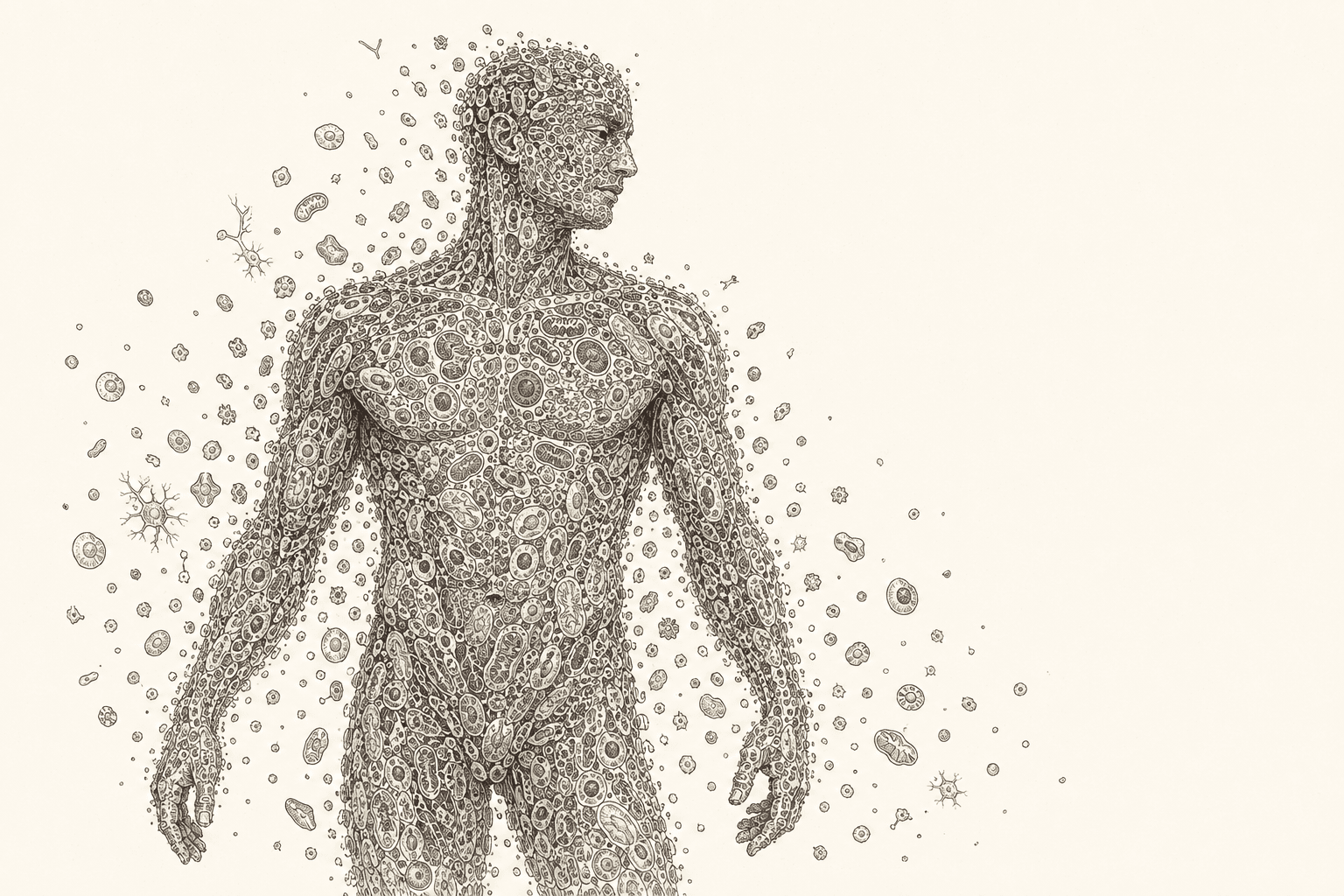
Usted no es un animal con un solo juego de necesidades. Es una colonia de unos treinta billones de individuos vivos, cada uno con su propia membrana, su propio metabolismo, su propia lucha momento a momento por seguir vivo, que sostienen una tregua tan antigua y tan completa que desde fuera parece una sola criatura andando por ahí.
La tregua es lo que usted llama estar sano. Cuando se deshilacha, en un tejido, en un órgano, en un rincón callado de la colonia, eso es lo que llama enfermedad. La salud nunca fue algo que le ocurriera a usted. Es verdadera, o es falsa, de sus células, de una en una.
Esta no es una metáfora a la que eche mano para ilustrar algo. Es la arquitectura literal de la cosa que está leyendo esta frase, y el mecanismo de cómo esa colonia respira y arde y emite señales pertenece a un capítulo posterior, donde se expone entero. Lo saco aquí solo para mover su mirada.
Durante la mayor parte de un siglo hemos imaginado el cuerpo como una fortaleza sitiada y la medicina como el ejército a las puertas, y así hemos preguntado, una y otra vez, qué está atacando y cómo lo matamos. La pregunta equivocada, formulada con una destreza enorme.
La acertada es más callada y más difícil. No qué está atacando a la colonia, sino cuáles son sus condiciones de trabajo, y si han fallado.
Usted no es un animal con un solo juego de necesidades. Es una colonia de unos treinta billones de individuos vivos que sostienen una tregua tan completa que parece un solo animal.
Deje a un lado las condiciones genéticas escritas en usted antes de su primera respiración. Deje a un lado la infección aguda y la violencia del trauma, el hueso roto, el microbio invasor, la herida. Son reales, y la medicina las enfrenta con una competencia que no voy a poner en duda. Y aun ahí este libro no está ocioso: un cuerpo devuelto a sus condiciones correctas cura el trauma más rápido, porque la maquinaria que previene la enfermedad es la maquinaria que repara una herida.
Todo lo demás está sobre la mesa. La obesidad que no se mueve por mucho que usted se prive. La diabetes que se controla durante treinta años y no se revierte ni una sola vez. La tensión arterial que se gana una segunda pastilla, y luego una tercera. La enfermedad cardíaca. Las enfermedades autoinmunes que llegan sin un enemigo al que nombrar, el lupus y la psoriasis y la tiroides que se vuelve contra sí misma. La artritis explicada como desgaste, en articulaciones que nunca cargaron el peso, y la osteoporosis que hemos acordado llamar envejecimiento. La fibromialgia que todos los nervios denuncian y que ninguna prueba de imagen encuentra. El agotamiento al que se le da una sigla en vez de una causa. Las migrañas. El asma y las alergias que eran raras dentro de la memoria de los vivos. El trastorno intestinal rebautizado cuatro veces en diez años y curado bajo ninguno de sus nombres. La piel tratada en la superficie durante una década. Las piedras en el riñón y en la vesícula, y el hígado llenándose de grasa en silencio. Los ciclos que dejaron de ser regulares, la fertilidad que se adelgazó, la libido que se fue. La depresión y la ansiedad a las que se les entregó una receta y nunca una causa. Las demencias, el Alzheimer y el Parkinson, que hemos acordado archivar bajo el destino. Los cánceres.
Casi nada de eso es un ataque, y casi nada de eso estaba escrito en sus genes. Es un fallo de las condiciones en las que sus células están obligadas a vivir. Dos fallos, en realidad, y solo dos: lo que la célula necesita y ya no recibe, y lo que se ha acumulado a su alrededor y ya no se retira.
Corrija esos dos y el cuerpo hace lo único que sabe hacer desde la primera célula viva. Se cura a sí mismo, y puede curar más lejos de lo que le han contado. Todo lo que sigue es el desarrollo de esas dos frases a altitud creciente.
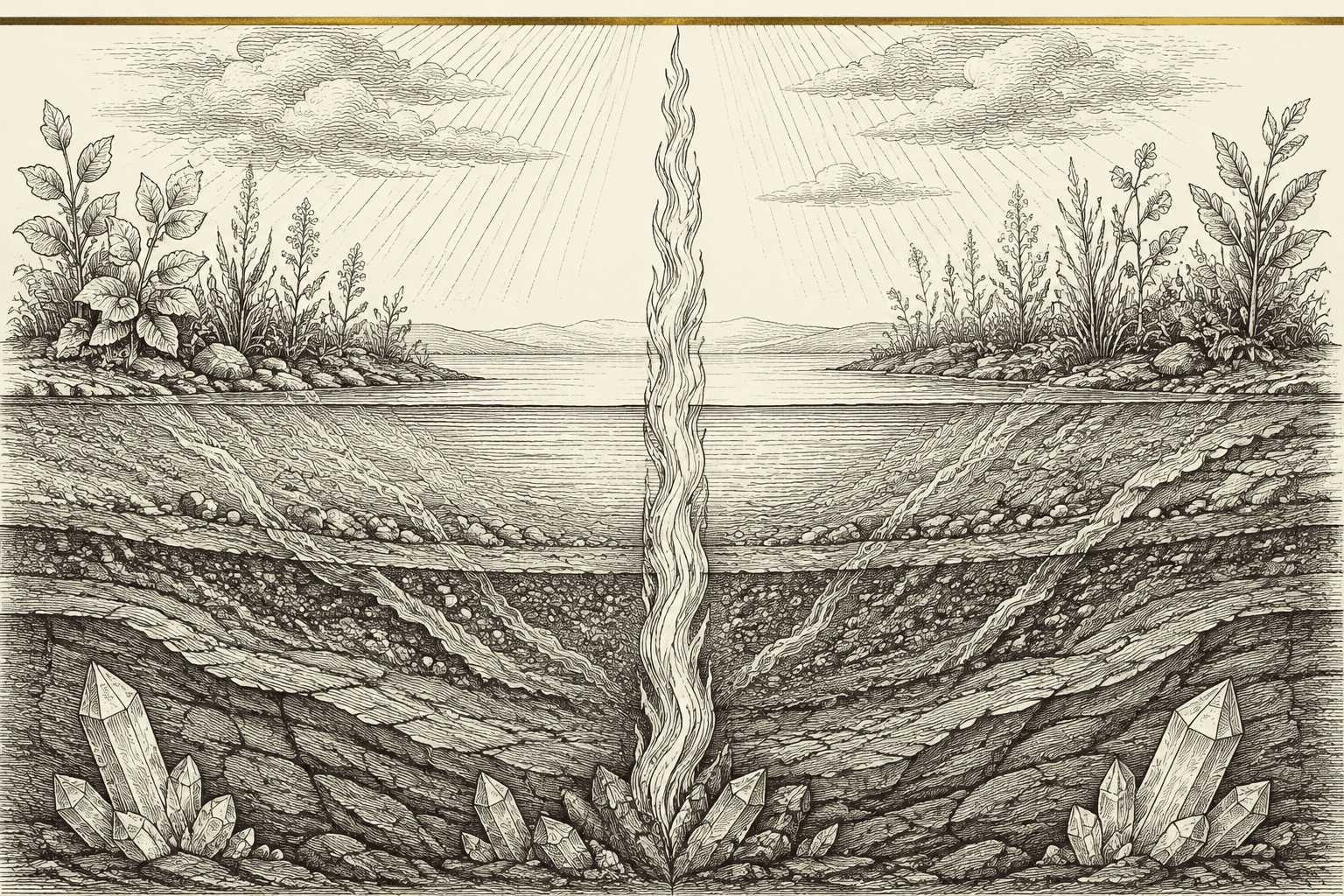
Ese desarrollo tiene una forma, y es un único ascenso, no un manual que se abre por la página donde está sentado su síntoma. Empieza en la planta baja, en la tierra, con el sustrato mineral que la dieta moderna ya no entrega, y sube.
Primero restauramos lo que falta, el puñado de elementos y los pocos suplementos que el cuerpo puede absorber de verdad.
Luego despejamos lo que se ha acumulado, empezando donde empieza la energía, en la respiración de la célula, y trabajando hacia fuera a través de la carga de metales pesados, la red linfática que el movimiento y la respiración mantienen en flujo, el intestino, la biopelícula y el hígado encenagado.
Luego el cuerpo despejado se convierte en un instrumento luminoso, la pineal descalcificada, la luz que hay en la comida viva, el agua misma destilada hasta quedar limpia y devuelta a la vida.
Luego la fuerza que el cuerpo conserva se eleva por la columna, y las cuatro hambres que impulsan una vida humana se revelan como una sola corriente estancada.
Y por fin el oro que los viejos alquimistas persiguieron toda su vida resulta haber sido el ser humano desde el principio, hecho libre de resistencia y portador de luz, un instrumento construido para pronunciar el Verbo.
Suelo, luego despeje, luego luz, luego fuego, luego oro. Un solo imperativo llevado hacia arriba por todos los registros: restaure lo que falta, despeje lo que se ha acumulado, aliméntelo de luz, conserve y eleve lo que le da, hasta que el instrumento sea incorruptible.
Le debo los términos en los que esto está escrito. Todo mecanismo se nombra. Y allí donde la física llega más lejos de lo que el libro de texto ha impreso todavía, lo digo a plena vista y le llevo directo a ello, porque es cierto y el libro de texto llegará ahí a su debido tiempo. Esa es la diferencia entre un registro en el que se puede confiar y un sermón en el que no.
Nada de lo que hay aquí se le pide por fe, y por eso todo mecanismo se nombra y toda fuente se da por su título. Tome la afirmación más grande de este libro, encuentre el artículo en el que se apoya y compruébelo usted mismo.
Queda una última cosa, y es la razón de que esto exista siquiera, y la razón por la que puedo respaldarlo. Nada de lo que sigue fue inventado. Soy la cuarta generación de mi familia que hace este trabajo, y el linaje no corrió limpio. Corrió por dos ramas que el mundo mantiene en guerra la una con la otra.
De un lado, médicos ortodoxos, formados en la fortaleza y el ejército a las puertas, fluidos en el mecanismo, la dosis, el valor de laboratorio, los límites honestos de lo que un fármaco puede hacer. Del otro, practicantes de salud natural, los que observaron el suelo y el intestino y las acumulaciones lentas que la analítica no mide nunca, algunos de los cuales pagaron lo que encontraron con su licencia, su posición y en algunos casos su vida.
Cuatro generaciones. Dos linajes que se supone que se desprecian, y que se sentaron en cambio a la misma mesa, frente a los mismos pacientes, dentro de la misma familia, durante la mayor parte de un siglo, corrigiendo cada uno el punto ciego del otro. Yo crecí dentro de la discusión entre ellos.
Este libro es la primera vez que esa discusión se pone por escrito en un solo lugar, la medicina y la naturaleza trenzadas en un único registro en vez de dos medias verdades en guerra. Es heredado, no de autor. Yo solo soy el que por fin lo puso sobre la página.
Y el verdadero tema, al final, nunca fue el cuerpo. El cuerpo es el instrumento, y un instrumento se construye para aquello que se le puede hacer hacer. Los treinta billones son la orquesta.
De lo que este libro trata al final es de la música que puede hacer un ser humano limpio, restaurado, luminoso y libre de resistencia, de la conciencia que un cuerpo incorruptible puede portar. La tierra siempre iba a convertirse en oro. Esa es la apuesta. Ahora pase la página.