
النور, الفصل 15
الماء الذي لم تصنعه الطبيعة قط
لم يبلغ أيُّ ماء شربه أحدٌ من أسلافك درجةَ الحموضة التي تبيعها لك آلةٌ اليوم، ومعدتك تمحو تلك الدرجة لحظة الملامسة، ودارئُ الجسد نفسه، البيكربونات، يؤدّي العمل بقروش قليلة. ادعم المنظِّم، ولا تصدّق أنّ أداةً فوق طاولة المطبخ أذكى من كليتيك.
لم يشرب إنسان واحد عاش على هذه الأرض، قبل ظهور الآلة، ماءً بقلوية الكأس الواقفة فوق الطاولة واعدةً بأن تجعلك قلوياً. المطر يهطل حمضياً قليلاً. الأنهار والينابيع تجري قريبةً من المتعادل. حموضة العشرة في تلك الكأس ليست نوعاً أعمق من الطبيعة، بل مُنتَج كهربائي، صُنع على صفيحة مشحونة، أمضى النوع البشري تطوّره كلّه دون أن يذوقه مرّةً واحدة. وفي اللحظة التي تبتلعه فيها، يُتلف أشرسُ حمّام حمضيّ في جسدك الخاصّيةَ الوحيدة التي دفعت ثمنها.
الدعاية قديمة وبديهية. الحياة الحديثة تتركك حمضياً، والحمض هو حيث ينمو المرض، فاشرب النقيض تُعافَ. فتتّصل آلة بالصنبور، وتُمرّر الماء عبر صفائح مشحونة، وتصبّ كأساً تُحيل شريط الاختبار إلى أزرق واثق، حموضة تسعة، حموضة عشرة.
ملايين الناس ينظّمون اليوم قائمة بقالتهم وفاتورة مائهم حول ذلك الوعد. إنهم يصبّون قيمةً شاذّة في نظام يدير أصلاً أدقّ عملية لإزالة الحموضة على هذا الكوكب.
الجسد يدير أصلاً النظام الرئيس
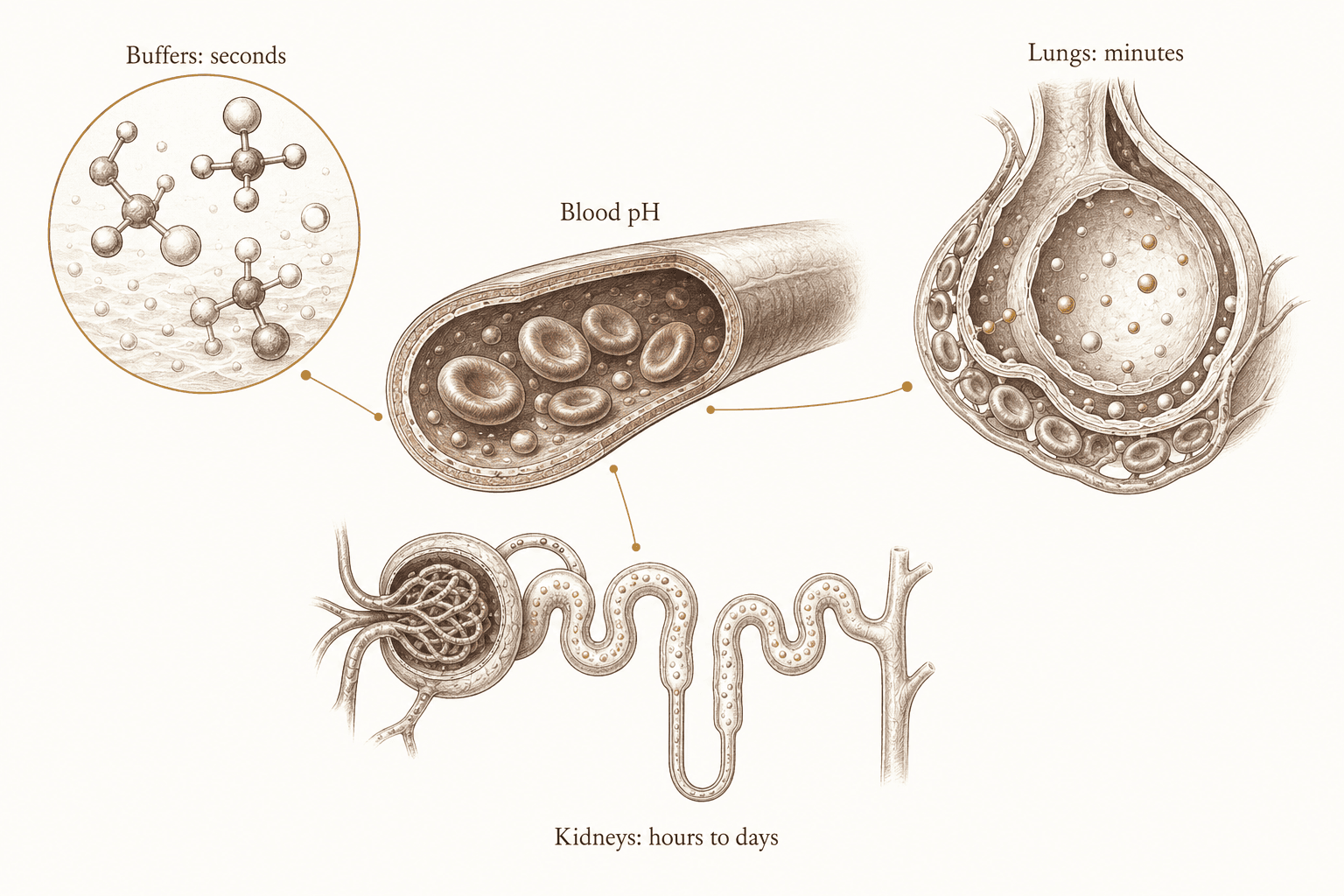
درجة حموضة دمك من أشدّ الأرقام دفاعاً عنها في فسيولوجيتك كلّها. تستقرّ بين 7.35 و7.45، قلويةً بدرجة طفيفة جداً، تُمسكها هناك ثلاثة أنظمة متداخلة تعمل على ثلاث ساعات مختلفة، لأنها لو انحرفت بأعشار قليلة في أيّ اتجاه لبدأت الإنزيمات التي تدير أيضك تنطوي على نحو خاطئ ثم تفشل.
الخطّ الأول كيميائي وفوري. يحمل الدم ، ماصَّ صدمات كيميائياً يبتلع الحمض أو القاعدة الواردة في ثوانٍ، قبل أن تستطيع درجة الحموضة أن تتحرّك أصلاً.
الخطّ الثاني هو نَفَسُك. ثاني أكسيد الكربون المذاب في الدم هو حمض الكربونيك، فما إن تتسلّل الحموضة صعوداً حتى يأمر الدماغُ الرئتين أن تتنفّسا بقوّة أكبر قليلاً وتنفثا الفائض غازاً.
الخطّ الثالث هو الكليتان، المنظِّم البطيء الشامل، تطرحان الهيدروجين الزائد في البول وتستعيدان البيكربونات على مدى ساعات وأيام، وتضبطان الميزان حتى آخر منزلة عشرية.footnoteGuyton, A. C., Hall, J. E. Textbook of Medical Physiology. تُنظَّم حموضة الدم الشرياني ضمن نحو 7.35 إلى 7.45 بثلاث آليات على ثلاثة مقاييس زمنية: نظام الدارئ البيكربوناتي (ثوانٍ)، والتعويض التنفّسي عبر زفير ثاني أكسيد الكربون (دقائق)، والتعويض الكلوي عبر طرح أيون الهيدروجين وإعادة امتصاص البيكربونات (ساعات إلى أيام).
هذا هو ، وهو ليس رقيقاً ولا هشّاً. إنه من أقدر حلقات التحكّم في الجسد، وذلك بالضبط لأنّ الكثير يتوقّف عليه. والبرهان في المواضع التي تتحرّك فيها حموضة الدم حقّاً: لا على مائدة الغداء أبداً، بل في الكارثة وحدها.
الحُماض والقُلاء يأتيان من الفشل الكلوي، ومن رئتين عاجزتين عن طرح ثاني أكسيد الكربون، ومن سكّري غير مضبوط يحرق الكيتونات، ومن الإنتان. إنها حالات طوارئ تُعالَج في المستشفيات. جسدٌ تستطيع كأسُ ماء أن تؤرجح حموضته ما كان لينجو أسبوعاً واحداً.
ثمّة شيء واحد صحيح مدفون داخل التسويق، وهو يهمّ. يحمل الجسد حمل حموضة يومياً حقيقياً. البروتين والأيض والتمرين والنظام الغذائي الحديث تُخلّف حمضاً صافياً على الكليتين تصفيته، ولتصفيته يُنفق الجسد بيكربوناتٍ، وحين يشحّ الدارئ يستدين قاعدةً معدنية من العظم كي يُبقي الدم ثابتاً.
فتعويض ذلك الدارئ عملٌ يستحقّ. لم يكن السؤال يوماً هل تستطيع دعم النظام. السؤال أيّ أداة تفعل ذلك، وهل تدعم المنظِّم أم تحاول نقض حكمه.
الماء الذي لم تصنعه الطبيعة قط
ضع الجسد جانباً واسأل السؤال الأبسط: أين في الطبيعة يوجد ماء كهذا. لا في أيّ موضع يستطيع إنسان أن يشرب منه تقريباً.
يبلغ المطر الأرضَ حمضياً قليلاً، مستقرّاً قرب حموضة 5.6 وهو يتّزن مع ثاني أكسيد الكربون في الهواء. والأنهار والبحيرات والينابيع تجري بين 6.5 و8.5 تقريباً، متجمّعةً قرب المتعادل، تضبطها الصخور والتربة التي تمرّ بها. وماء الجليد الذائب، الفقير في المعادن المذابة، يستقرّ قرب المتعادل أو أدنى منه قليلاً. ومياه البحر تدور حول 8.1، ولم يشرب سلفٌ واحد من البحر.footnoteStumm, W., Morgan, J. J. Aquatic Chemistry. تحكم توازناتُ الكربونات أساساً حموضةَ المياه السطحية والجوفية الطبيعية، وهي تقع عادةً بين نحو 6.5 و8.5؛ ومياه المطر المتّزنة مع ثاني أكسيد الكربون الجوّي تستقرّ قرب 5.6. أمّا المياه التي تبلغ 9.5 إلى 11، كبحيرات الصودا المغلقة الحوض (Mono Lake وLake Natron)، فهي أُجاجات كاوية شديدة التمعدن، لا مياه صالحة للشرب.
الماء الذي ضُبط عليه الجسد البشري، عبر ملايين السنين التي بنت كل إنزيم فيك وكل شبر من أمعائك، كان يقع في نطاق ضيّق من الحمضية الخفيفة إلى القلوية الخفيفة، وكان خفيفاً في معادنه المذابة. أمّا حموضة 9.5 إلى 10 التي تُخرجها آلة التأيين فرقمٌ لم تقدّمه الطبيعة للشرب في ما يكاد يكون لا شيء.
والمياه الطبيعية النادرة التي تبلغه فعلاً، بحيرات الصودا وحفنة من الينابيع البركانية، كاويةٌ إلى حدّ سلخ الريش، لا يشربها كائن له كلية. الماء القلوي ليس الحالة الأصلية التي يوحي بها التسويق. إنه اختراع من القرن العشرين يرتدي زيّ الطبيعة.
لم يكن أيّ ماء شربه نوعنا يوماً بهذه القلوية. لم تعثر الآلة على طبيعة أعمق. صنعت رقماً، ثم باعته لك على أنه الشيء الذي فقدته.
والمعدة بُنيت لتنقض ذلك
قبل أن تدخل الكلية في الأمر أصلاً، ثمّة بوّابة، وقد صُمّمت لتفعل عكس ما يَعِد به التسويق تماماً. معدتك حمّام حمضي، مضبوط عمداً بين حموضة 1.5 و3.5، قويّ بما يكفي لتفكيك البروتين وقتل معظم ما تبتلعه.
اسكب كأس ماء بحموضة 9 في ذلك فيعادله الحمض لحظة الملامسة، فوراً. وإن وصل حجم كافٍ ليدفع المعدة نحو الأعلى ولو قليلاً، استشعرت المعدة التغيّر وأفرزت حمضاً أكثر لتردّه إلى الأسفل، لأنّ معدةً تبقى قلوية لا تستطيع الهضم.footnoteGuyton, A. C., Hall, J. E. Textbook of Medical Physiology. يُحفَظ سائل المعدة عند حموضة 1.5 إلى 3.5 تقريباً بإفراز الحمض من الخلايا الجدارية، وهو إفراز منظَّم يستعيد نقطة الضبط الحمضية حين تُدرَأ. والسائل القلوي المبتلَع يُعادَل في المعدة قبل بلوغ الأمعاء الدقيقة حيث يحدث الامتصاص.
فخاصّية الماء القلوي الرئيسة، حموضته العالية، تزول خلال ثوانٍ من وصوله، يُفكّكها الجسد ذاته الذي تزعم البطاقة أنها تُصحّحه. الرقم على الشريط يصف الماء في الكأس. ولا يقول شيئاً عن الجسد بعد البلعة.
وحين بحث الباحثون، بصرامة، عن دليل سريري على أنّ الماء القلوي يمنع السرطان أو أيّ مرض آخر، لم يجدوا شيئاً. فحصت مراجعة منهجية عام 2016 سلسلة الادّعاءات كاملةً وخلصت إلى أنّ الترويج العام للماء القلوي لا تُبرّره الأدلّة.footnoteFenton, T. R., Huang, T. (2016). "Systematic review of the association between dietary acid load, alkaline water and cancer." BMJ Open, 6(6), e010438. لم تجد المراجعة أيّ دليل من تجربة سريرية على أنّ الماء القلوي يغيّر حالة الحمض والقاعدة الجهازية بما يمنع مرضاً أو يعالجه، وخلصت إلى أنّ الترويج العام لهذه المنتجات لا تسنده البيانات. الفسيولوجيا تنبّأت بذلك الخواء قبل عقود من ذهاب أحد للبحث.
ما تشتريه لك كلمة "قلوي" فعلاً هو المعادن
الكلمة التي تؤدّي العمل كلّه على القارورة لا تعني ما يظنّه الناس. تُقرأ في عالم العافية مرادفاً لكلمة صحّي، النقيض الطيّب للحمضي. أمّا في كيمياء الماء الفعلية فتعني شيئاً أدقّ بكثير وأقلّ رومانسية بكثير.
هي السعة الدارئة. هي مقياس كمّ الحمض الذي يستطيع ماءٌ امتصاصه قبل أن تهبط حموضته، وهي تأتي كلّها تقريباً من الكربونات والبيكربونات المذابة، التي تسير يداً بيد مع الكالسيوم والمغنيسيوم.
فالماء القلوي، في جوهره، اسمٌ أنيق لماء ذابت فيه معادن. والحموضة العالية التي تُنتجها آلة التأيين ليست استحضاراً للصحّة داخل الماء. إنها الآلة تُركّز، عند صفيحتها السالبة، المعادنَ التي كان ماء المصدر يحملها أصلاً. انزع تلك المعادن فتذهب القلوية معها، لأنها كانت هي القلوية.
وحمل المعادن ذاك هو العُسر غير العضوي الذي يُكلّس الغلّاية. أمعاؤك تلتقط ذلك الكالسيوم والمغنيسيوم بسهولة أقلّ بكثير من التقاطها العنصرين ذاتيهما مرتبطين داخل ورقة سبانخ، وهما يصلان في صحبة كل ما كان الإمداد يحمله، الرصاص والفلوريد وبقية القائمة.
أنظف برهان هو الماء المقطَّر. مردوداً إلى لا شيء تقريباً سوى نفسه، بمواد صلبة مذابة تقارب الصفر، لا يكاد يملك ، وهذا يعني، بحسب التعريف أعلاه، أنه بلا قلوية في جوهر الأمر.
لا تستطيع أن تمنحه قراءةً قلوية دون أن تُذيب فيه معادن من جديد. أعِد عُسر الأنبوب إليه وتكون قد نقضت التقطير ببساطة. أمّا أن تضع فيه البيكربونات والمغنيسيوم اللذين اخترتهما بنفسك فتحصل على الماء الذي يبنيه مُقطَّرٌ ومُنظَّم: مُنقّى حتى العدم، ثم مُمعدَن بقرار لا بالصدفة. القراءة القلوية أثر جانبي لذلك الاختيار، لا سببه أبداً.
إذا كان أنظف ماء تستطيع صنعه يسجّل أسوأ نتيجة على مقياسك، فالمقياس لم يكن يقيس الصحّة قطّ. كان يقيس الصخر المذاب.
لماذا البيكربونات هي القاعدة الأفضل
زبون الماء القلوي يريد الشيء الصحيح ويمدّ يده إلى الأداة الخطأ. ثمّة أداة صُنعت لهذا العمل، وهي ليست آلة.
البيكربونات هي دارئ الجسد نفسه. هي الجزيء بعينه الذي تُعيد الكليتان امتصاصه ويُفرزه البنكرياس ليُمسك درجة الحموضة كل ثانية من حياتك.
حين تأخذ ، مع السترات القادم من ليمونة، الذي يحوّله الكبد إلى بيكربونات مباشرةً، فأنت لا تدفع حموضةً عالية غريبة عبر المعدة على أمل أن تمرّ. أنت تسلّم الجسد مزيداً من العملة الوحيدة التي يعمل بها أصلاً. وخلافاً للماء القلوي، هذه تنجو من الرحلة: البيكربونات المُجرَّعة ترفع فعلاً ، أي المخزون الدارئ في الدم، دون أن تحاول قطّ تحريك درجة الحموضة المدافَع عنها.footnotede Brito-Ashurst, I., Varagunam, M., Raftery, M. J., Yaqoob, M. M. (2009). "Bicarbonate supplementation slows progression of CKD and improves nutritional status." J Am Soc Nephrol, 20(9), 2075-2084. أنتجت بيكربونات الصوديوم الفموية ارتفاعاً قابلاً للقياس ومستمرّاً في بيكربونات المصل، وهو البرهان السريري على أنّ البيكربونات المبتلَعة تبلغ الدم في صورة مخزون دارئ أكبر، وهو ما لا يفعله الماء القلوي المُعادَل عند المعدة.
الفرق عن آلة التأيين هو التحكّم. أنت تختار الدارئ والجرعة والصيغة، على صفحة نظيفة من صنعك أنت، بدلاً من شرب أيّ كوكتيل معدني تصادف أن سلّمك إيّاه الأنبوب والصفائح ثم تسمية الرقم على الشريط صحّةً.
هذا هو الأساس الكامل لبروتوكول الليمون والبيكربونات، وماء بيكربونات المغنيسيوم في المعادن الأساسية يوصل الدارئ ذاته بالتصميم. أحدهما قروش قليلة من الشيء بعينه الذي يصنعه الجسد. والآخر جهاز بعدّة مئات من الدولارات يبيعك حموضةً تمحوها معدتك لحظة الملامسة.
لسنا أذكى من الكلية
الحركة القلوية فعل غرور واحد. تنظر إلى جهاز عضوي أمسك حموضة دمك عند منزلتين عشريتين، عبر كل وجبة وكل حمّى وكل يوم من حياتك، ثم تقرّر أنّ آلةً فوق طاولة المطبخ تعرف العمل خيراً منه. هي لا تعرفه. لا شيء بنيناه ينظّم نظاماً مدروءاً بمثل براعة الجسد الذي وُلدت مالكاً له، ولا شيء قدّمته الطبيعة للشرب يوماً كان بقلوية الشيء الذي نبيعه اليوم لأنفسنا على أنه طبيعي.
الموقف الصادق هو الأقدم. ثِق بالنظام. ادعمه بالدارئ الذي يصنعه أصلاً، مأخوذاً عن قصد وبجرعة تتحكّم فيها. كُل المعادن في صورتها الحيّة. تنفّس ببطء يكفي للاحتفاظ بثاني أكسيد الكربون الخاصّ بك. خُذ الشمس.
ثم دع المنظِّم وشأنه ليؤدّي العمل الذي بُني له. لقد ضُبط الجسد، عبر بضعة مليارات من السنين من الانتخاب، أو على يد ما قد تُفضّل تسميته خالقاً، ليتولّى هذا الأمر قبل أن يخطر لأحد أن يبيعه آلةً أشدّ لمعاناً بزمن طويل.
فأسقِط محور الحموضة. لم يكن قطّ المتغيّر الذي تستطيع تحريكه، ومطاردته مطاردة لرقم يملكه الجسد ولن يتنازل عنه.
الماء الجدير بالشرب ليس قلوياً. هو نظيف، مُقطَّر حتى العدم، مُعاد التمعدن عن قصد، منظَّم، حيّ، على النحو الذي يضعه مُقطَّرٌ ومُنظَّم. وبعد أن تُنظَّف الآلة ويُعاد إليه الدارئ الذي يعرفه، يصير الجسد جاهزاً أخيراً للتيّار الوحيد الذي لم تستطع الآلة القلوية تعبئته ولا استطاعت صفيحة شحنه يوماً: الطاقة الأعمق التي تحملها فيك أصلاً، وما تصير إليه حين تكفّ عن إنفاقها وتتعلّم رفعها بدلاً من ذلك.
Sources
- Textbook of Medical Physiology, . https://openlibrary.org/works/OL17627866W
- Systematic Review of the Association between Dietary Acid Load, Alkaline Water and Cancer, . https://doi.org/10.1136/bmjopen-2015-010438
- Aquatic Chemistry, . https://openlibrary.org/works/OL3528131W
- Bicarbonate Supplementation Slows Progression of CKD and Improves Nutritional Status, . https://pubmed.ncbi.nlm.nih.gov/19608703/
- Distilled and Structured, . https://samsinger.tech/writing/2026-06-21-distilled-and-structured-water
- Alkaline Without Alkalinity, . https://drsircus.com/sodium-bicarbonate-baking-soda/alkalinity-ph-2/